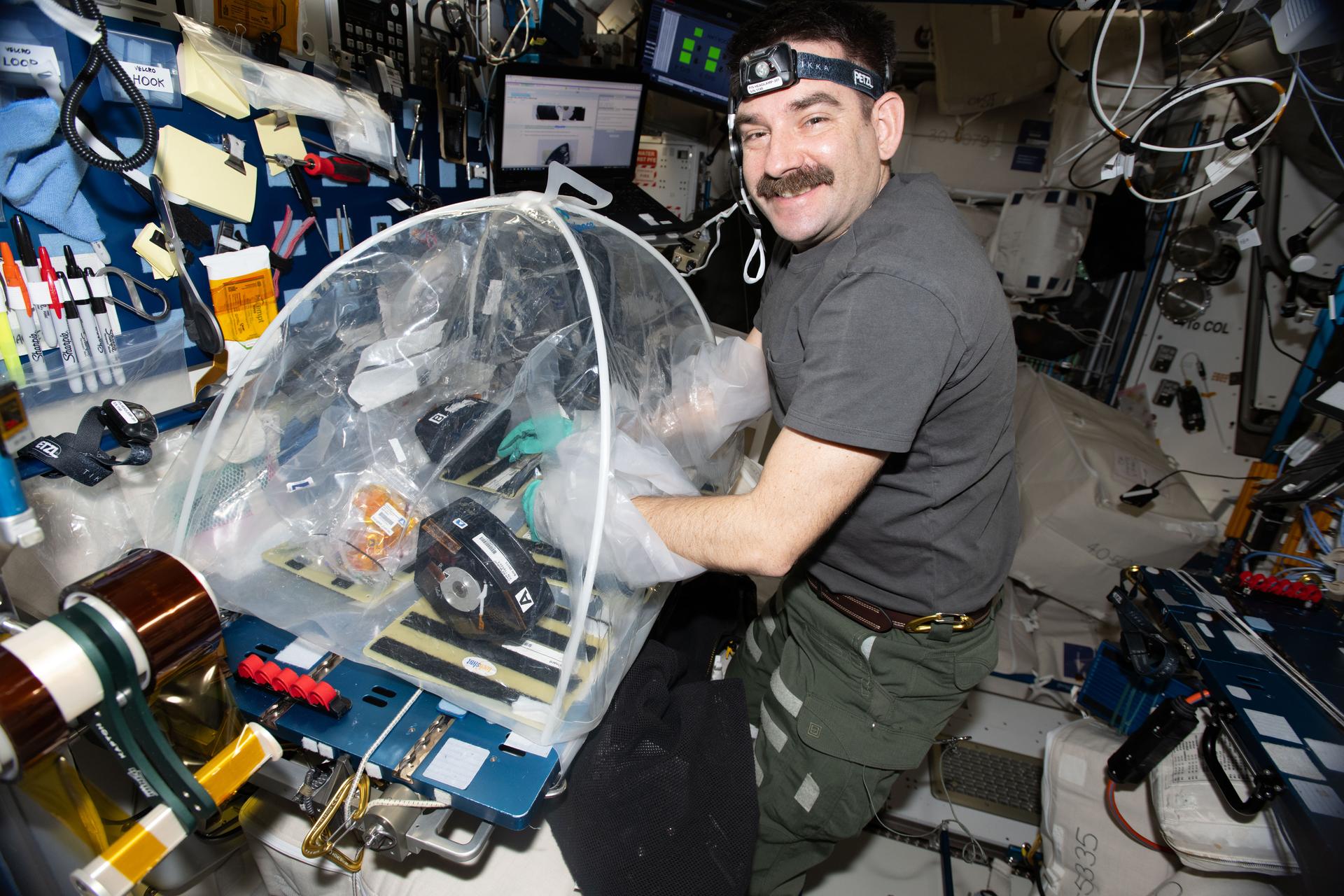
Astronauts with Expedition 74 on the International Space Station are helping scientists probe an unsettling medical link: how a bacterial pneumonia infection can leave…
Astronauts with Expedition 74 on the International Space Station are helping scientists probe an unsettling medical link: how a bacterial pneumonia infection can leave lasting damage in the heart long after the lungs have recovered.
The work focuses on Streptococcus pneumoniae, the most common cause of community-acquired pneumonia (CAP). CAP remains a major global killer, responsible for millions of deaths each year. Even when patients survive, the aftermath can extend beyond the respiratory system. More than one in four adults hospitalized with CAP go on to develop heart disease, and people who recover from severe pneumonia face elevated cardiovascular risk even after the infection has been cleared.
To better understand why, researchers are turning to an environment where microbes often behave differently than they do on Earth. Experiments in orbit are examining how heart tissue—grown from stem cells in the lab—responds when exposed to bacterial infection. By monitoring these engineered cardiac tissues in space, the team aims to map the cellular damage pathways that may connect a bout of pneumonia to longer-term cardiovascular harm.
Space offers a crucial advantage for this type of study: many bacteria become more aggressive and show greater resistance to drugs in microgravity. Rather than viewing that as only a hazard, scientists are using it as a tool. If infection-related effects are amplified in orbit, subtle biological signals that are difficult to detect in terrestrial experiments may become clearer, making it easier to identify the specific factors that drive bacterial virulence and the resulting injury to heart cells.
Dr. Palaniappan Sethu, a professor of Medicine and Biomedical Engineering at the University of Alabama at Birmingham, said the team expects that intensifying the infection in space will make the differences between infected samples and controls easier to discern. That clearer separation, he explained, could help reveal smaller influences that nonetheless contribute to how harmful the bacteria become.
Pinpointing what makes infections more severe in orbit could do more than explain a spaceflight phenomenon. The same mechanisms may highlight targets for future therapies aimed at protecting the heart during and after pneumonia—advances that could improve treatment strategies for infectious disease patients on Earth.
The investigation also speaks directly to the realities of human exploration beyond low Earth orbit. For more than 25 years, the space station has served as a platform for studying how the human body and microorganisms respond to the conditions of space. As mission planners look toward longer journeys and extended stays away from Earth, understanding how disease progresses in microgravity becomes increasingly important.
Dr. Carlos J. Orihuela, a professor of Microbiology at the University of Alabama at Birmingham, emphasized that answering these questions is central to safeguarding health during long-duration missions and supporting sustainable habitation beyond Earth. The experiments, he said, are expected to clarify how space-specific conditions shape the course of disease.
The broader effort underscores why the space station remains a valuable laboratory. By leveraging its distinctive environment, researchers worldwide can tackle complex questions in human health, from unraveling disease processes to evaluating potential drugs and diagnostic approaches—work intended to benefit both astronauts in space and patients back on Earth.