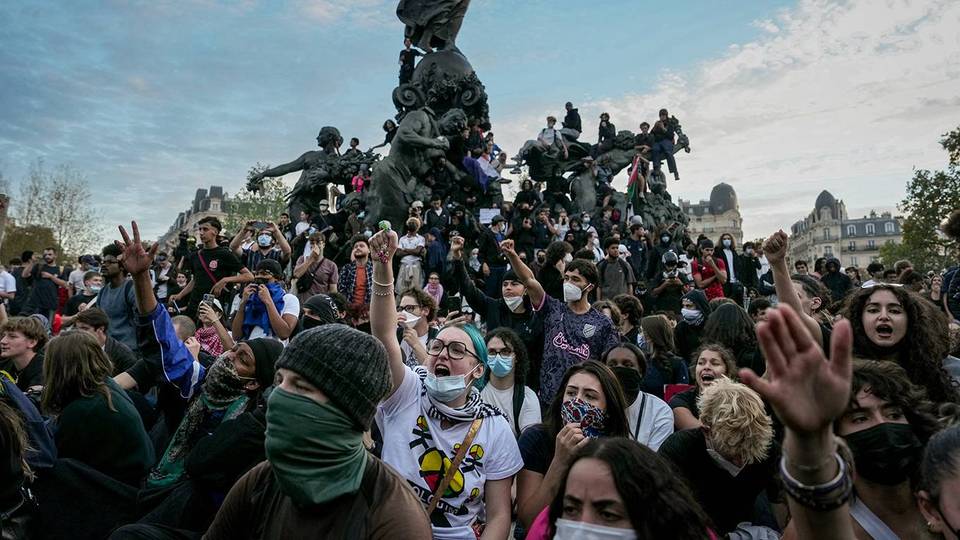
Rising anger targets billionaires’ political sway as critics warn corporate power is eroding democratic governance and deepening inequality. Voters are increasingly pushing back.
Across the world, anger is rising over the outsized influence of billionaires and the corporations they control—an influence many critics say now poses a direct challenge to both democratic governance and the planet’s long-term stability. What is new is not the existence of vast fortunes, but the scale of their political leverage and the increasingly visible ways it shapes everyday life for everyone else.
From New Delhi to other major capitals, the pattern is familiar: as the cost of living climbs and stable employment becomes harder to secure, more voters are concluding that formal elections alone have not prevented power from pooling at the top. In many countries, the public mood is shifting from resignation to confrontation, driven by the perception that systems described as electoral democracies are functioning more like oligarchies or plutocracies—political economies steered by a narrow elite.
The backlash is fueled by a basic arithmetic of modern inequality. A small group of extremely wealthy individuals—still overwhelmingly men—sits atop corporate empires that can influence legislation, regulation, and public spending. Through campaign financing, lobbying networks, control over media and information channels, and revolving-door relationships between business and government, this group has gained an exceptional ability to shape the rules under which markets and societies operate.
Critics argue that those rules have increasingly worked as a one-way ratchet. Tax structures, regulatory regimes, and labor-market policies have often been designed—or redesigned—in ways that protect capital, expand corporate freedom of action, and reduce the bargaining power and security of ordinary workers. The result, they say, is a self-reinforcing cycle: concentrated wealth buys political access, political access delivers favorable policy, and favorable policy further concentrates wealth.
For many households, these dynamics are not abstract. They show up as rents and mortgages that absorb more income, as prices that rise faster than wages, and as job prospects that feel more uncertain—especially for younger workers navigating gig work, contract employment, and weakened safety nets. As day-to-day insecurity spreads, so does suspicion that governments are responding more to boardrooms and billionaire donors than to voters.
Yet the same pressures that have intensified disillusionment are also prompting a reevaluation of political agency. In many places, people who feel locked out of economic gains are recognizing that collective action—at the ballot box, in civic movements, and through public pressure—can still force issues like inequality, corporate power, and political capture onto national agendas. The emerging pushback reflects a growing belief that democratic institutions can be reclaimed, but only if citizens treat extreme concentrations of wealth and influence as a political problem, not merely an economic outcome.
The contest now playing out is over who sets the terms of modern life: the few with extraordinary resources and access, or the many who live with the consequences of policies shaped at the top. As that struggle becomes more visible, so does the possibility that the era of quiet acceptance of billionaire dominance may be giving way to louder demands for accountability.
Why it matters
If public trust continues to erode, democratic legitimacy weakens and policymaking can become more volatile, affecting investment, labor markets, and social stability. For households facing affordability pressures and insecure work, the question is whether political systems will respond with rules that curb concentrated influence or further entrench it. What happens next will depend on whether citizen movements translate frustration into sustained political change—or whether elite power adapts and persists under new forms.