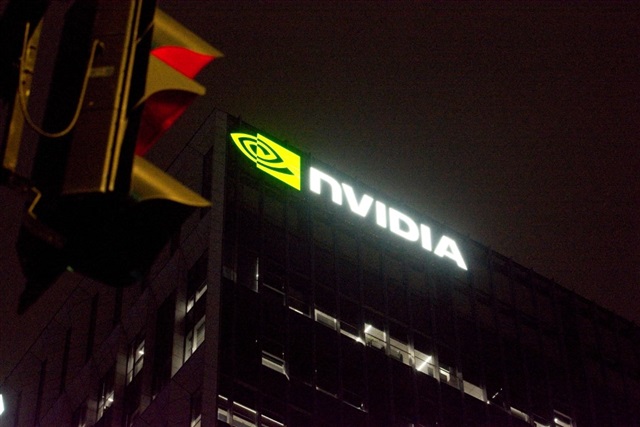
Jensen Huang's reinstatement as Nvidia CEO on November 23 has restored confidence in the global AI computing market, but Chinese cloud providers face a more fundamental challenge: securing sufficient computing capacity under increasingly restrictive US export controls.
Jensen Huang’s return to the center of Nvidia’s public narrative this week—marked by the company formally reaffirming his role as chief executive on Nov. 23—has steadied investor sentiment after months of uncertainty around the world’s most important supplier of AI accelerators. Yet in China, where cloud giants and AI labs have come to depend on Nvidia hardware, the bigger story is not executive continuity. It is the fragility of the country’s access to high-end computing under tightening U.S. export controls.
Markets tend to treat Nvidia’s leadership as a proxy for broader confidence in the AI buildout. The company sits at a critical junction: it designs the dominant GPUs for training and running advanced AI models; it provides the software ecosystem developers rely on; and it benefits directly from the surge in capital spending by cloud providers. With Huang visibly back in the driver’s seat, analysts say the signal to customers is stability—product roadmaps, supply commitments, and a clear strategic line on how Nvidia plans to navigate geopolitical risk.
But that geopolitical risk is most acute in China, where the company’s chips are both in high demand and increasingly difficult to obtain. Over the past two years, U.S. rules have progressively narrowed which advanced chips can be shipped to China, and regulators have repeatedly updated thresholds tied to performance and interconnect speeds—technical measures designed to constrain the ability to assemble large, cutting-edge AI clusters. Research and policy analysis have described these restrictions as moving targets: as vendors attempt to engineer “compliant” variants, the rules evolve, shrinking the space for workarounds.
Chinese cloud providers face a practical problem that no CEO announcement can solve: capacity. Even when chips are legally shippable, volumes can be limited, delivery schedules uncertain, and product lines subject to abrupt redesign. Industry research on AI infrastructure suggests that cloud firms planning multi-year AI investments are increasingly forced to treat supply risk as a first-order constraint, alongside electricity, data-center space, and networking.
In that environment, Nvidia’s China-specific products—chips configured to meet U.S. export limits—have served as a stopgap rather than a durable solution. They can support many commercial inference workloads, and some training tasks, but they typically come with performance ceilings that make scaling frontier models harder. Engineers at multiple AI companies have described the situation as an optimization puzzle: to deliver competitive AI services, they must stretch each available GPU hour further through better model efficiency, more aggressive scheduling, and narrower deployment targets.
The larger strategic issue is that access to Nvidia hardware is not simply a procurement decision; it is entwined with an entire software and developer ecosystem. Studies of AI compute stacks emphasize that GPUs are only one layer: performance depends on compilers, libraries, optimized kernels, distributed training frameworks, and tooling that has been tuned for Nvidia’s platform over more than a decade. That creates lock-in effects. Switching to alternative accelerators—whether from domestic Chinese vendors or other global players—requires revalidation, code migration, and often a hit to utilization and reliability.
At the same time, Beijing has strong incentives to reduce reliance on U.S.-linked supply chains, and domestic semiconductor firms have been accelerating efforts to offer competitive AI chips. Yet independent assessments of the sector suggest a gap remains in several areas: manufacturing access to the most advanced process nodes, high-bandwidth memory supply, and the maturity of the software ecosystem needed to match Nvidia’s developer productivity. For China’s cloud providers, that translates into a hybrid reality: domestic accelerators may fill some inference and mid-range training demand, while Nvidia remains critical for the highest-value workloads—precisely the segment most exposed to export controls.
There are also second-order effects. When supply is uncertain, cloud firms tend to prioritize their largest customers and most profitable AI services, potentially squeezing startups and academic labs. Research on innovation ecosystems consistently shows that constrained access to shared infrastructure can shift the pace and direction of development—favoring incremental productization over compute-intensive experimentation.
For Nvidia, China remains financially significant, but it is also politically sensitive and operationally volatile. Investors may welcome signals of steadiness at the top, yet the company’s China outlook is increasingly shaped by policy rather than demand. For Chinese buyers, the calculus is starker: every procurement cycle carries the risk that the next rule update will redraw the boundaries again.
Huang’s reasserted leadership may calm the global market’s nerves. It does not change the underlying equation for China’s AI industry: the lifeline is real, but it is thin—and it can fray without warning.
Why it matters
AI leadership is increasingly determined by access to compute, not just talent or data. If China’s cloud providers cannot reliably scale GPU capacity, the country’s ability to train and deploy cutting-edge models could be uneven, affecting competition across software, robotics, and advanced manufacturing. For global investors, the episode underscores that AI supply chains are now as much about geopolitics as they are about product cycles.