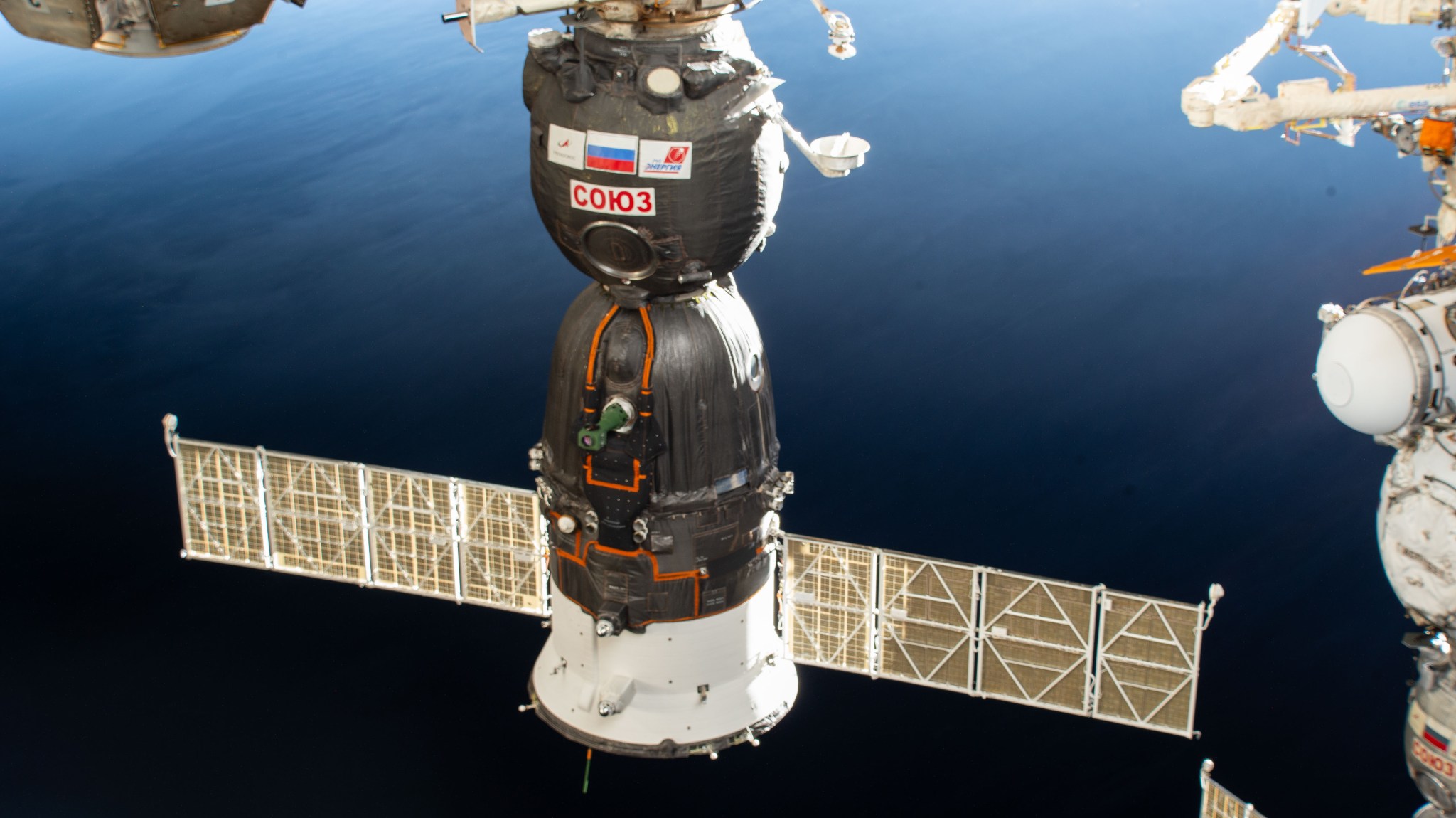
NASA is preparing live coverage as astronaut Chris Williams and two Russian crewmates wrap up a long-duration stay aboard the International Space Station and begin their journey home.
NASA is preparing live coverage as astronaut Chris Williams and two Russian crewmates wrap up a long-duration stay aboard the International Space Station and begin their journey home.
Williams, flying with Roscosmos cosmonauts Sergey Kud‑Sverchkov and Sergei Mikaev, is set to depart the orbiting laboratory after a 241-day mission. Their ride home, the Soyuz MS‑28 spacecraft, is scheduled to undock from the station’s Rassvet module at 3:02 a.m. EDT on Sunday, July 26. After separating from the station, the Soyuz will perform its deorbit sequence and descend for a parachute-assisted touchdown in Kazakhstan.
Landing is targeted for 6:26 a.m. EDT (3:26 p.m. local time) on the Kazakh steppe southeast of Dzhezkazgan. By the time they return to Earth, the trio will have completed 3,856 trips around the planet and logged more than 102 million miles in space.
The flight is a milestone for the crew: it is the first space mission for Williams and Mikaev, while Kud‑Sverchkov is concluding his second. Following landing, recovery forces will transport the crew by helicopter to Karaganda, Kazakhstan, where the ground teams are based. From there, Williams will continue on to NASA’s Johnson Space Center in Houston. Kud‑Sverchkov and Mikaev will return to their training center in Star City, Russia.
NASA says it will stream the return events across multiple online platforms, with timing dependent on real-time operations. The agency’s published schedule (all times Eastern) begins Saturday morning with the change-of-command aboard the station. At 9:40 a.m., coverage is slated to start for the Expedition 74/75 handover ceremony, during which Kud‑Sverchkov will pass leadership of the orbital complex to NASA astronaut Jessica Meir. NASA notes that Expedition 75 formally begins once Soyuz MS‑28 departs the station.
Later in the day, at 11:10 p.m., NASA plans to carry coverage of the crew’s farewells and the closing of the Soyuz hatch. Early Sunday, the focus shifts to the final phase of the mission. At 5:15 a.m., NASA is scheduled to begin broadcasting the deorbit burn and landing sequence leading up to touchdown in Kazakhstan.
The agency is placing the homecoming in the broader context of a program that has operated without interruption for decades. Humans have continuously lived and worked aboard the International Space Station for more than 25 years, NASA said, supporting research and technology development that cannot be performed on Earth. The station also serves as a testbed for addressing the demands of human spaceflight, expanding commercial activity in low Earth orbit, and preparing for longer voyages—work NASA links directly to its Artemis plans for extended missions to the Moon and, ultimately, to Mars.