Nous Research says light post-training of Alibaba’s Qwen3.8-27B yielded Arete-27B, reducing propaganda-style framing on sensitive topics while preserving general usefulness.
Nous Research says it has successfully altered the behavior of Alibaba’s open-weight Qwen3.8-27B language model through a relatively light round of post-training, producing a new release it calls nous/arete27b. The group reports that the modified model sharply reduces “propaganda-style” outputs on politically sensitive questions while preserving the underlying capabilities that make the system useful for everyday search, summarization, and general assistance.
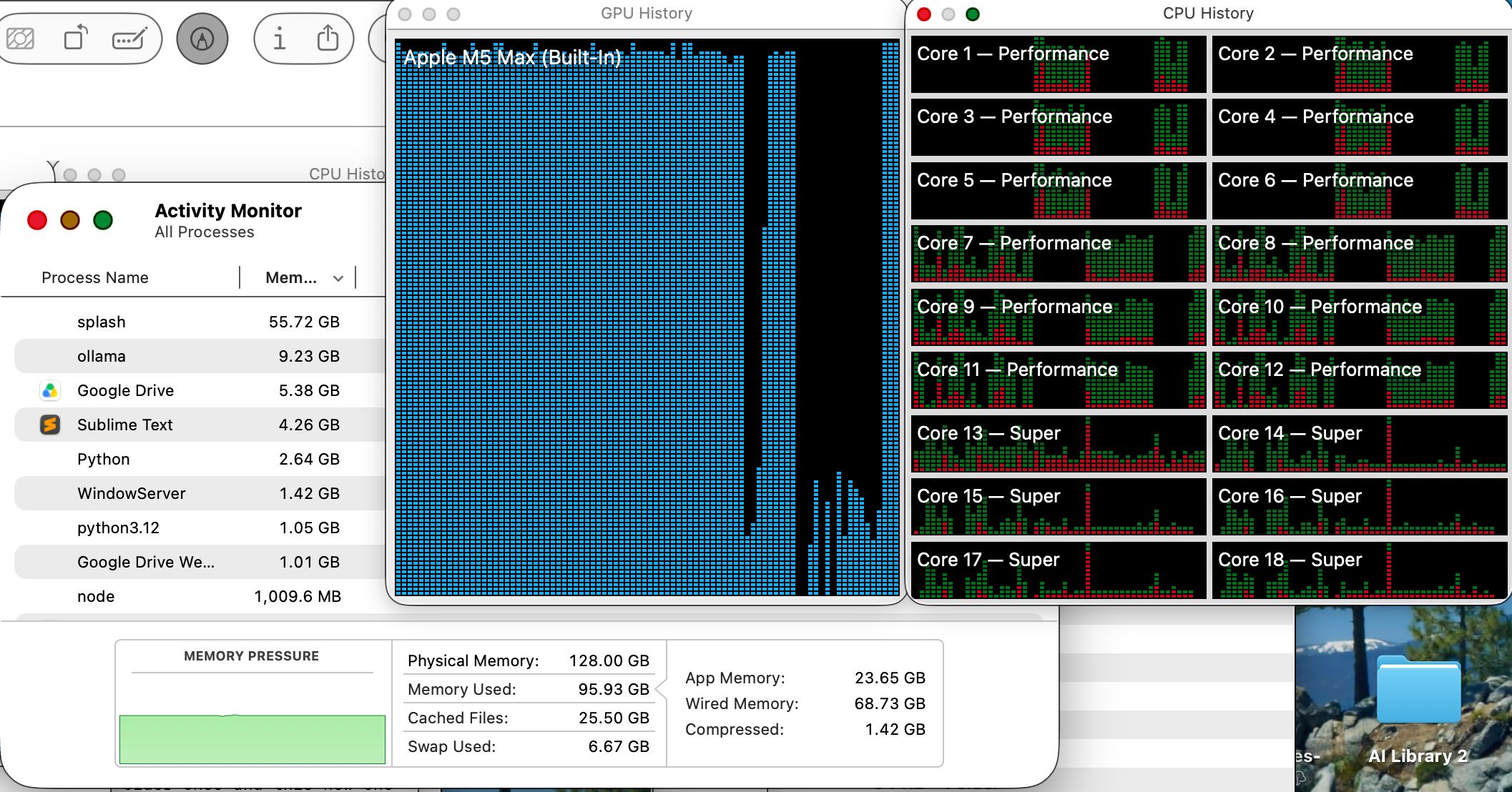
In practical testing, the difference is easy to spot. The base Qwen model refused to engage with some topics—such as the 1989 Tiananmen Square crackdown—while offering government-aligned framing on others, including cross-strait relations with Taiwan. When asked about the modified model itself, Qwen even suggested that Arete would be trading away capability and imposing a political slant. After comparing the two, I found Nous Research’s core claim broadly matched observed behavior: Arete was far more willing to discuss sensitive issues directly, and it did so without obvious degradation in general performance. That was enough for me to replace google/gemma with nous/arete as an on-device workhorse model.
Nous frames Arete-27B as an attempt to “reinforce Western values” in a model trained primarily in a Chinese context. The label is provocative—and, arguably, imprecise. The source article draws on Confucius’s concept of “rectifying names” (正名) from the Analects (13.3): if terms are wrong, speech no longer matches reality; if speech diverges from reality, effective action becomes impossible. From that perspective, the project can be read less as exporting “Western values” than as correcting systematic evasions and state-scripted framing—an aim that is hardly exclusive to any one cultural tradition.
Technically, Nous argues that many Chinese open-weight models ship with “state-aligned behavior baked into the weights,” visible as refusals, deflections, or answers that adopt official Chinese Communist Party framing. To measure whether post-training could shift this, the team built an evaluation set of 803 prompts spanning subjects such as freedom of expression, state ideology, state versus free markets, education, data privacy and surveillance, democracy, and environmental issues. Outputs were scored along two axes: factual recall (whether answers could be corroborated against reliable sources) and “framing,” including the presence of propaganda-style content.
The intervention itself was modest by modern standards. Nous fine-tuned Qwen3.8-27B on roughly 50,000 samples using a long 64,000-token context window, with no sequence packing, over two epochs (1,202 steps). The team says it did not use reinforcement learning, preference optimization, or any architectural changes, and characterizes the compute cost as insignificant relative to pretraining.
On its internal eval, Nous reports that Arete-27B increased the average factual score from 2.32 to 2.98 out of 5, while cutting propaganda-containing answers from 22% to 1%. The number of responses receiving a zero score dropped from 359 to 216 out of 803. The biggest gain appeared in the freedom-of-expression category, where the fact score rose from 0.89 to 2.44 and the propaganda rate fell from 60% to 1%.
Crucially, Nous claims these shifts did not come with a capability hit. On Hermes Bench, a measure of agentic performance, Arete scored 65.60% versus Qwen’s 65.77%—a difference the team argues is within noise. In my use, the model remained a solid on-device assistant, supporting the broader idea that removing systematic distortions in sensitive domains does not necessarily weaken a model’s utility elsewhere.
Why it matters
As open-weight models spread, users and developers increasingly inherit the political and rhetorical defaults embedded in training data. If post-training can substantially reduce refusals and state-aligned framing without degrading capability, it changes what organizations can safely deploy on-device and in products. The next question to watch is whether these gains generalize beyond the tested prompt set—and how transparently “framing” targets can be defined without simply swapping one ideology for another.