Blue Origin’s Blue Moon Mark 1 lunar lander—nicknamed Endurance—has completed a major round of ground testing inside NASA’s giant thermal vacuum facility at Johnson…
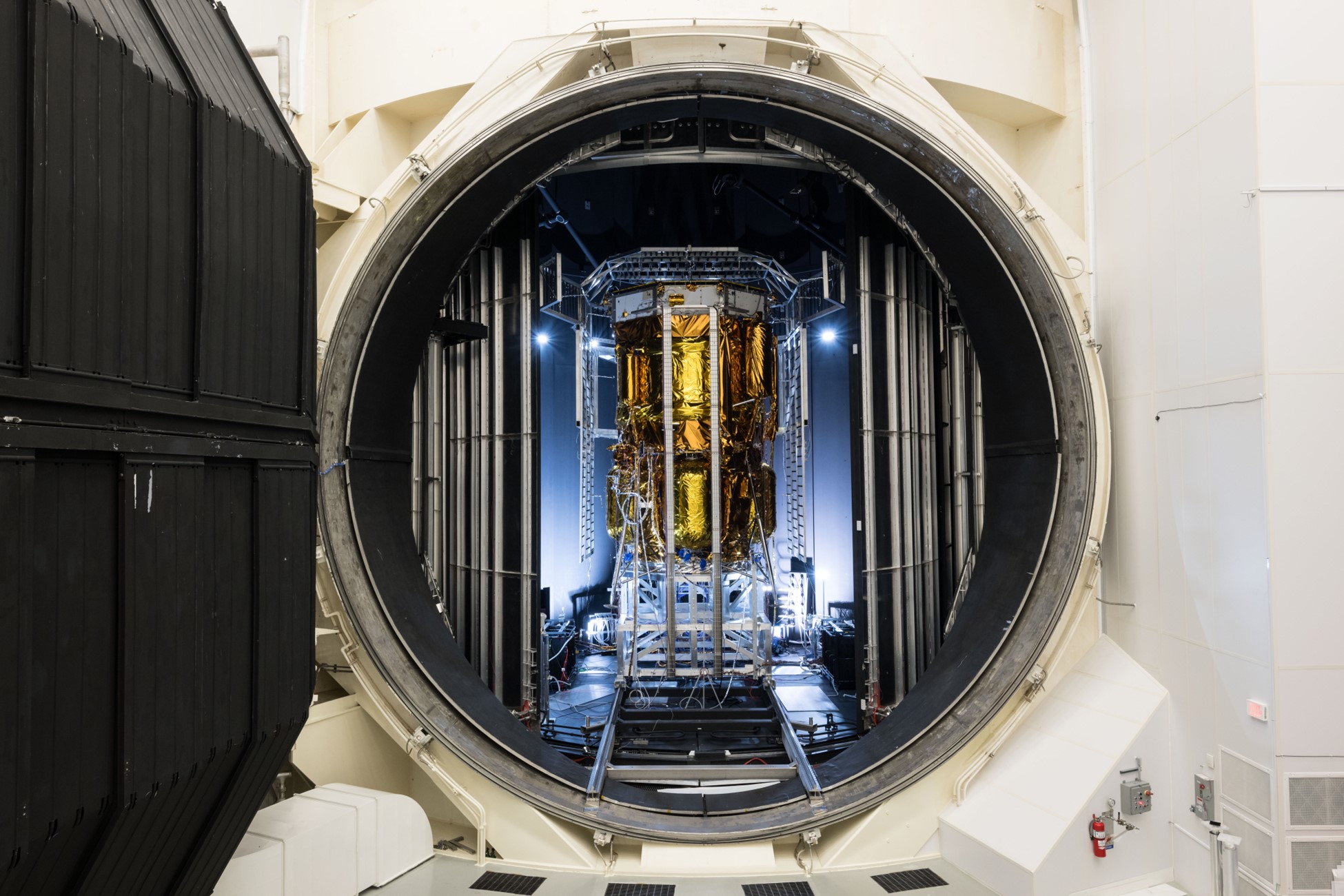
Blue Origin’s Blue Moon Mark 1 lunar lander—nicknamed Endurance—has completed a major round of ground testing inside NASA’s giant thermal vacuum facility at Johnson Space Center, a step aimed at proving key technologies needed for future Artemis-era lunar operations.
The MK1 vehicle is an uncrewed cargo lander being paid for by Blue Origin as a commercial demonstration intended to advance NASA’s Human Landing System capabilities. Its recent campaign took place in Johnson’s Thermal Vacuum Chamber A, one of the world’s largest facilities of its kind. Engineers used the chamber to approximate the airless environment of space and to cycle the lander through the extreme hot-and-cold conditions it would face during a lunar mission. By reproducing those stresses on Earth, the teams could assess how the spacecraft’s systems perform and confirm that its structure and thermal protection can maintain integrity ahead of flight.
The work also underscores NASA’s growing reliance on public-private partnerships to accelerate lunar exploration. Blue Origin conducted the testing through a reimbursable Space Act Agreement, a mechanism that allows the company to use NASA capabilities while covering the agency’s costs. NASA described the effort as part of its “front door” approach, a coordinated pathway that helps commercial partners gain access to NASA facilities and expertise while preserving safety, mission assurance, and alignment with the agency’s goals.
Endurance is designed to showcase several core capabilities that NASA will need for sustained lunar activity. Among them are precision landing, the operation of cryogenic propulsion systems, and autonomous guidance, navigation, and control—functions that become critical as landers target more challenging terrain and operate with limited real-time input from Earth.
In addition to its own technology demonstrations, MK1 is slated to deliver two NASA science and technology payloads to the lunar South Pole region this year under NASA’s Commercial Lunar Payload Services (CLPS) initiative. One payload, Stereo Cameras for Lunar Plume-Surface Studies, uses an array of high-resolution cameras to record how a lander’s rocket exhaust interacts with the lunar surface during descent and touchdown—data that can inform safer landings and help predict how dust and debris might be displaced near future surface infrastructure. The second payload, the Laser Retroreflective Array, is designed to reflect laser light back to orbiting spacecraft, enabling more accurate location fixes and improved navigation around the Moon.
NASA created CLPS to buy delivery services from U.S. companies, flying science investigations and technology demonstrations to the Moon to expand knowledge of the lunar environment and support future crewed missions as part of the Artemis campaign.
Both NASA and Blue Origin say they will apply lessons from MK1’s design, integration, and testing to upcoming Artemis efforts. The MK1 program is also meant to mature technologies and reduce risk for larger “human-class” landers, including Blue Origin’s Blue Moon Mark 2, a crew-capable system intended to carry astronauts from lunar orbit to the surface and back, supporting longer-term exploration of the Moon’s South Pole.