A pioneering attempt to extend the life of NASA’s Neil Gehrels Swift Observatory is nearing liftoff, with launch targeted no earlier than Thursday, July 2, at 5:09 a.m.
A pioneering attempt to extend the life of NASA’s Neil Gehrels Swift Observatory is nearing liftoff, with launch targeted no earlier than Thursday, July 2, at 5:09 a.m. EDT (9:09 p.m. UTC+12). The mission will depart from Kwajalein Atoll in the Republic of the Marshall Islands, a remote launch site in the South Pacific.
At the center of the effort is LINK, a robotic spacecraft developed by the commercial firm Katalyst Space. LINK is designed to carry out a delicate in-orbit rendezvous with Swift, physically seize the satellite, and then gradually lift it to a higher orbit over the course of months. The goal is to keep Swift from losing altitude and re-entering Earth’s atmosphere later this year—an outcome that would end the observatory’s operations.
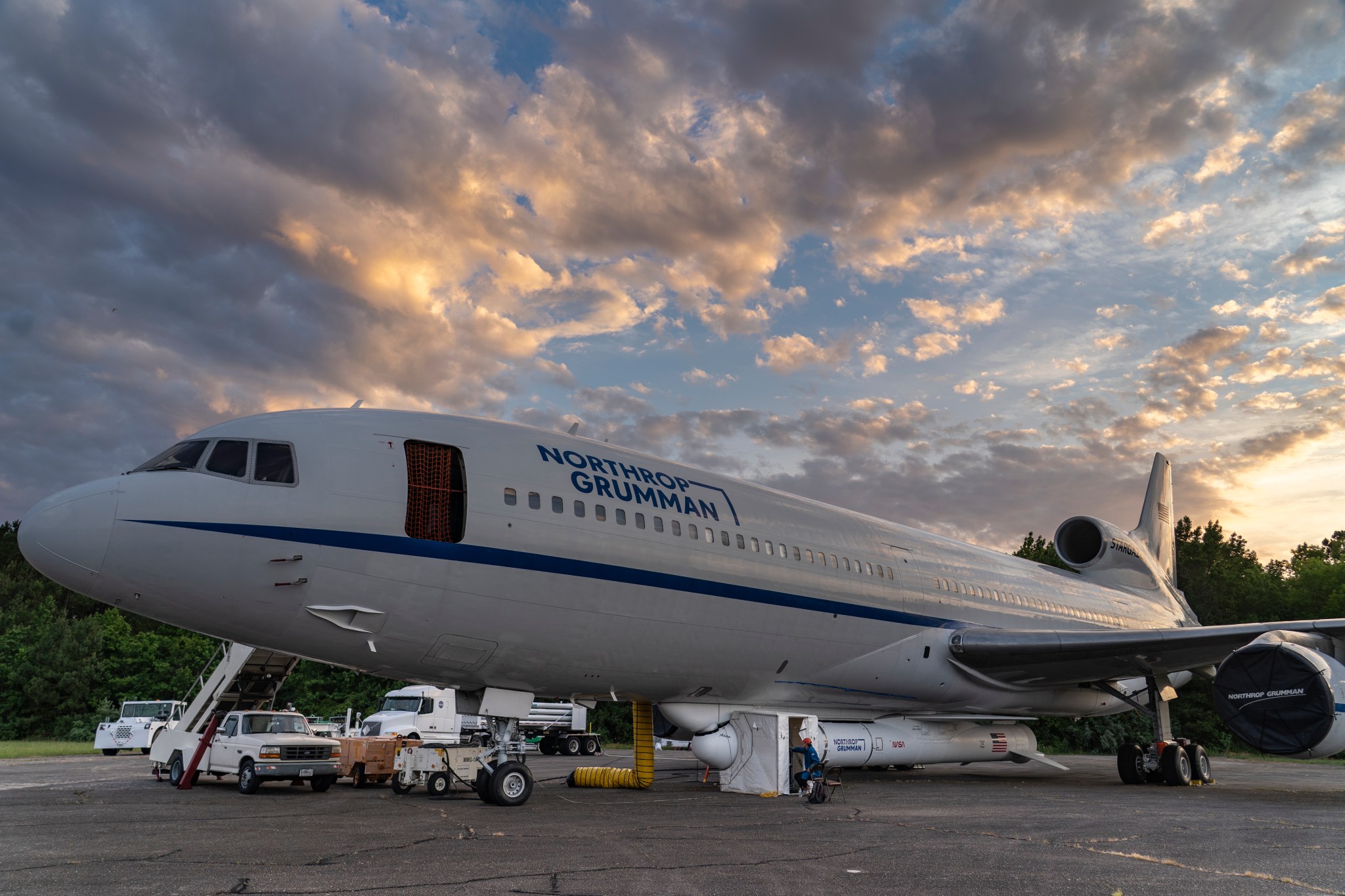
The spacecraft will ride to space on a Northrop Grumman Pegasus XL rocket, an air-launched vehicle carried beneath the company’s Stargazer aircraft. The combination of aircraft and rocket is intended to provide a flexible launch capability, with Stargazer releasing Pegasus at altitude before the rocket ignites and continues to orbit.
Once in space, LINK will begin a carefully planned sequence to find and approach Swift, match its orbit, and grapple it. Unlike many modern satellites that include docking fixtures or servicing interfaces, Swift was not built with robotic capture in mind. That makes the task significantly more challenging: the servicer must rely on autonomous guidance and precision maneuvering to secure a safe hold without damaging the observatory.
If LINK succeeds, the mission would mark a notable milestone for the space industry. It would be the first time a commercial robotic servicing vehicle has captured a NASA spacecraft that is both uncrewed and not originally designed for on-orbit servicing. Beyond preserving Swift’s ability to study the high-energy universe, the demonstration could help validate techniques needed to maintain or reposition aging satellites—capabilities increasingly seen as critical as Earth orbit becomes more crowded.
NASA is directing the public to the Swift blog for continuing updates as the launch window approaches and the mission begins its high-stakes attempt to give the long-running observatory more time in space.