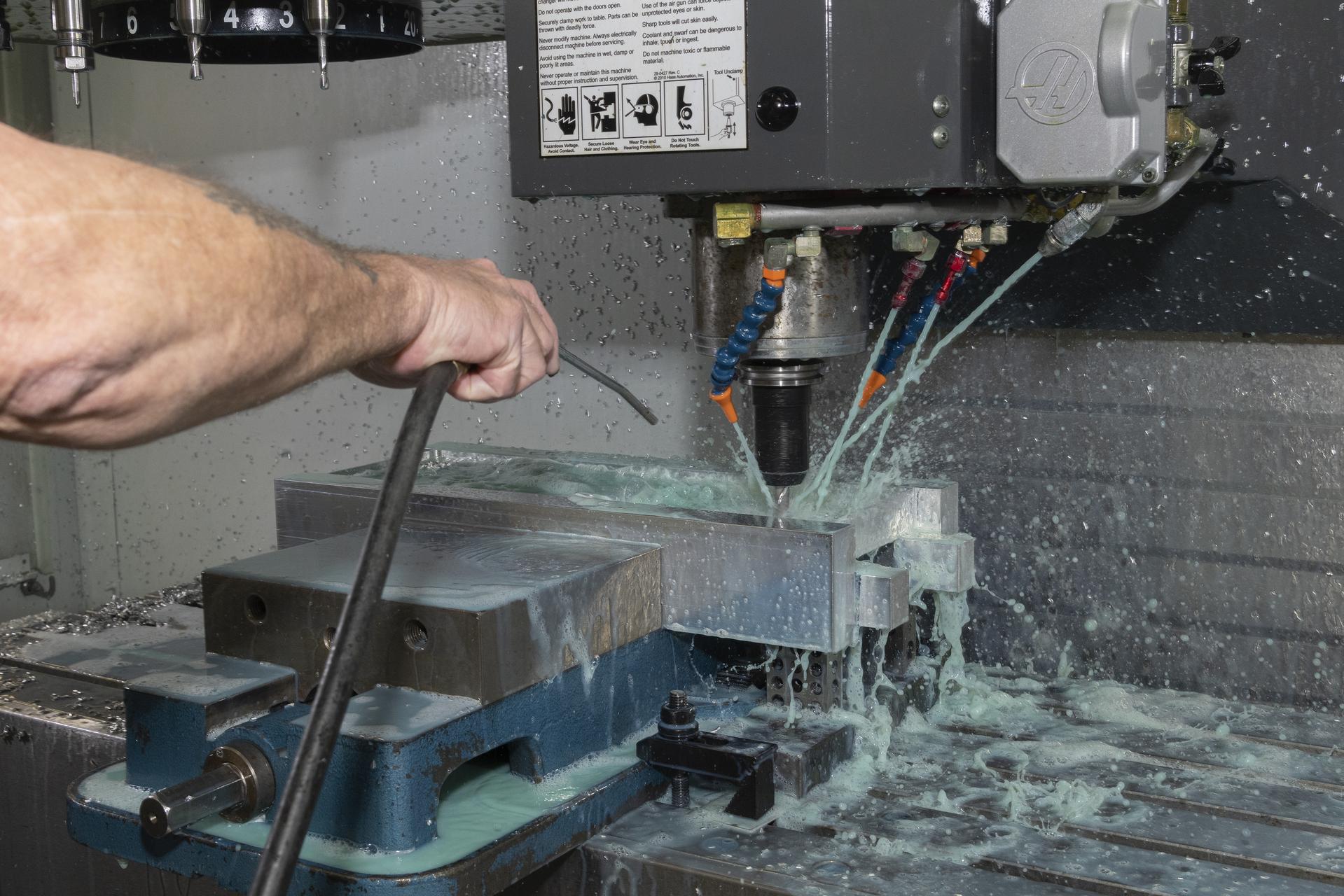
Long before a NASA research aircraft ever leaves the runway, a quieter kind of flight test is already underway inside the shops at NASA’s Armstrong Flight Research Center in Edwards, California.
Long before a NASA research aircraft ever leaves the runway, a quieter kind of flight test is already underway inside the shops at NASA’s Armstrong Flight Research Center in Edwards, California. There, the center’s Experimental Fabrication Branch turns early-stage engineering ideas into the physical hardware that makes cutting-edge aviation experiments possible—often on tight timelines and always under strict safety requirements.
Operating as a full-service manufacturing, modification, and repair hub for Armstrong’s fleet of research and science aircraft, the branch provides the hands-on capabilities that bridge design and flight operations. Its technicians are trained across a wide spectrum of advanced manufacturing methods, including precision machining, sheet-metal forming, aircraft tubing work, welding, additive manufacturing, composite fabrication, and structural repair and modification. That range allows the team to produce one-off components and complex assemblies not only for aircraft, but also for ground-based research systems that support NASA’s broader technology development efforts.
The work demands both craftsmanship and engineering discipline. The branch’s engineering technicians—many with decades of experience as master fabricators—build rapid prototypes, custom parts, and flight-critical structures that must perform reliably in demanding test environments. From hand-shaped composite components to tightly toleranced milled parts, each item is produced to meet NASA’s rigorous performance and safety standards, with mission success as the driving requirement.
This in-house capability is central to Armstrong’s research model. Rather than passing designs through multiple external contractors, the fabrication team is embedded early in the process and remains involved through final assembly and installation on the aircraft. That continuity helps streamline communication with engineers and flight operations personnel, reduces the risk of mismatches between digital designs and real-world hardware, and can shorten development schedules.
A recent example came from autonomous-flight research supported by the AIRVUE project—short for Airborne Instrumentation for Real-world Video of Urban Environments. After Armstrong teams developed the concept for an AIRVUE sensor pod, Experimental Fabrication took the digital design and produced a working structure, ensuring it satisfied strict safety requirements before it was cleared for flight testing. The result was not just a prototype, but a mission-ready system built to operate in real flight conditions.
The branch relies on modern computer-aided design and manufacturing tools to move quickly from models to parts. Software suites such as Pro E/Creo, MasterCam, and SolidWorks help translate engineering intent into machinable geometries, fabrication plans, and finished hardware—tightening the feedback loop between design and production.
Recent efforts underscore the group’s continuing impact, including fabrication of advanced wing models and production of custom lightweight aircraft floorboards—projects that illustrate how seemingly small components can be pivotal in aircraft research and technology demonstrations.
The Experimental Fabrication Branch also extends its influence beyond NASA’s gates. As part of Armstrong’s STEM engagement, technicians bring mobile fabrication equipment to local robotics competitions, where they help repair student-built robots and demonstrate machining and welding techniques. The outreach offers students a direct look at real-world manufacturing skills and highlights how those skills support aerospace innovation.
Whether enabling experimental aircraft programs, supporting new technology demonstrations, or mentoring future engineers and technicians, the Experimental Fabrication Branch remains a behind-the-scenes engine of progress—helping NASA advance safer, more efficient, and more sustainable aviation for the public.