From ancient Rome to modern Britain, graffiti has carried political dissent in public view, blurring the line between vandalism and free expression.
For a decade, a line of black spray paint has greeted me almost daily on a railway bridge near my home: “BREXIT WAS SOLD TO US BY LIARS.” It sits high above the pavement, beyond easy reach of cleaners, and over time it has become as fixed in my mental map as the corner shop or the local pub. To some passers-by it is nothing more than damage to public property. Yet it can also be read as something else: an unsanctioned message in a shared space, a blunt form of political commentary that bypasses formal channels.
That tension—between vandalism and public expression—runs through the long history of graffiti. Monuments, palaces and statues typically project authority and commemorate the powerful. Graffiti, by contrast, often preserves the voices of people with little access to official platforms. Even the word itself has an archaeological pedigree: graffiti entered English in the mid-19th century, derived from the Italian graffito, “a scratch,” a term used to describe markings found on ancient walls.
Those ancient walls include some of the richest archives of political scribbling ever uncovered. In Pompeii, destroyed in AD 79, excavations have revealed thousands of inscriptions: painted promotions for electoral candidates alongside insults, satire and jokes aimed at would-be leaders and public officials. Written sources from the Roman world suggest that such public writing was not confined to Pompeii. People in Rome voiced anger at rulers by marking walls and columns, and even by hanging signs around the necks of statues—turning civic symbols into unwilling billboards for dissent.
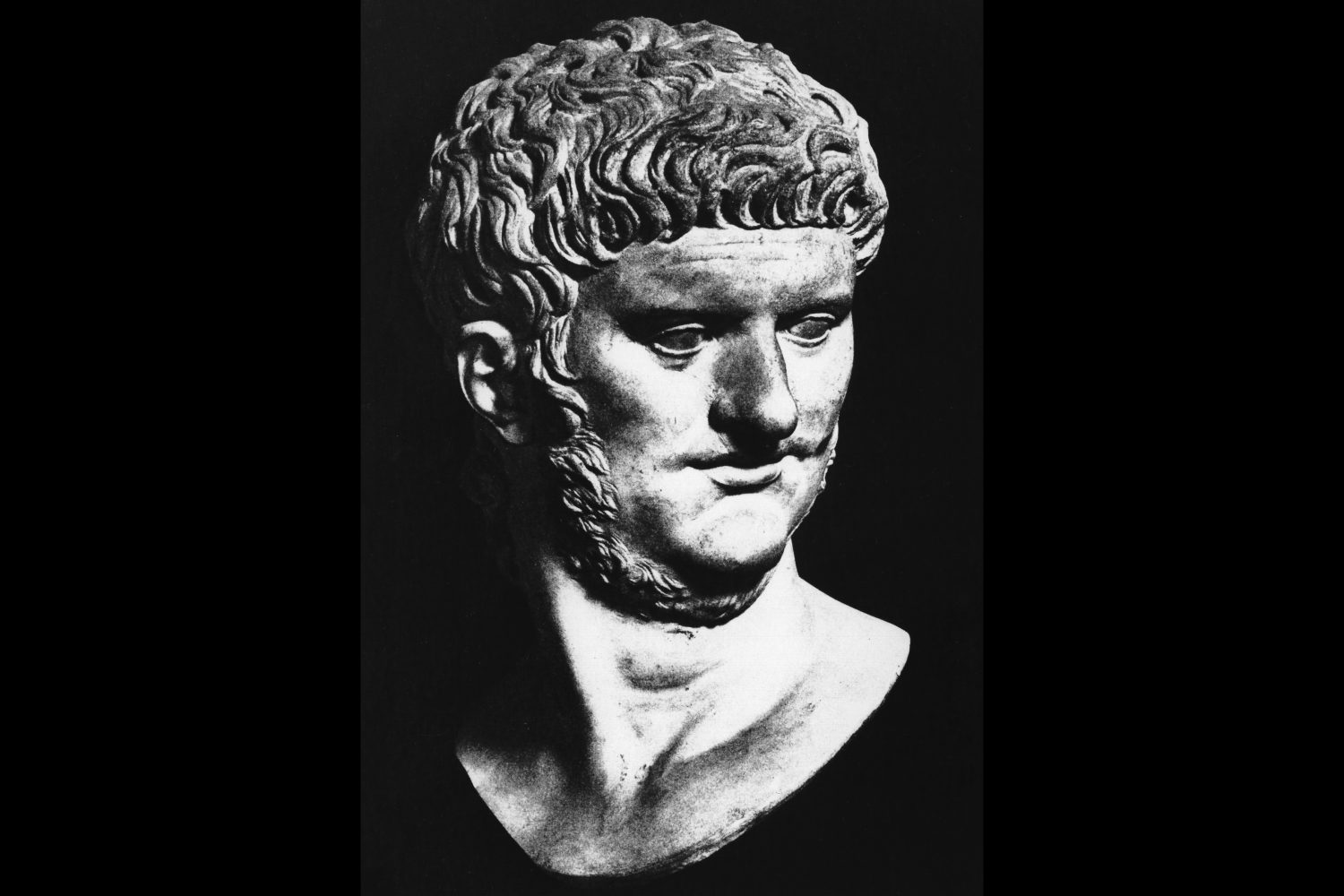
Classical authors also hint at the political charge these messages could carry. Plutarch reported that Brutus was spurred toward joining the conspiracy against Julius Caesar after encountering graffiti secretly written at night. Suetonius described the atmosphere late in Nero’s rule, when the emperor’s reputation deteriorated amid especially high food prices. In that climate, he wrote, mocking slogans appeared around the city attacking imperial extravagance.
Graffiti’s impact has always depended in part on who can read it. In ancient Rome, literacy is estimated at only about 10 per cent. Centuries later, the balance had shifted. By the 18th century, around half of Paris’s population could read, and in the years leading up to the French Revolution of 1789, the statue of King Louis XV—on the site that is now the Place de la Concorde—became a frequent target for anti-monarchical scrawls. Authorities responded with railings and constant military guards, a sign that a few words in the wrong place could be felt as a real political threat.
In wartime and conflict, graffiti has repeatedly served as both proof and propaganda. When Soviet forces captured Berlin in May 1945, they covered the Reichstag with names and triumphal slogans; those marks were later preserved in the renovated building. Elsewhere, writing on walls can demarcate identity and territory: in Northern Ireland, graffiti and murals have long signalled political stance, religious affiliation and the boundaries of neighbourhood control.
Sometimes the most striking examples are intimate rather than triumphant. At Richmond Castle in North Yorkshire during the First World War, conscientious objectors were imprisoned—some pressured into service, others threatened with execution for refusing. On one wall, a detainee, Percy F Goldsbrough of Pontefract, left a dated record of his predicament: on 11 August 1916 he wrote that he was confined in a cell for “refusing to be made into a soldier.”
As long as people live in societies—and disagree about how those societies are run—graffiti is likely to endure. It carries dissent, ridicule and protest, and even the act of putting a name on a wall can amount to a political statement. Such words may be erased and rewritten, or, occasionally, protected as historical evidence. Either way, they offer something the grand narratives often miss: traces of ordinary lives and unfiltered opinions, set down in public for anyone passing by.
Why it matters
Graffiti is often dismissed as defacement, but history shows it can also function as a grassroots record of political feeling—especially for people excluded from formal power. From Nero’s Rome to revolutionary Paris and modern conflicts, markings on walls have signalled legitimacy crises, territorial tensions and resistance. What gets scrubbed away—and what gets preserved—can shape how future generations understand public sentiment in pivotal moments.