NASA’s plans to return to the Moon—and ultimately push onward to Mars and other destinations—depend on more than rockets and landers.
NASA’s plans to return to the Moon—and ultimately push onward to Mars and other destinations—depend on more than rockets and landers. They also hinge on whether the nuts, bolts, electronics, and flexible materials inside spacecraft can survive some of the harshest temperatures found anywhere humans hope to operate.
In deep cold, familiar materials can behave in unfamiliar ways. Rubber that bends at room temperature can become brittle enough to crack. Circuit boards can stop working. Electrical joints can stiffen, freeze, and fracture. That vulnerability is especially relevant for lunar surface operations at the Moon’s south pole, where NASA is targeting long-term activity and where temperatures can swing dramatically between intense daytime heat and punishing nighttime cold. Understanding exactly how mission hardware responds across that range is a prerequisite for designing reliable structures and systems.
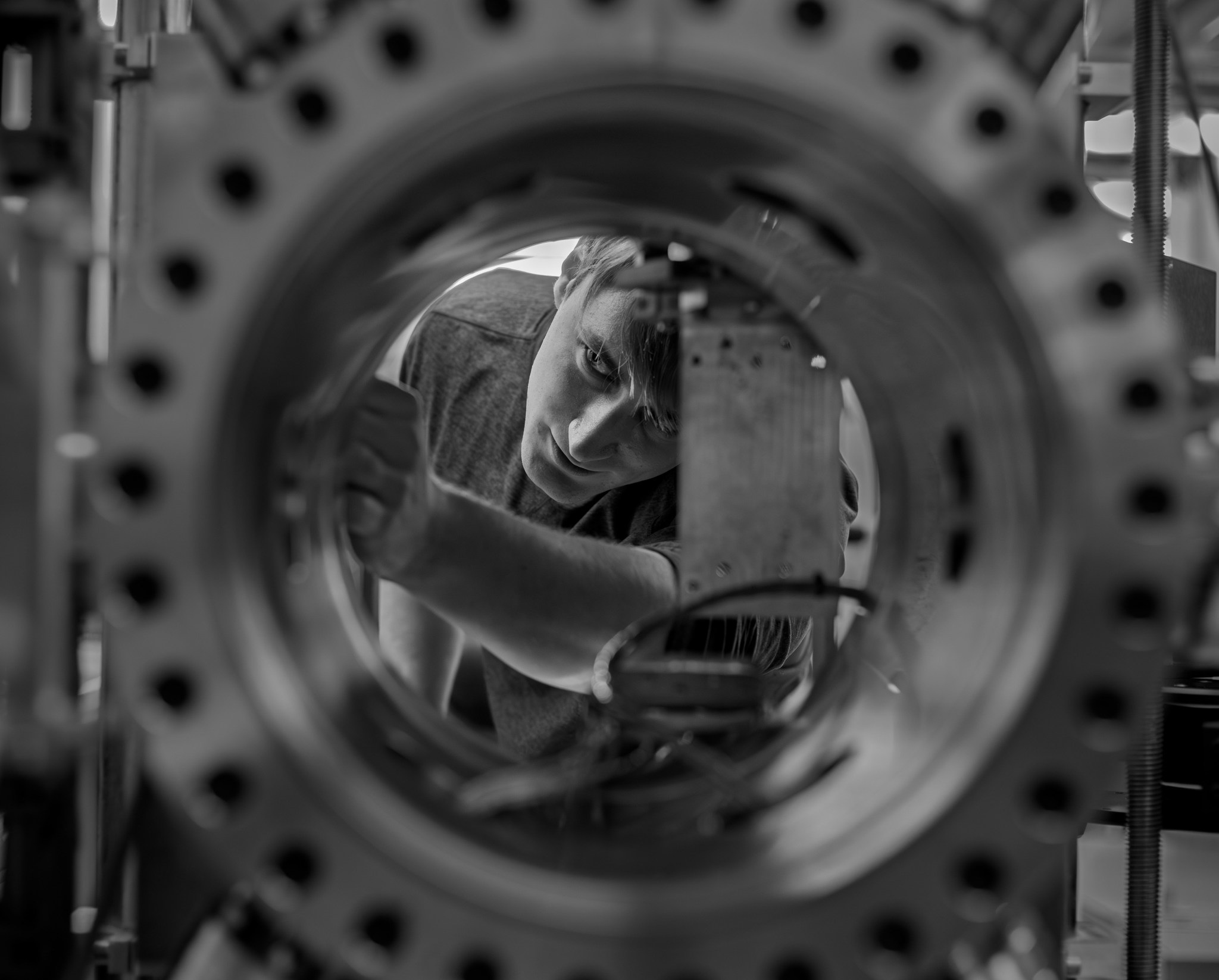
To probe those extremes on Earth, engineers at NASA’s Glenn Research Center in Cleveland have built a new testing system called the Lunar Environment Structural Test Rig, or LESTR. The device is designed to evaluate materials, electronics, and other flight hardware at temperatures down to 40 kelvin—about minus 388 degrees Fahrenheit—conditions comparable to the cold lunar night.
“Just as no building ever gets built without knowing exactly how the construction materials behave, no space mission is complete without a robust structural design that hinges on knowing how the materials used within it behave,” said Ariel Dimston, the rig’s technical lead at NASA Glenn.
Historically, cryogenic testing has often relied on liquid cryogens—ultracold fluids such as liquid nitrogen, liquid hydrogen, or liquid helium—stored in specialized containers and fed into test setups to pull heat out of samples. While effective, those fluids introduce complications: they require dedicated handling equipment and add safety considerations and operational overhead.
LESTR takes a different route. Instead of chilling test articles with cryogenic liquids, the system creates a dry vacuum environment and uses a high-powered refrigerator known as a cryocooler to remove heat. The result, Dimston said, is a “dry” cryogenic mechanical test environment that avoids the logistical and safety burdens tied to working with cryogenic fluids. Without liquid cryogens, teams can dispense with equipment such as dewars, wet heaters, and valves. They also no longer need oxygen displacement sensors and other safety systems that become necessary when large volumes of cryogenic liquids are present—reducing time, complexity, and cost while broadening the temperature range available for testing.
NASA is already putting the new capability to work. Dimston’s team has been evaluating yarns that could one day be woven into advanced fabrics for next-generation spacesuits. The group is also focused on materials that could improve rover mobility, including a class of metals called shape memory alloys. These alloys can return to their original form after being bent or stretched and after cycling through heating and cooling—traits that could help future lunar and Martian rovers handle jagged, uneven terrain without the punctures and flats that plague traditional tires.
NASA researchers spent more than two years designing and assembling the first system, known as LESTR 1, and are now building a matching unit, LESTR 2. In collaboration with Fort Wayne Metals, NASA delivered LESTR 1 to the company’s facility in Fort Wayne, Indiana, where it will be used to evaluate shape memory alloy materials under lunar-like thermal extremes.
“We are working to develop a next-generation shape memory alloy that is capable of functioning at temperatures down to 40 kelvin, one of the coldest regions we could go to with rover capability,” said Dr. Santo Padula II, LESTR’s principal investigator at NASA Glenn. With LESTR, he added, researchers can directly measure how these alloys behave in the coldest environments expected on the Moon and Mars—data that could shape the durability of future surface missions.