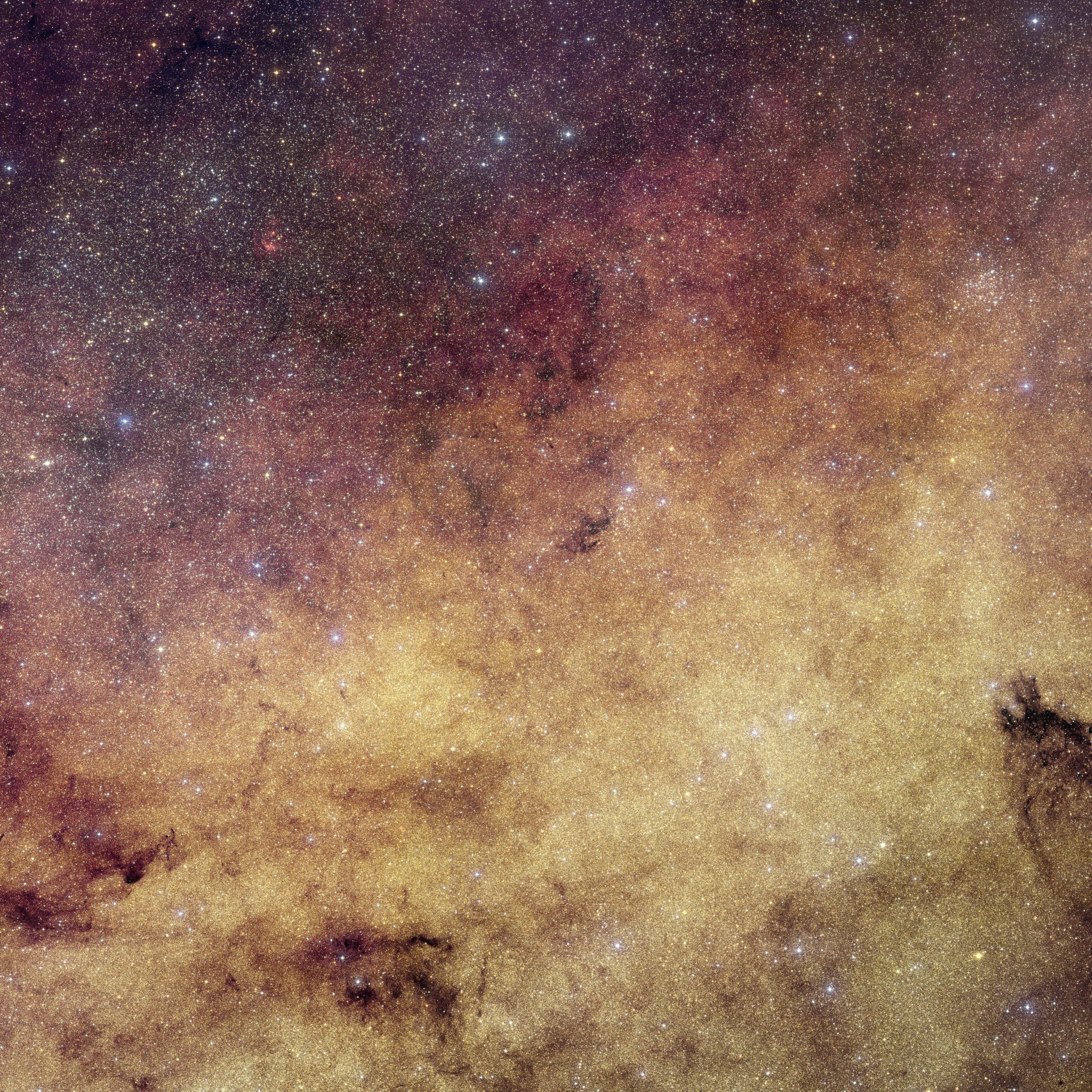
Europe’s Euclid space telescope, a European Space Agency mission supported by contributions from NASA, has delivered a fresh view into the crowded central region of the…
Europe’s Euclid space telescope, a European Space Agency mission supported by contributions from NASA, has delivered a fresh view into the crowded central region of the Milky Way in an image made public on June 24, 2026. The new observation targets the galaxy’s bustling core, where dense star fields and interstellar material make detailed mapping both challenging and scientifically rich.
The area captured by Euclid is not just a showcase of the mission’s capabilities—it also dovetails with plans for NASA’s upcoming Nancy Grace Roman Space Telescope. Roman, scheduled to launch later this summer, is expected to carry out a major survey program focused in part on this same region. By intentionally overlapping Euclid’s pointing with a future Roman field, scientists gain an early reference dataset that can be compared directly with Roman’s forthcoming observations.
Researchers say this “early look” provides a valuable head start for a central Roman survey, enabling astronomers to begin characterizing the field and refining analysis approaches before Roman even begins routine science operations. The alignment of the two missions is also designed to amplify what each can accomplish on its own: Euclid’s view can help contextualize and complement Roman’s later measurements, while Roman’s data will extend and deepen the scientific return from Euclid’s initial pass.
The image was produced by the Euclid Consortium and ESA, with NASA also credited in the release. Additional data and support came from the Canada-France-Hawaii Telescope (CFHT). The processing work for the released image was carried out by J.-C. Cuillandre and E. Bertin at CEA Paris-Saclay.
By pairing Euclid’s newly released Milky Way core observation with the prospect of Roman’s forthcoming survey, astronomers anticipate being able to extract more information about this complex region than either observatory could deliver independently—turning a single image into a strategic stepping-stone for the next major space-based study of our galaxy’s center.