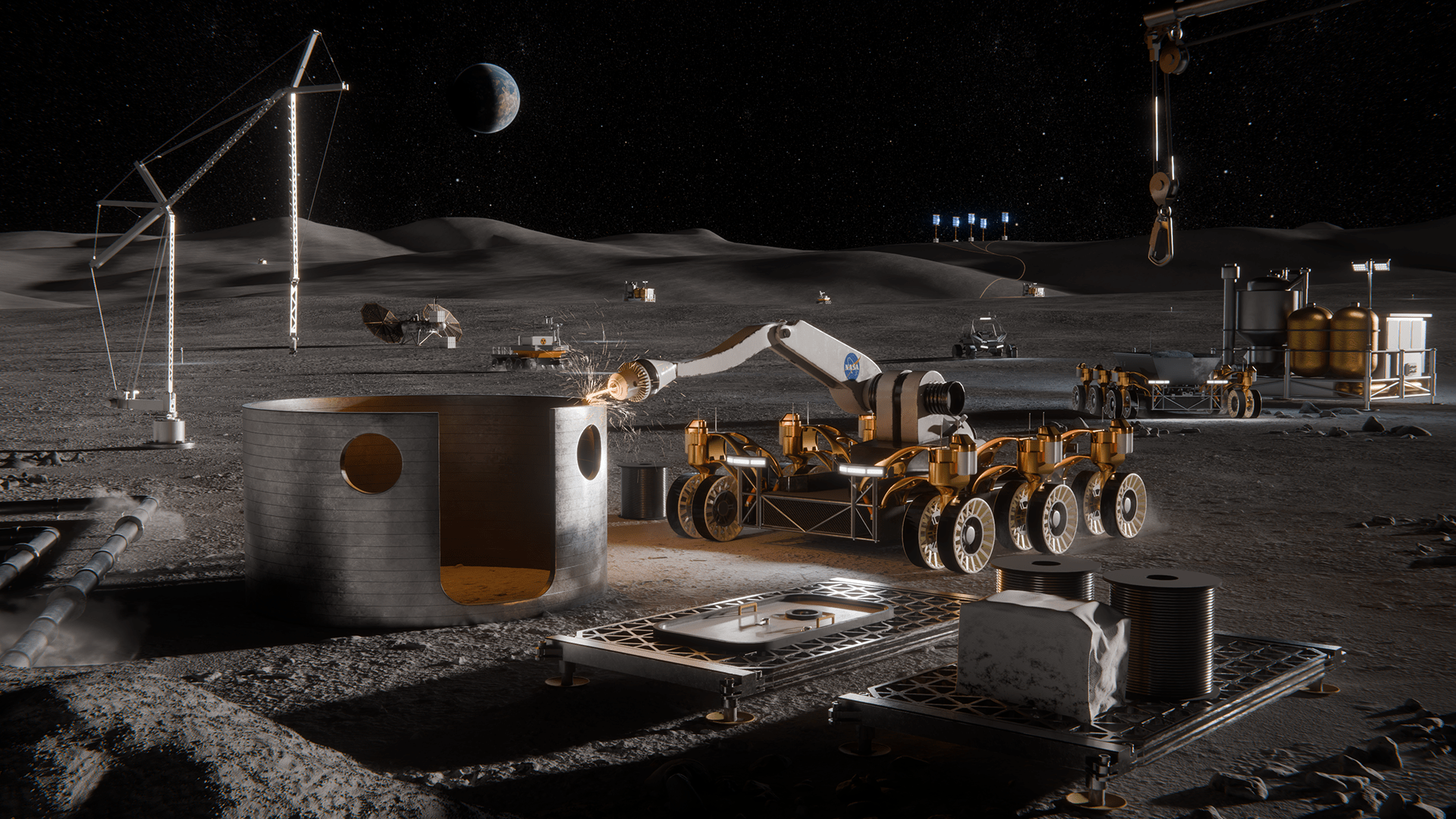
NASA has opened a new pathway for industry and research teams to help prepare the technologies needed to support sustained activity on and around the Moon.
NASA has opened a new pathway for industry and research teams to help prepare the technologies needed to support sustained activity on and around the Moon. On June 29, 2026, the agency released a draft Broad Agency Announcement (BAA) under Next Space Technologies for Exploration Partnerships (NextSTEP‑3), Appendix A, aimed at speeding development of key systems for lunar surface operations and the wider cislunar infrastructure.
The draft solicitation concentrates on technologies that NASA considers essential—but not yet mature enough—for near‑term missions. The goal is to reduce technical risk and push competing approaches through targeted ground testing, raising them to Technology Readiness Level (TRL) 5–6. That benchmark generally corresponds to components and systems validated in relevant environments and ready to move toward higher‑fidelity demonstrations.
NASA’s call highlights several priority areas where capability gaps remain. One focus is vertical solar arrays, a power approach expected to be important for lunar surface installations where low sun angles, terrain shadows, and long‑duration operations can complicate energy generation. Another target is in‑situ resource utilization (ISRU) oxygen production, a cornerstone capability for producing breathable oxygen and potential propellant oxidizer from lunar materials, thereby reducing reliance on resupply from Earth.
The draft BAA also seeks advances in Stirling radioisotope generators, which could provide dependable power independent of sunlight—an important consideration for shadowed regions and for operations during the long lunar night. In addition, NASA is looking to mature in‑space manufacturing technologies that could enable fabrication and repair beyond Earth, improving resiliency and lowering logistical demands by producing parts or structures closer to where they are needed.
Advanced nanomaterials production is also included in the solicitation’s scope. By fostering progress in nanoscale material systems and manufacturing methods, NASA aims to unlock performance gains—such as improved strength‑to‑weight ratios, thermal characteristics, or other properties—that could enhance a range of lunar and in‑space hardware.
Across all these areas, the draft NextSTEP‑3 Appendix A effort is designed to identify where further risk reduction is required and to support ground‑based testing campaigns that can distinguish the most promising solutions. NASA frames the work as directly supporting the agency’s Moon Base technology objectives, with selected projects expected to demonstrate critical systems and accelerate the readiness of enabling capabilities.
The announcement is posted as the Lunar Enabling Infrastructure Accelerator (LEIA) BAA and is available on SAM.gov as “NextSTEP‑3 Appendix A – Draft Solicitation.”