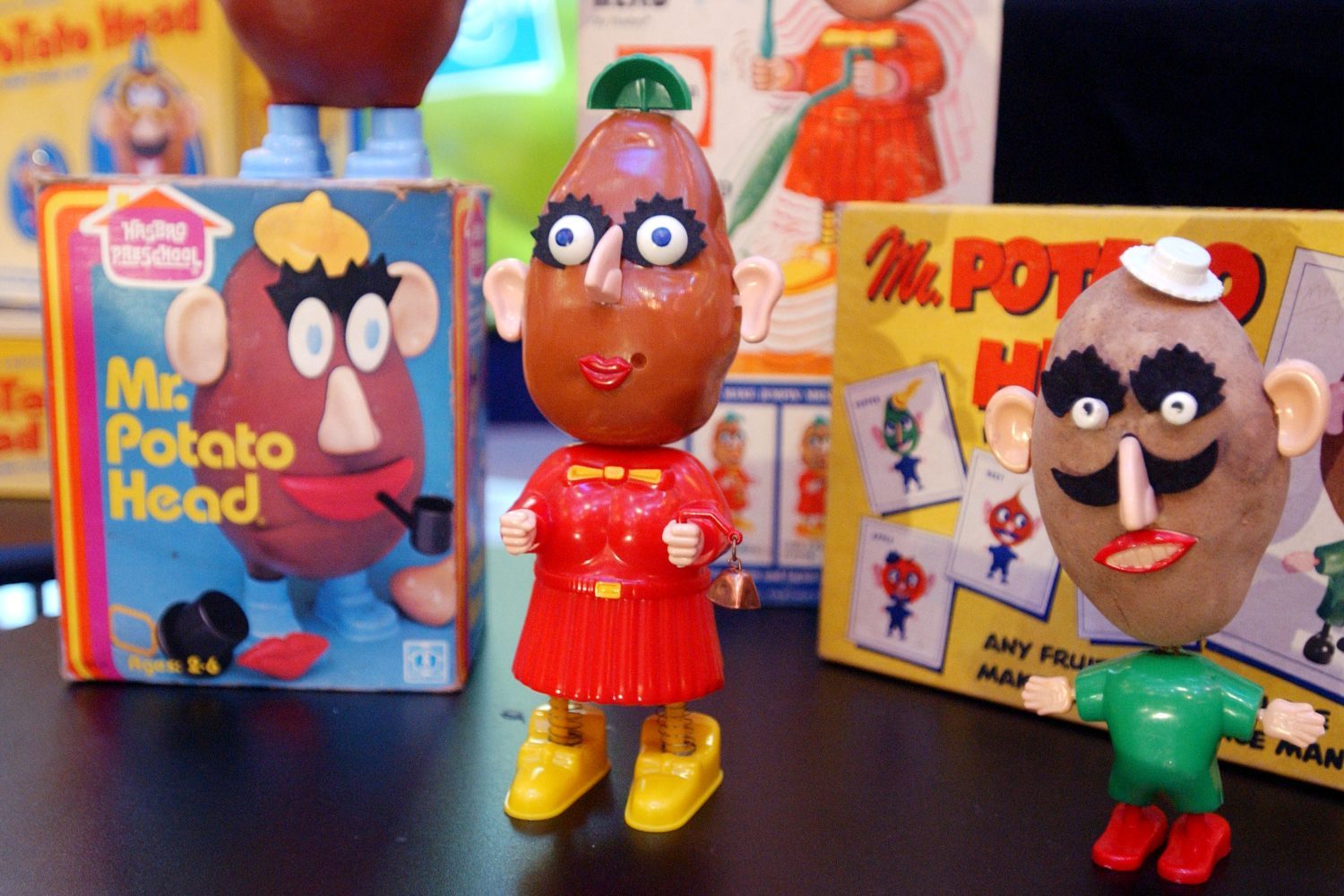
A pioneering TV ad for Mr Potato Head helped usher in child-targeted toy marketing, proving kids could drive sales through “pester power” and reshape consumer culture.
Television transformed American consumer culture in countless ways, but one of its earliest, and most revealing, revolutions arrived in the toy aisle. On 30 April 1952, U.S. viewers saw something they had never encountered before: a toy commercial designed not for the adults holding the purse strings, but for the children who would want the product.
The advertisement—now considered a landmark moment in broadcasting and marketing history—promoted a new novelty called Mr Potato Head. It may have lasted only a brief slot in the schedule, but its effects rippled far beyond the 98 cents families paid to bring the “funny face man” home.
Before television, toy advertising largely spoke in plain terms to parents. Radio promotions tended to focus on practical details and value, reflecting the reality that adults made the purchasing decisions. Television, however, introduced moving images, sound, and a direct pipeline into family living rooms. Marketers quickly recognized that a persuasive pitch could bypass parents entirely by recruiting their children as advocates.
Mr Potato Head was perfectly suited to this new medium. Created in 1949 by American inventor George Lerner and later sold to Hassenfeld Brothers—the company that would eventually become Hasbro—the toy was originally a kit of plastic facial features and accessories. Buyers received items such as eyes, ears, noses, mouths, glasses, hats, moustaches, plus hands and feet. What they did not receive was the “head” itself.
Instead, children were meant to raid the kitchen for a real vegetable, typically a potato, and stick the parts directly into it. Potatoes were chosen because they were inexpensive and commonly available year-round. But the manufacturer also encouraged experimentation: print promotions touting the toy as a “new TV star” suggested that everything from bananas and beetroots to apples, oranges, and cucumbers could become canvases for “thousands of funny faces.” In other words, the original Mr Potato Head invited kids to quite literally play with their food.
That premise may help explain why the first television toy ad targeted children so explicitly. Adults, confronted with the idea of puncturing produce for entertainment, might have rejected it as frivolous or wasteful. Children, by contrast, could be persuaded to want it intensely—and then to campaign for it at home. This strategy became a defining feature of modern marketing, later labelled “pester power” or the “nag factor.”
The approach worked. In its first year on the market, more than 1 million Mr Potato Head kits were sold, demonstrating that children had become a newly powerful consumer audience during the postwar economic boom. The toy business followed quickly: by the end of the 1950s, television screens and store shelves were filled with now-classic products including Play-Doh, the Frisbee, the Hula Hoop, Slinky, and Barbie.
Mr Potato Head itself expanded into a broader cast. In 1953, the brand added Mrs Potato Head, and later introduced Brother Spud and Sister Yam. The growing “family” brought along extras such as cars, boat trailers (and a shopping trailer for Mrs Potato Head), as well as pet companions called the Spud-ettes.
But the food-based design had a messy downside. Parents complained about the inevitable aftermath—forgotten, decaying fruits and vegetables turning up around the house. In response, the product was redesigned in 1964 to include a reusable plastic body, reducing reliance on kitchen produce and helping the toy evolve into the version most consumers recognize today.
Why it matters
The first TV toy commercial signaled a shift in who advertising was built to influence, helping establish children as a distinct consumer market in mid-century America. It also marked the early rise of “pester power,” a tactic that still shapes debates over marketing ethics and childhood consumption. The story of Mr Potato Head shows how new media can rapidly rewire household economics—and how consumer pushback can force product redesign.