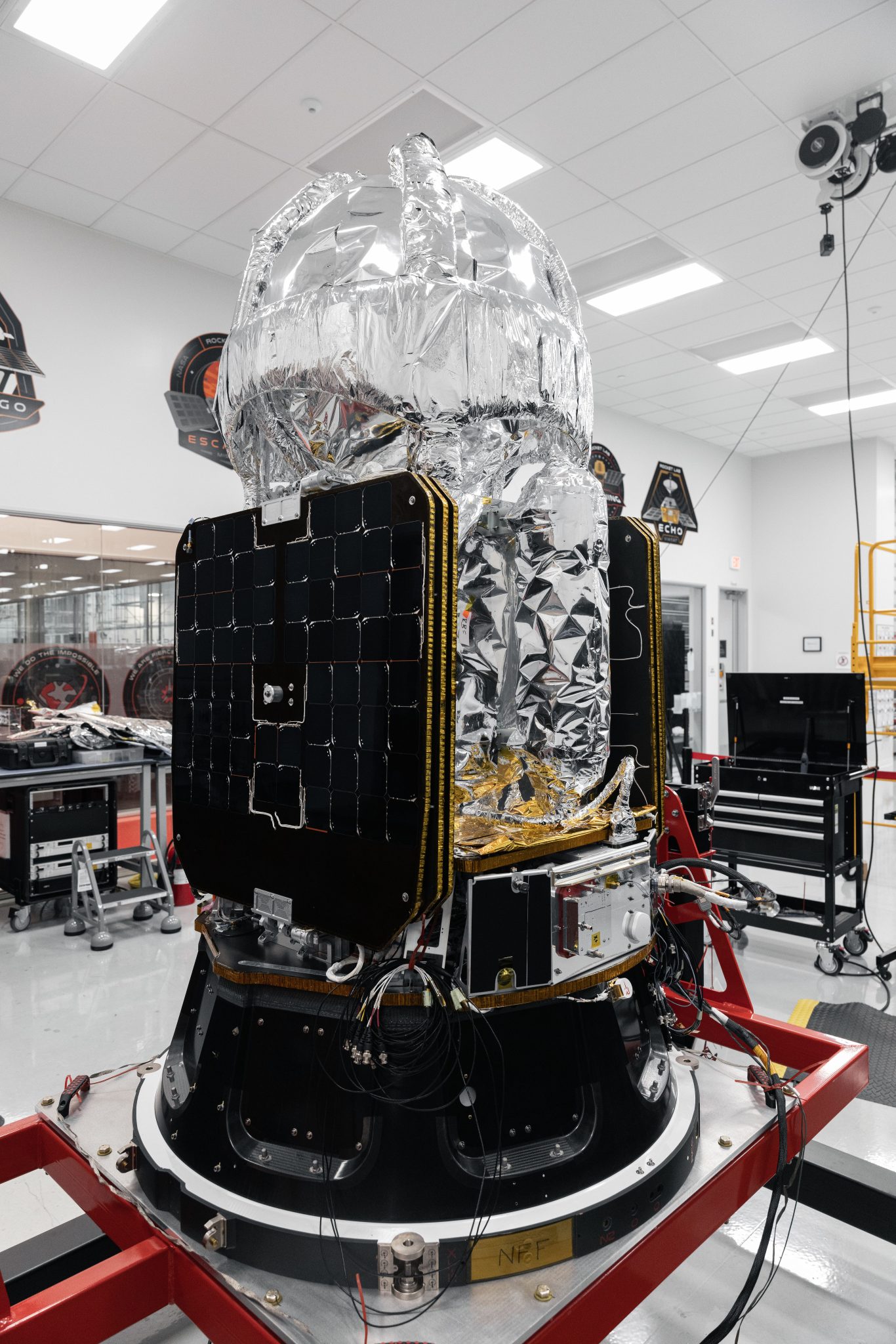
NASA is preparing to put a critical piece of future deep-space infrastructure to the test: the ability to store and handle super-cold propellants in orbit.
NASA is preparing to put a critical piece of future deep-space infrastructure to the test: the ability to store and handle super-cold propellants in orbit. Working with Florida-based Eta Space, the agency is readying an on-orbit experiment called the Liquid Oxygen Flight Demonstration, known as LOXSAT, designed to mature cryogenic fluid management—the set of techniques needed to keep cryogenic propellants usable in microgravity for long periods.
The goal is to pave the way for in-space propellant depots, effectively orbital refueling stations that could extend the reach of spacecraft traveling to the Moon, Mars, and beyond. Such depots would rely on cryogenic propellants like liquid oxygen, but keeping those fluids stable in space poses challenges that are difficult to replicate fully on the ground.
LOXSAT is set up as a nine-month mission in low Earth orbit and will carry out demonstrations of 11 separate cryogenic fluid management technologies. Together, they are aimed at the central obstacles of using cryogens off Earth: limiting propellant loss from boiloff, moving propellant from one tank to another, controlling and maintaining tank pressure, and accurately determining how much propellant remains in a tank when gravity can’t reliably pull liquids to the bottom.
Eta Space built the LOXSAT payload through a NASA “Tipping Point” initiative, a public-private partnership model intended to accelerate promising space technologies toward operational use. For the spacecraft and ride to orbit, NASA is turning to Rocket Lab, which is supplying both the satellite platform and launch services.
The LOXSAT payload has already been integrated onto Rocket Lab’s Photon satellite bus. Launch is scheduled aboard the company’s Electron rocket from Launch Complex 1 on New Zealand’s Mahia Peninsula, with liftoff planned no earlier than July 17.
Once in orbit, LOXSAT will collect data to evaluate how well the technologies perform in the space environment. That information is expected to inform the design of future orbital depots capable of storing cryogenic propellant for extended periods and enabling refueling operations—a capability that could reduce the amount of fuel spacecraft must carry from Earth and support longer, more flexible mission architectures.
NASA’s LOXSAT effort draws expertise from across the agency’s cryogenics community. The project team includes personnel from the Cryogenic Fluid Management Portfolio Project with NASA’s Marshall Space Flight Center in Huntsville, Alabama; Glenn Research Center in Cleveland; and Kennedy Space Center in Florida.
The broader cryogenic technology portfolio falls under NASA’s Space Technology Mission Directorate and encompasses more than 20 individual technology development efforts. LOXSAT represents a high-profile step within that work, offering a direct, in-space check of the hardware and methods that could eventually make orbital “gas stations” a practical part of deep-space exploration.