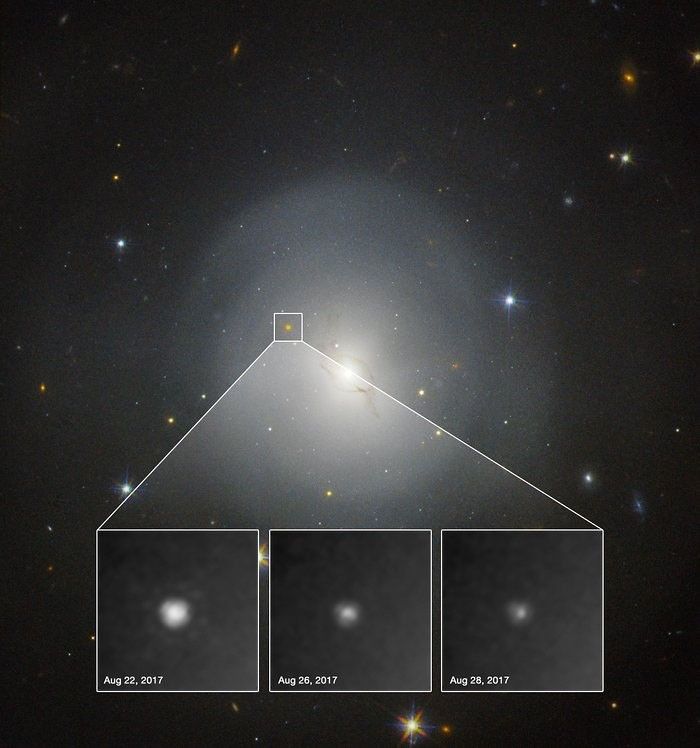
NASA-backed Kilonova Catcher mobilizes amateur astronomers worldwide to rapidly follow up neutron-star mergers and other transients, feeding observations into the GCN.
Neutron stars are among the universe’s strangest objects: ultra-compact remnants of massive stars, packing enormous mass into a body roughly the size of a city. When two of them spiral together and merge, the collision can produce a rapidly fading burst of light known as a kilonova. These short-lived flares are more than cosmic spectacle—they are a key site where nature manufactures many heavy elements, including much of the gold and platinum found throughout the universe.
The challenge is timing. Kilonovae dim dramatically over the course of just a few days, so astronomers must locate them quickly and monitor how their brightness and color evolve. No single telescope can continuously survey the entire sky, and professional facilities are often oversubscribed. That’s where a NASA-supported citizen-science effort called Kilonova Catcher comes in, turning a global community of amateur observers into a fast, coordinated follow-up team.
Kilonova Catcher links volunteers who have access to a telescope equipped with a camera. When gravitational-wave observatories or space-based instruments issue an alert that could indicate a neutron-star merger—or when other transient events are flagged—participants receive guidance on where to point their telescopes. Their job is to help identify the optical counterpart and to track its fading signal, adding critical coverage from locations spread across many time zones.
The network does more than hunt kilonovae. It also performs follow-up observations of gamma-ray bursts, among the most energetic explosions known, and it mobilizes for other brief astrophysical phenomena when opportunities arise.
The project has grown to more than 150 registered members across multiple continents. According to the program, volunteers work in close collaboration with professional astronomers and established observatories. Their contributions have already fed into more than 64 formal notices distributed through NASA’s General Coordinates Network (GCN), the real-time system used by researchers to coordinate transient discoveries and follow-up observations. In some cases, volunteer observers have received authorship credit in peer-reviewed scientific papers that used their data.
Kilonova Catcher participants have also supported other NASA campaigns. During the Artemis II mission, volunteers joined the Impact Flash! observing effort, recording faint, momentary flashes produced when meteoroids strike the Moon.
Looking ahead, the team is preparing for a surge in discoveries expected from NASA’s upcoming Nancy Grace Roman Space Telescope, which is anticipated to generate thousands of new alerts that could benefit from rapid ground-based confirmation and monitoring.
Cristina Andrade, head of operations for Kilonova Catcher at the Minnesota Institute for Astrophysics, said the project highlights how a single merger can be traced across enormous distances through multiple kinds of signals. With observatories poised to deliver unprecedented volumes of data, she emphasized, expanding the pool of people examining the sky and the data is increasingly important—and so is demonstrating that meaningful scientific contributions are not limited by formal background.
The project is co-led by Andrade and principal investigator Dr. Damien Turpin of the French Alternative Energies and Atomic Energy Commission (CEA). Turpin said he is motivated by the skill and persistence of the amateur community, noting that the work depends on their efforts.
Anyone with access to a camera-equipped telescope can apply to participate at https://kilonovacatcher.in2p3.fr/ or by emailing kilonovacatcher@gmail.com.
Why it matters
Kilonovae fade quickly, and missing the first days can mean losing vital clues about how neutron-star mergers unfold and how heavy elements are formed. By coordinating amateur and professional observers worldwide, Kilonova Catcher increases the odds of capturing these rare events in time. With Roman expected to multiply the number of transient alerts, networks like this may become essential infrastructure for modern “multi-messenger” astronomy.