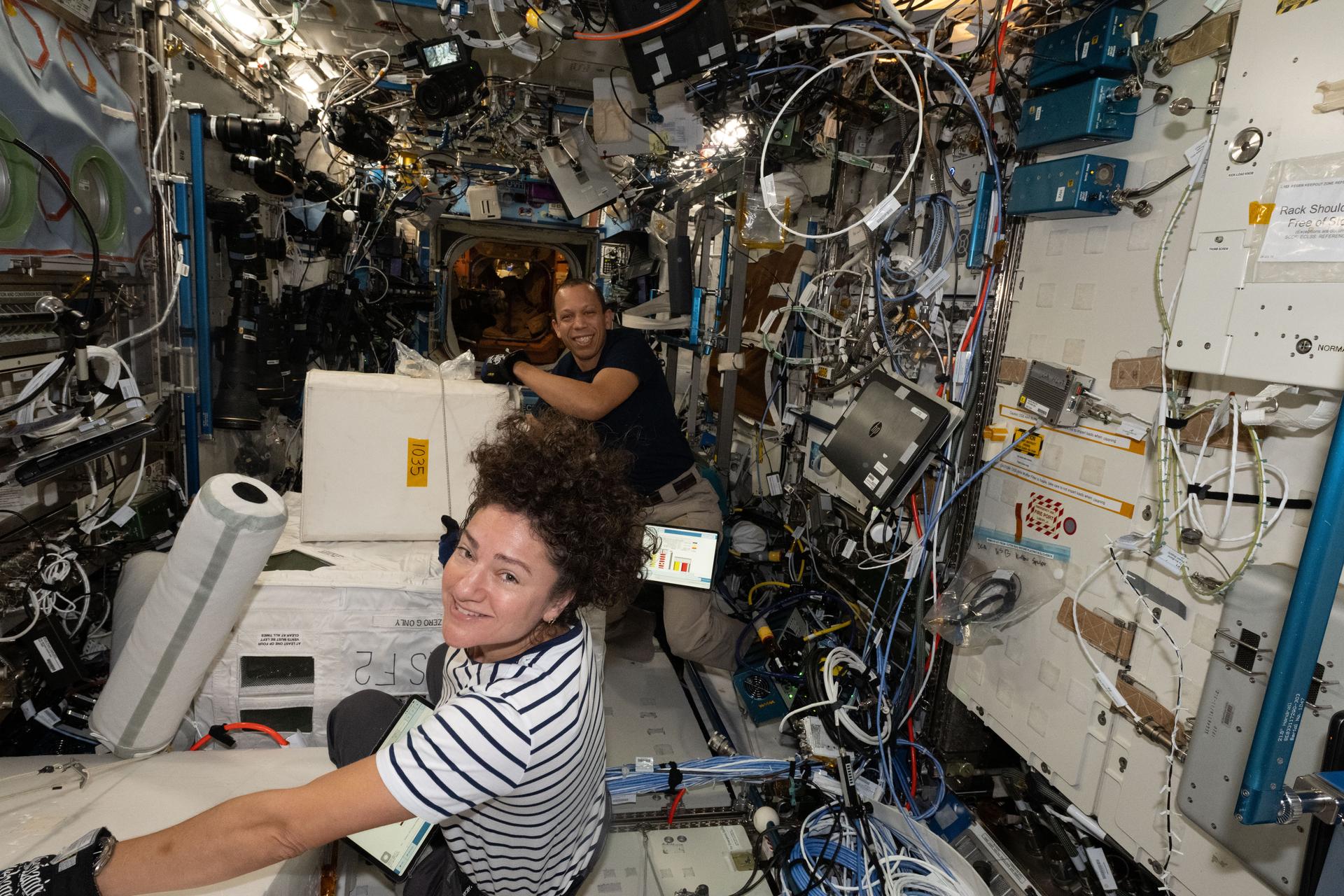
New Jersey students are set to connect with the International Space Station this week as NASA astronauts Chris Williams and Jessica Meir respond to prerecorded questions…
New Jersey students are set to connect with the International Space Station this week as NASA astronauts Chris Williams and Jessica Meir respond to prerecorded questions focused on science, technology, engineering and math. The live Earth-to-space event is scheduled to begin at 12:05 p.m. EDT on Thursday, June 18, and will be streamed on NASA’s Learn With NASA YouTube channel.
The session is being hosted by Newton Public Schools in Newton, New Jersey, and is open to students from kindergarten through 12th grade as well as members of the wider community. Organizers say the downlink is designed to help students better understand what space exploration involves and to spotlight the range of STEM careers that support missions in orbit and beyond.
Media outlets planning to cover the event are required to RSVP by 5 p.m. EDT on Wednesday, June 17. Requests should be directed to Dr. Joseph Piccirillo at Newton Public Schools via phone at 973-383-7392, extension 4229, or by email at jpiccirillo@newtonnj.org.
The conversation with Williams and Meir builds on a long-running tradition of astronauts engaging directly with classrooms while living and working in low Earth orbit. NASA notes that humans have maintained a continuous presence aboard the space station for more than a quarter century, using the orbiting laboratory to evaluate new technologies, carry out scientific research, and refine the operational skills required for more distant expeditions.
Those real-time connections are made possible through NASA’s Space Communications and Navigation capabilities, specifically the Near Space Network, which links crew members with Mission Control in Houston around the clock. The constant communications chain supports daily station operations and allows astronauts to share their work with audiences on the ground, including student groups participating in educational events like the Newton program.
NASA emphasizes that investigations conducted on the station are intended to produce practical benefits on Earth while also serving as preparation for future missions. Research and technology demonstrations in microgravity can inform advances across multiple fields and help validate systems that will be needed for human exploration farther from the planet.
The agency frames these educational contacts as part of a broader push to inspire the next generation of explorers and engineers as NASA pursues its Artemis program. Under Artemis, NASA plans to return astronauts to the Moon, using lunar missions to test equipment and strategies that could eventually support human travel to Mars. By connecting students with astronauts currently working in orbit, NASA aims to offer a direct window into that progression—from today’s research on the space station to the next era of deep-space exploration.