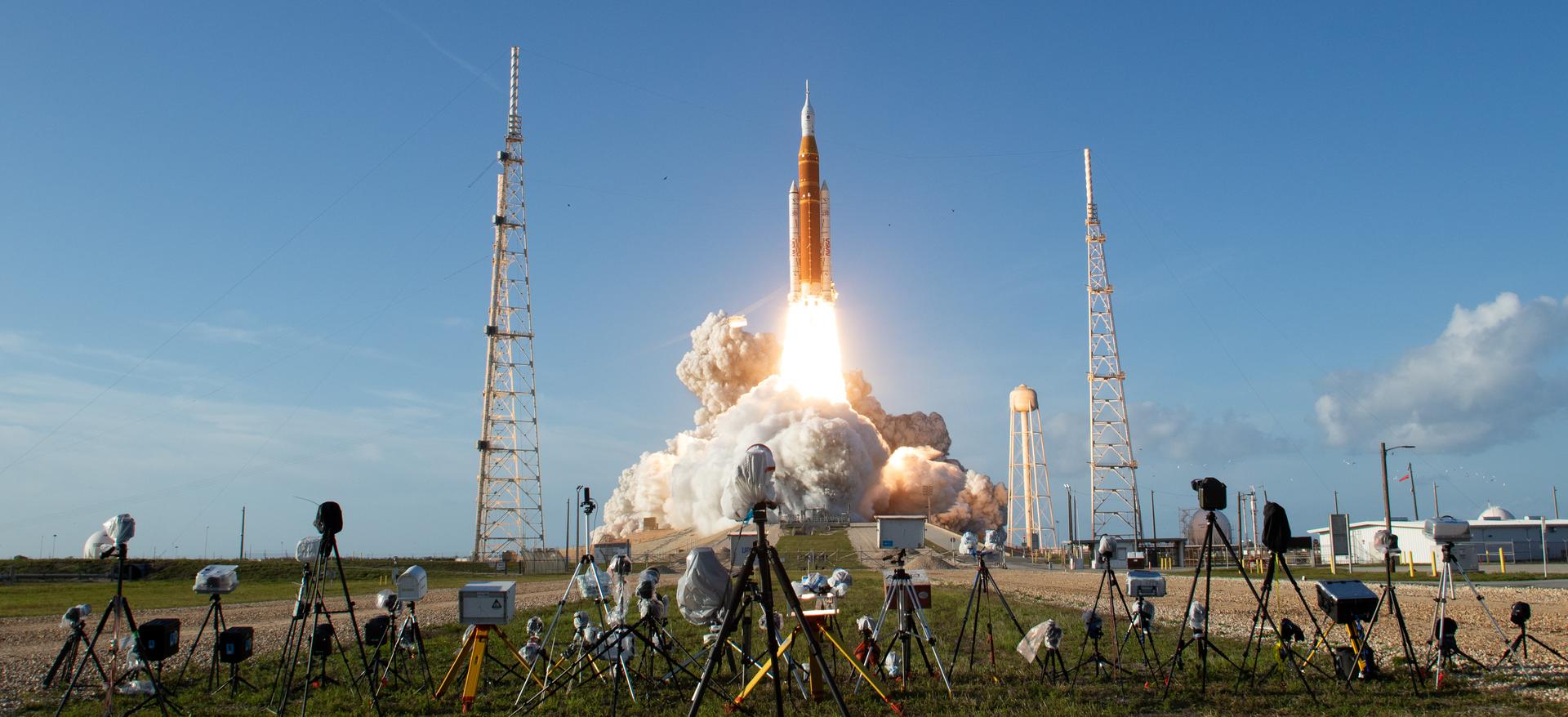
NASA’s multimedia coverage of the Artemis II mission—an effort that brought viewers around the world along for the first crewed journey around the Moon in more than 50…
NASA’s multimedia coverage of the Artemis II mission—an effort that brought viewers around the world along for the first crewed journey around the Moon in more than 50 years—has earned four 2026 Telly Awards, the agency said. The honors recognize a range of NASA video projects, from live mission broadcasting to documentaries and science storytelling pieces.
Will Boyington, NASA’s associate administrator for communications at the agency’s Washington headquarters, credited the origins of the Artemis program to President Donald Trump’s direction and said Artemis II represented a turning point in America’s return to lunar exploration. He framed the mission as arriving in a symbolic moment—the nation’s 250th birthday—and as the first crewed lunar mission since the Apollo era. Boyington said the awards highlight the work of NASA teams that translated the milestone into an at-home experience through live reporting, creative narrative techniques, and an expansive digital approach intended to spark interest in a new generation.
A centerpiece of the award-winning work was NASA’s continuous Artemis II livestream, which ran around the clock for the duration of the mission. Rather than functioning solely as a broadcast of events, the stream was designed as an ongoing science communication product. NASA blended mission visuals with real-time spacecraft and mission data, while specialists provided context and analysis to help nonexperts understand the intricacies of human spaceflight as the mission unfolded.
NASA also received recognition for video documentation showing Artemis astronauts and the support teams preparing on Earth for future lunar surface expeditions. That production followed geology field training—an element of mission readiness that helps crews learn how to observe terrain, interpret rock formations, and collect samples, skills that are expected to be crucial when astronauts return to the Moon on later Artemis missions. The piece was honored in the science and technology storytelling category.
Another award went to NASA for screenwriting for a documentary focused on three of the agency’s major space observatories: the Hubble Space Telescope, the James Webb Space Telescope, and the Nancy Grace Roman Space Telescope. The film is narrated by actor John Rhys-Davies and ties together the past, present, and future of NASA’s space-based astronomy program.
Brittany Brown, director of the Office of Communications Digital and Technology Division at NASA Headquarters, said the agency’s multi-platform strategy enabled audiences to follow Artemis II “inside” the Orion spacecraft and alongside the crew through key phases of the mission, including the lunar flyby and the capsule’s return and splashdown. She emphasized the coordination involved, stretching from the Mission Control Center at NASA’s Johnson Space Center in Houston through the communications network supporting the spacecraft.
NASA said the Artemis II livestream and milestone clips generated the agency’s largest streaming audience to date on its own platforms, totaling nearly 290 million combined views. In addition, commercial streaming partners broadened distribution, giving the coverage access to hundreds of millions more potential viewers worldwide. NASA noted that its video and livestream content remains available through the agency’s online channels.