Google is bringing its Gemini AI assistant to eligible Android (Go edition) phones, aiming to run smoothly on low-RAM devices. The update adds voice chat, camera help and image tools.
Hundreds of millions of people rely on budget Android phones as their primary gateway to the web—for schoolwork, jobs, and day-to-day communication. But limited hardware, especially low RAM, has historically restricted what those devices could do with on-device assistants, often leaving users with little more than basic voice controls.
Google says that gap is narrowing. The company is expanding availability of its Gemini app to eligible Android (Go edition) phones, a class of lower-memory devices designed to run efficiently on entry-level hardware. By optimizing and rebuilding parts of the app, Google claims it can now deliver the “core Gemini experience” in a way that performs smoothly even on phones with tighter memory constraints. The move brings Gemini—Google’s flagship personal AI assistant—to hundreds of millions of additional potential users worldwide.
The rollout is intended to make Gemini’s more interactive features accessible beyond premium smartphones. Rather than requiring users to type long, detailed prompts on small screens, the app supports conversational use through Gemini Live. With this mode, users can speak with the assistant and practice scenarios out loud, including interview preparation. Google says Gemini Live supports more than 45 languages.
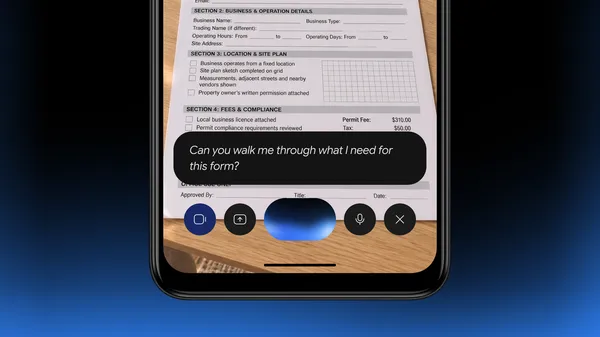
The app also leans on the phone’s camera to help interpret information in the real world. Users can point the camera at handwritten notes or printed forms to get help understanding content, including translation. These capabilities are aimed at practical situations—studying, filling out paperwork, or navigating materials written in another language—where entry-level devices are often the only tool available.
In addition, Google is promoting image-generation features through a tool it calls “Nano Banana.” The company positions it as a way to create customized images quickly, such as producing a simple promotional graphic—like a flyer advertising a weekend bakery sale.
Google says users on supported devices will be able to access Gemini in multiple ways. The app can be downloaded from Google Play, and on compatible phones it can also be launched by pressing and holding the power button. Gemini is also expected to arrive preinstalled on some upcoming Android (Go edition) devices, including models from partners such as Transsion, a major manufacturer in several emerging markets.
By widening support for lower-memory phones, Google is effectively targeting the largest segment of the global smartphone market—users who may not upgrade frequently, but for whom their device is essential infrastructure for learning, commerce, and communication.
Why it matters
Expanding Gemini to Android (Go edition) could bring advanced AI assistance to people who are most constrained by device cost and connectivity, not just those with flagship phones. If the redesigned app performs well on low-memory hardware, it may shift expectations for what “entry-level” devices can do. The next key question is how broadly “eligible” devices are defined—and whether performance remains reliable as features and usage scale.