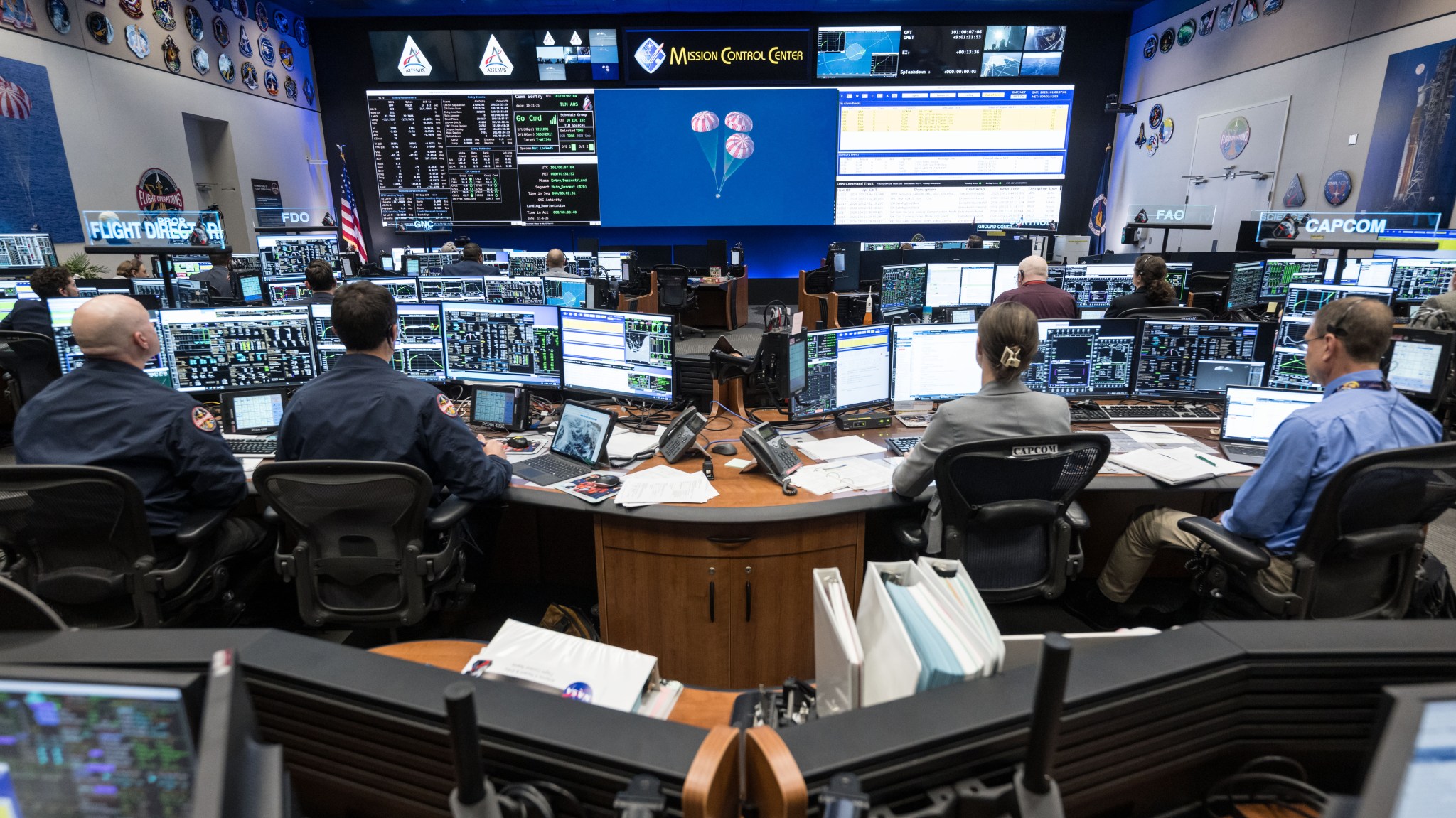
NASA is recruiting for one of human spaceflight’s most influential jobs: flight director in Mission Control at the agency’s Johnson Space Center in Houston.
NASA is recruiting for one of human spaceflight’s most influential jobs: flight director in Mission Control at the agency’s Johnson Space Center in Houston. The position sits at the heart of NASA’s push to maintain U.S. leadership in space exploration as the agency works toward a long-term human presence on the Moon.
Applications for the next class of flight directors are being accepted now through Monday, Oct. 12. The opening is limited to U.S. citizens, and submissions are handled through USAJOBS at https://www.usajobs.gov/GetJob/ViewDetails/886788000. NASA expects to announce its selections by the end of the year.
Flight directors are the senior leaders responsible for guiding crewed missions as they unfold, directing real-time operations and managing risk while coordinating large teams. Those selected will be in line to oversee missions to the International Space Station as well as Artemis flights to the Moon—and, ultimately, the first human expeditions to Mars. In practice, flight directors bring together flight controllers, astronauts, and a network of commercial and international partners to execute mission plans, respond to anomalies, and make time-critical decisions.
Their responsibilities begin well before launch. Flight directors work with engineering, safety, and program organizations to verify that operational concepts match the spacecraft’s capabilities and the mission’s goals. The role requires an ability to synthesize technical information quickly and turn it into clear direction for teams operating under tight time constraints.
Emily Nelson, Johnson’s chief flight director, said the agency is operating in a transitional moment: continuing space station operations while simultaneously building the next era of crewed exploration through Artemis and future Moon Base efforts. Meeting those ambitions, she said, depends on flight directors who can integrate expertise from across disciplines and unify teams around a common plan—an approach she characterized as emblematic of NASA’s culture of innovation and collaboration.
NASA’s eligibility requirements emphasize both technical training and high-pressure leadership. Candidates must be U.S. citizens and hold a bachelor’s degree from an accredited institution in engineering, biological science, physical science, computer science, or mathematics. Applicants must also have significant, progressively responsible professional experience relevant to the job, including demonstrated decision-making in time-critical, high-stress, high-risk settings.
While many flight directors have historically risen from the ranks of NASA flight controllers, prior work in Mission Control is not mandatory for consideration, the agency noted.
Those chosen will enter an extensive training pipeline that covers flight control practices, spacecraft systems, operational leadership, and risk management—preparing them to take the console during some of the agency’s most complex and consequential missions. NASA has additional information about the flight director role and the application process available through the agency.