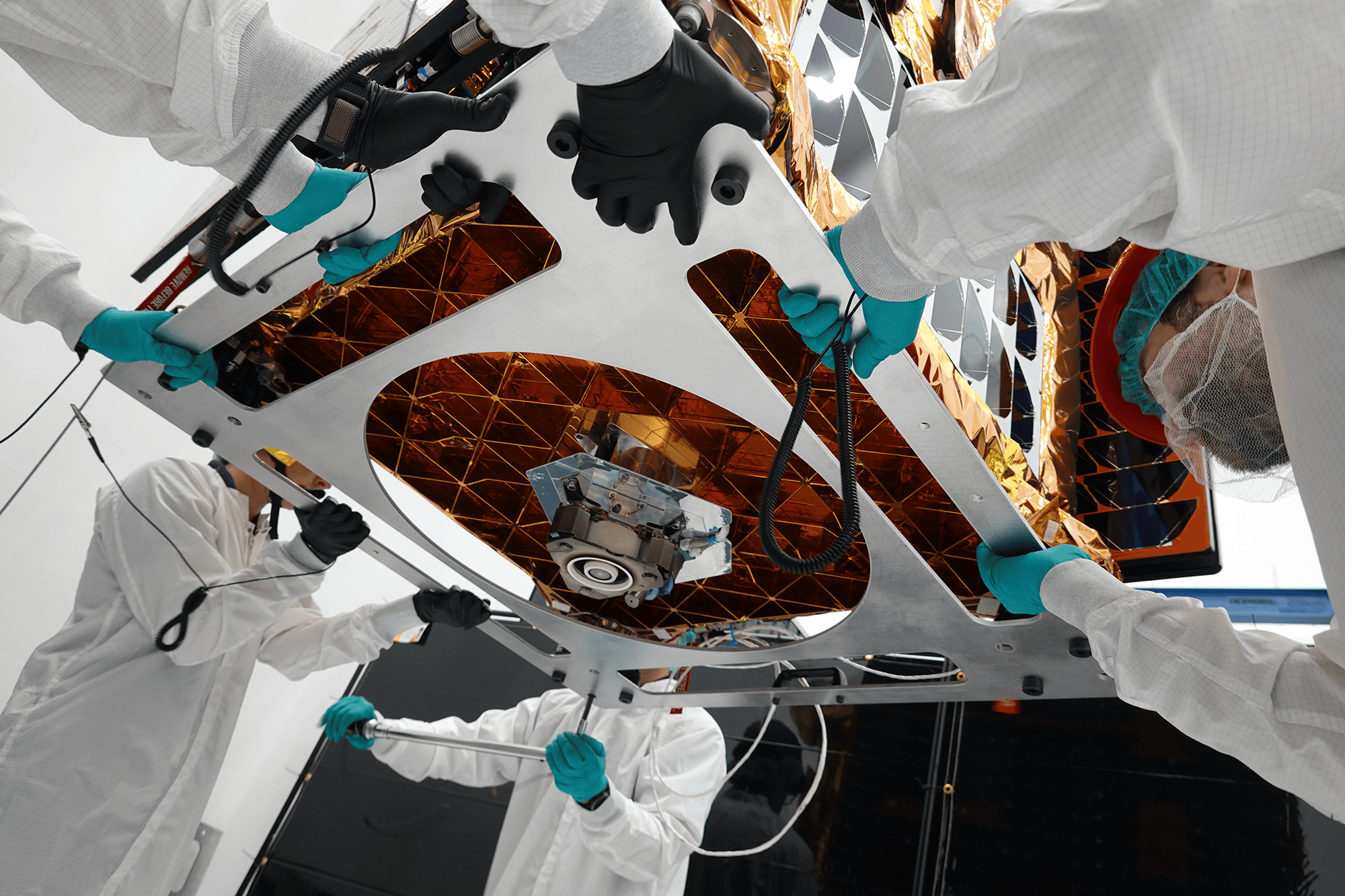
NASA’s SSPICY mission will send Starfish Space’s Otter to autonomously approach defunct satellites and rocket bodies, testing sensors and propulsion for routine inspections.
A NASA-backed technology demonstration is set to bring a small spacecraft close to defunct satellites and spent rocket hardware, showcasing tools that could one day make on-orbit inspections routine and help curb the growth of orbital debris.
The mission, called Small Spacecraft Propulsion and Inspection Capability (SSPICY), launched Oct. 1 from Vandenberg Space Force Base in California. At the heart of SSPICY is “Otter,” a spacecraft built by Starfish Space. Its job will be to fly near as many as four non-operational, U.S.-origin objects in low Earth orbit—targets that may include retired satellites as well as rocket bodies.
Operations are scheduled to begin in early 2027, when Otter will start closing in on each target to within hundreds of yards. The key test is autonomy: rather than relying on constant direction from Earth, Otter will use onboard guidance and control software designed to operate with minimal ground intervention. Using computer vision along with other sensors, the spacecraft will assess its surroundings and make navigation decisions in real time as it approaches each object.
Once in position, Otter will conduct detailed visual inspections intended to capture critical data about each target’s state. The spacecraft is expected to measure and characterize factors such as an object’s spin rate, its orientation in space, and the condition of its exterior surfaces—information that can be difficult to obtain from the ground but is essential for any future attempt to service, stabilize, or remove a piece of hardware.
Mobility between multiple targets will be enabled by an electric propulsion system. SSPICY will also trial precision maneuvering techniques using an articulating robotic boom that can help evaluate how to point the spacecraft’s thrusters for fine control while transitioning among different orbits. NASA describes SSPICY as the first mission to evaluate this set of technologies together as a unified system—an integrated demonstration aimed at de-risking future autonomous inspection and servicing concepts.
Importantly, SSPICY is not designed to physically interact with its targets. Otter will not touch, capture, or dock with any spacecraft during the mission. Instead, the aim is to validate the sensing, navigation, and control capabilities that could underpin later missions—whether those missions focus on repair and maintenance, or on safely disposing of dead spacecraft by guiding them into Earth’s atmosphere for burn-up.
The stakes are growing as Earth orbit becomes more crowded. Out-of-service satellites and rocket stages can tumble, fail structurally, or collide—events that can generate debris ranging from large fragments to tiny particles. With thousands of satellites being launched each year to support communications, navigation, weather monitoring, and other everyday services, preventing collisions and managing debris is increasingly central to maintaining safe and sustainable operations in low Earth orbit.
Starfish Space developed and operates the Otter 24C spacecraft for SSPICY. The technology demonstration is funded and managed by NASA’s Small Spacecraft and Distributed Systems program within the agency’s Research and Technology Mission Directorate. Early development of key capabilities was supported through awards from NASA’s Small Business Innovation Research and Small Business Technology Transfer program.
Why it matters
Close-up inspection is a foundational capability for repairing satellites, diagnosing failures, and ultimately removing dangerous derelicts before they fragment or collide. SSPICY’s focus on autonomy reflects a practical need: as the number of objects in orbit rises, Earth-based control alone will not scale. Results from this mission will help determine how soon future “space tow truck” or servicing missions can be carried out safely and routinely.