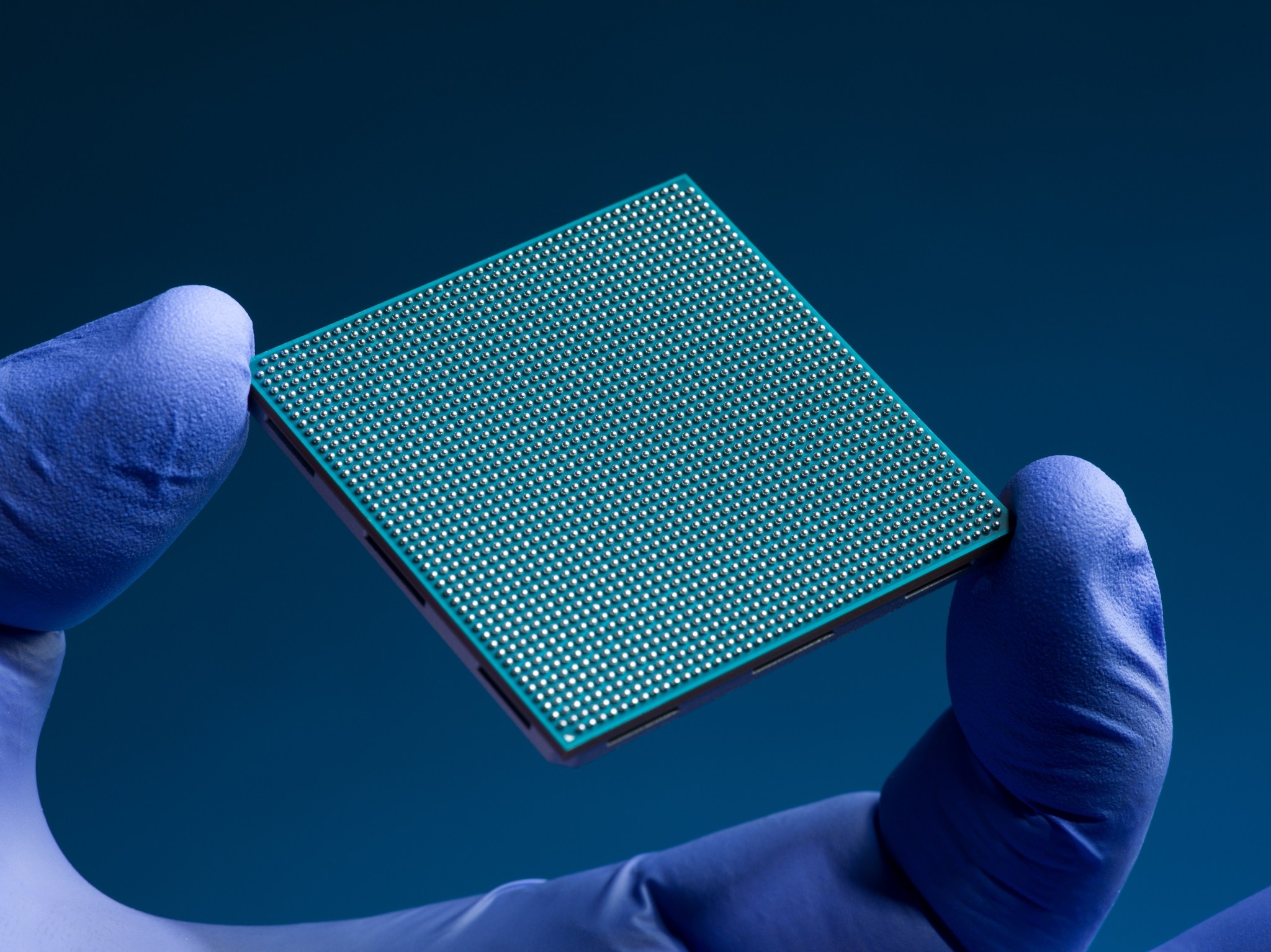
NASA is pushing to close a widening gap between the computers flown on spacecraft and the rapidly advancing chips used on Earth.
NASA is pushing to close a widening gap between the computers flown on spacecraft and the rapidly advancing chips used on Earth. Under its High Performance Spaceflight Computing project, the agency is developing a new generation of radiation-hardened processors designed to deliver a major leap in onboard computing while surviving the punishing conditions of space.
Space missions typically rely on processors created years earlier, not because engineers prefer outdated technology, but because reliability is paramount. Electronics beyond Earth must endure intense radiation, severe temperature swings, and the impossibility of hands-on repairs. Yet as NASA eyes more capable robotic explorers and longer human journeys—including missions to the Moon and Mars—the demand for far greater computing power is growing. Faster onboard processing could enable spacecraft to act more autonomously, speed scientific analysis, and better support astronauts far from Earth.
“Building on the legacy of previous space processors, this new multicore system is fault-tolerant, flexible, and extremely high-performing,” said Eugene Schwanbeck, a program element manager in NASA’s Game Changing Development program at the Langley Research Center in Hampton, Virginia. He described the effort as a collaborative technical achievement aimed at modernizing spaceflight computing.
At the heart of the project is a compact, high-performance system-on-a-chip processor engineered to withstand radiation while offering up to 100 times the computational capability of current spaceflight computers. NASA’s Jet Propulsion Laboratory (JPL) in Southern California has been running the new hardware through a battery of evaluations meant to mimic real mission hazards.
“We are putting these new chips through the wringer by carrying out radiation, thermal, and shock tests while also evaluating their performance through a rigorous functional test campaign,” said Jim Butler, the project manager at JPL. Such testing is critical because energetic particles from the Sun and beyond the solar system can flip bits or trigger malfunctions that force a spacecraft into “safe mode,” shutting down nonessential functions until operators can diagnose the problem. Extreme heating and cooling cycles can also degrade electronics over time.
The team is also examining how the processor handles the heavy computational loads associated with planetary landings. To approximate what future missions may face, JPL is using high-fidelity landing simulations based on real NASA scenarios—cases that normally demand power-hungry hardware to digest vast streams of sensor data in real time. Butler called it a pivotal moment for technology that could support NASA’s “next giant leaps.”
Testing began in February and is expected to continue for several months. Early results have been encouraging: JPL reports the processor is operating as intended, with indications it may reach 500 times the performance of radiation-hardened chips currently in use. Marking the start of the campaign, the team sent an email titled “Hello Universe,” a playful reference to the famous “Hello” test messages from the early days of computing.
The processor is being built by Microchip Technology Inc. of Chandler, Arizona, through a commercial partnership with JPL. Hardware samples have already been distributed to early-access partners across the defense and commercial aerospace sectors.
If the technology performs as hoped, it could allow spacecraft to employ artificial intelligence for rapid, onboard decision-making when communication delays or mission complexity make constant human oversight impossible. It could also help deep-space probes analyze, store, and downlink far larger volumes of data, potentially accelerating scientific discovery. And for future crews traveling to the Moon or Mars, it could provide more robust computing support in environments where reliability is nonnegotiable.
As a system-on-a-chip, the device integrates central processing units, specialized computational offloads, advanced networking capabilities, memory, and input/output interfaces into a palm-sized package. While similar designs are common in consumer electronics, the version under test is meant to keep running for years—millions or even billions of miles from the nearest repair technician.