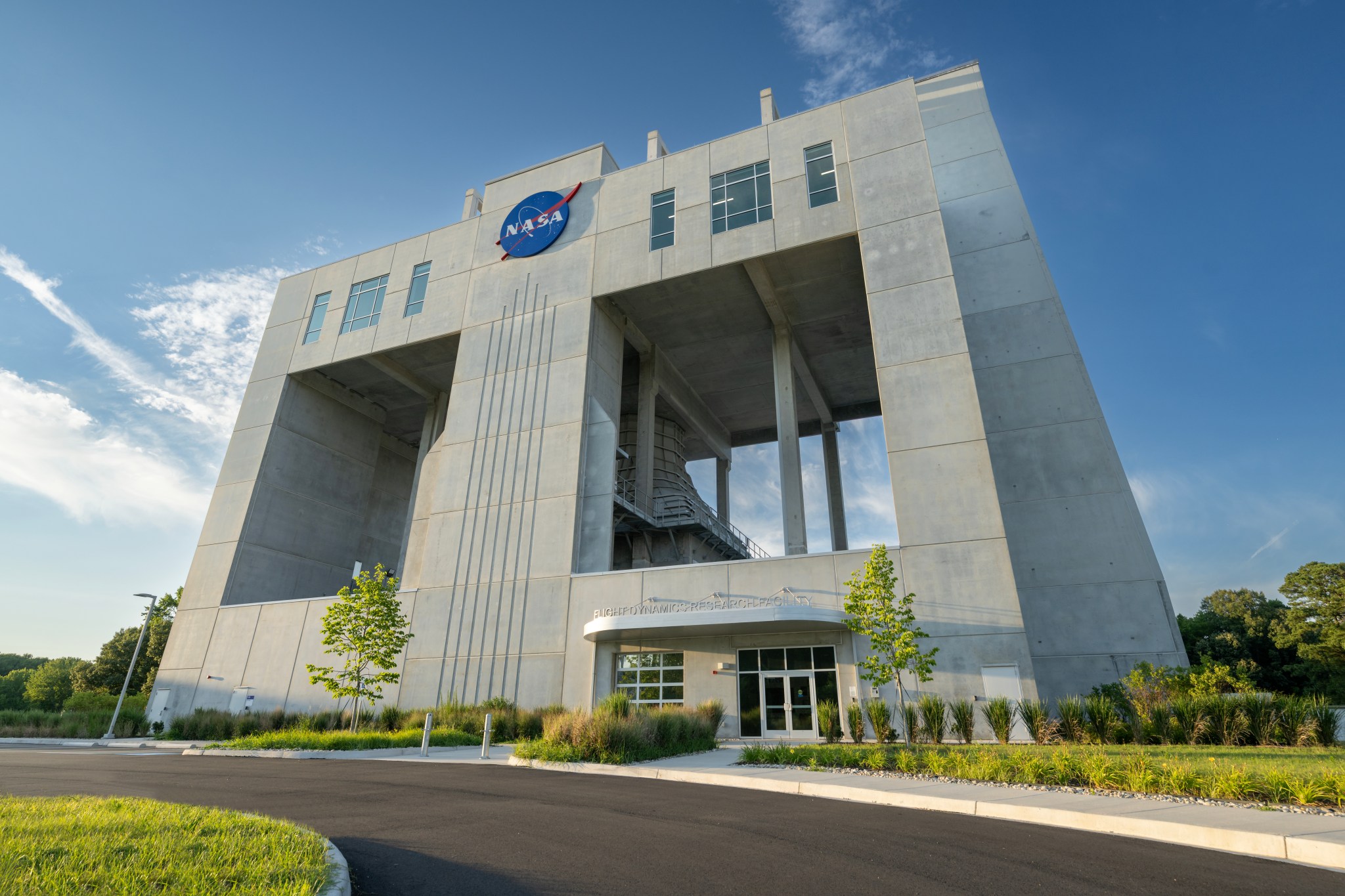
NASA is preparing to open a major new research tool at its Langley Research Center in Hampton, Virginia: the Flight Dynamics Research Facility, the agency’s first newly…
NASA is preparing to open a major new research tool at its Langley Research Center in Hampton, Virginia: the Flight Dynamics Research Facility, the agency’s first newly built wind tunnel in more than four decades.
The agency has invited journalists to attend an in-person media tour and ribbon-cutting ceremony at Langley on Friday, July 31. NASA said the event will also feature a short media availability with agency representatives. Additional details on the day’s schedule will be provided closer to the event.
Attendance is limited to members of the news media who are either U.S. citizens or lawful permanent residents, and the event will not be offered virtually. NASA noted that its media accreditation requirements are posted online.
Reporters who want to participate must confirm their attendance by 5 p.m. EDT on Wednesday, July 29. RSVP requests should be emailed to NASA Langley public affairs contacts Kimiko Booker (kimiko.s.booker@nasa.gov) and Brittny McGraw (brittny.v.mcgraw@nasa.gov). NASA did not specify in the announcement which personal details are required in the RSVP, but emphasized that responses must include requested information.
The opening of the Flight Dynamics Research Facility is being framed by the agency as a significant step in expanding U.S. capabilities in aeronautics and space-related research. Wind tunnels are crucial for testing how aircraft and spacecraft designs behave in simulated flight conditions, allowing engineers to measure forces, airflow, and stability in a controlled environment before committing to more expensive development and flight tests.
NASA said the new installation is designed as a modern, high-performance facility to support research and technology development across the agency’s portfolio. That includes work tied to NASA’s aeronautics mission, future exploration systems, and scientific objectives.
Among the programs expected to benefit is Artemis, NASA’s effort to return humans to the Moon and build a long-term presence on the lunar surface. The agency said the facility will contribute to technology development aimed at enabling sustained operations on the Moon, including efforts associated with the concept of a Moon Base.
More information about the Flight Dynamics Research Facility is available through NASA. For media questions, NASA listed headquarters contacts Camille Gallo (camille.m.gallo@nasa.gov) and Rob Margetta (robert.j.margetta@nasa.gov) at 202-358-1600. At NASA Langley, Booker can be reached at 757-506-5939 and McGraw at 757-769-3763.