NASA’s Curiosity rover set out to collect a routine drilled sample on Mars—then unexpectedly yanked an entire rock free.
NASA’s Curiosity rover set out to collect a routine drilled sample on Mars—then unexpectedly yanked an entire rock free.
On April 25, 2026, Curiosity drilled into a target rock and began retracting its robotic arm. Instead of leaving the rock in place, the rover’s arm lifted it off the surface along with the drill, surprising the mission team. The incident forced engineers to pause and spend the next several days working through a careful recovery plan.
To separate the rock from the drill system, the team repeatedly adjusted the arm’s position and used vibrations from the drill mechanism in an attempt to shake the material loose. The effort continued until May 1, when the rock finally detached. When it came free, it didn’t stay intact: the piece broke apart into multiple fragments.
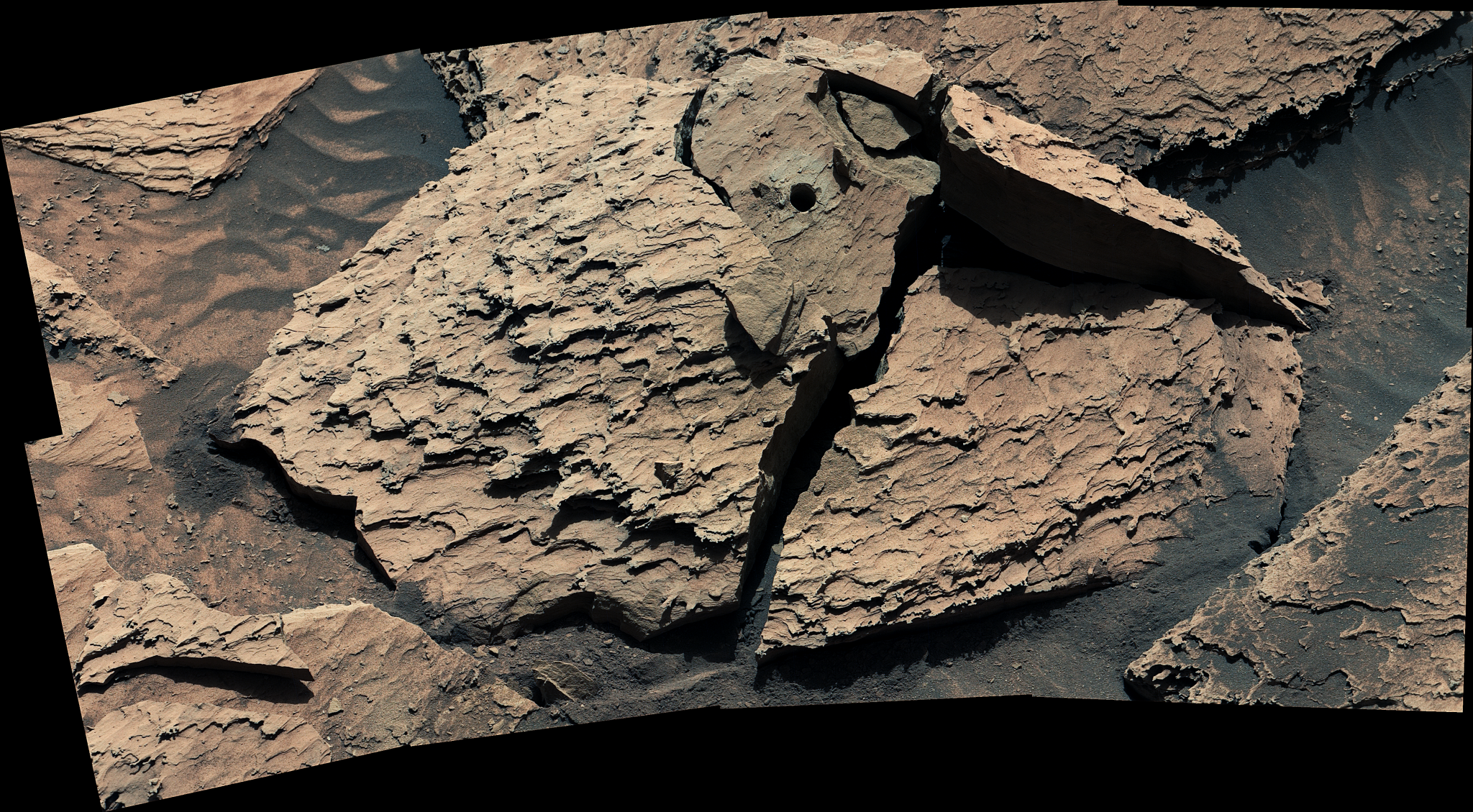
A close-up view captured afterward reveals both the rock’s size and the aftermath of the drilling. The image was taken on May 6 by Curiosity’s Mast Camera (Mastcam). The rover team has nicknamed the rock “Atacama.”
Based on estimates from the rover’s observations, Atacama measures about 1.5 feet across at its base and is roughly 6 inches thick. If it were on Earth, the rock would weigh around 28.6 pounds; in Mars’ weaker gravity, it would weigh about one-third as much. The circular borehole left behind by Curiosity’s drill is clearly visible in the Mastcam image, marking the spot where the rover extracted its sample just before the unexpected tug-of-war with the Martian surface.