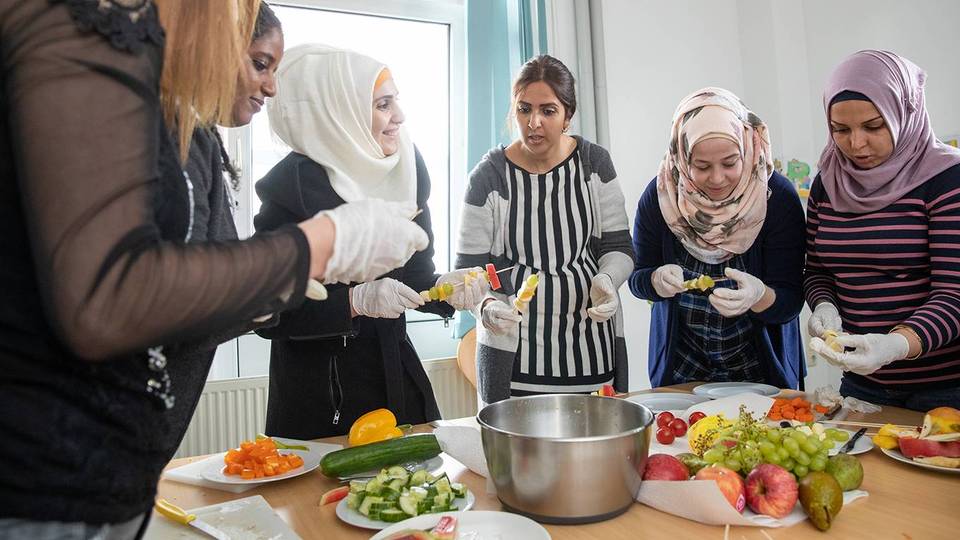
Some of the most significant innovations surrounding food are not high-tech scientific advances but low-tech social practices and relations, such as new ways of cooperating and distributing responsibility.
Some of the most significant innovations surrounding food are not high-tech scientific advances but low-tech social practices and relations, such as new ways of cooperating and distributing responsibility. To fix our broken food systems, we must demand that the best of these practices receive respect and investment. MILAN/BETHESDA/NEW YORK—Food innovation is often presented as novel crops, agricultural methods, and biochemical compounds, as well as more efficient manufacturing techniques and supply chains. But some of the most significant innovations surrounding food are related to low-tech social practices and relations: ways of cooperating, sharing knowledge, distributing responsibility, and redesigning institutions. Earlier this year, amid an aggressive federal immigration crackdown, Dylan Alversonremoved pricesfrom the menu at his Minneapolis restaurant. Those who could pay made donations, and those who could not ate for free. Business thrived under this model, which followedothereffortsto reinvent the restaurant’s socioeconomic structure. Thousands of miles away, civilians in Sudan responded to the collapse of public services amid a catastrophic civil war by organizing mutual-aid networks. Itbegan with a community kitchen: a site to identify needs and resources, share knowledge, and negotiate goals and risks. These examples underscore food’s role in organizing individual and collective life. Eating is a powerful form of communication and vehicle for social cohesion. Think ofenjoying a dish prepared by a loved oneorserving hot chocolate and soup to Ukrainian refugeesat the Polish border.Recipesform a pillar of cultural heritage. Food innovation is as much aboutsociocultural processesand cultivating human relationships as it is about scientific breakthroughs and environmental sustainability. After the devastating Grenfell fire in London, local women came together to cook for those who had lost their homes. They established the Hubb Community Kitchen and later publishedTogether: Our Community Cookbookto support their work. As one of us hasargued, social gastronomy can be used in various ways for peacebuilding.Refugee Food, a French festival that connects diners with refugee chefs, shows how food can bridge societal and cultural divides. Similarly, another of us has documented the benefits ofSyrian refugee women and Turkish womenworking together in a food incubator, where their discovery of a shared culinary history helped them overcome language barriers and negative stereotypes. This Black Friday, aPSsubscription starts at $39.99. You can read every new commentary from the likes of Joseph Stiglitz, Claudia Goldin, Raghuram Rajan, and Mariana Mazzucato, and explore an archive of 26,000 more prescient analyses by the world’s leading thinkers. With the year ahead promising to be a volatile one, few investments will serve you better TheLeague of Kitchensproject, a culinary school in New York where immigrant women welcome participants into their homes and teach them their family recipes, shows how food offers an avenue for celebrating pluralism. Equally important are efforts to counter cultural erasure, like those of cookbook authors, chefs, andhistorianshighlighting and preserving the Gullah Geechee cuisine in the southern United States. Food can promote inclusion by showing that excluded groups are part of the body politic. France’sKouss-Kouss Festivalcelebrates couscous as Algeria, Morocco, Mauritania, and Tunisia’s joint entry into UNESCO’sintangible cultural heritage listwhile demonstrating the important role it plays in European culture. Conversely, food cansow disagreement, deepen inequality, and fuel conflict. In 2024, an estimated673 million peoplefaced hunger, while roughly 2.3 billion experienced moderate or severe food insecurity. Yet policymakers cannot agree onhow to addressthese urgent needs. Food offers opportunities to promote human flourishing and social cohesion because eating is a continuous need that encourages informality and allows for spontaneity and creativity. People can often earn a livelihood from culinary pursuits even if they lack conventional credentials, like language skills or advanced degrees.Newcomer Kitchenin Canada, for example, enables women from different backgrounds to turn their culinary knowledge into a source of income. The social benefits often flyunder the radar, and reaping them does not require significant investment. That is whysocial innovationsare superior to high-tech fixes for our broken food systems. To be sure, apill, ahormone, and arobotcan deliver results. But they cannot provide meaning or purpose. We must recognize all the things that people already do to feed one another—and demand that the best of these practices receive the respect and support they need to endure. Nov 25, 2026Fiona E. Murray&Constanze Coelsch-Foisner Report a problemContact UsLicensingSwitch to classic view