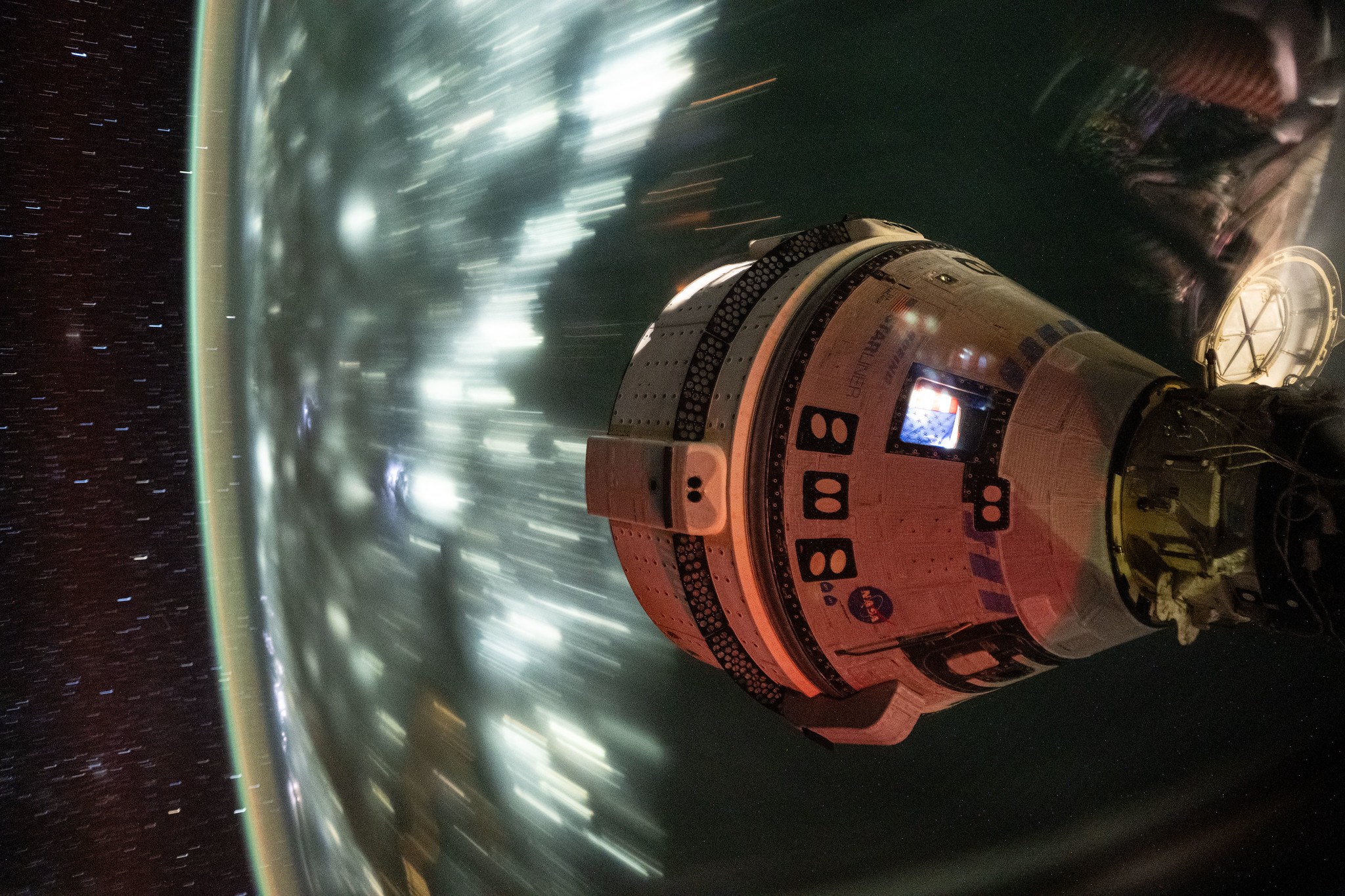
NASA and Boeing say they are moving ahead with a stepped plan to return the CST-100 Starliner capsule to flight, expanding the number of missions the spacecraft could…
NASA and Boeing say they are moving ahead with a stepped plan to return the CST-100 Starliner capsule to flight, expanding the number of missions the spacecraft could fly to the International Space Station while also transitioning the program to a new launch vehicle.
In a joint update Monday, the agency said it plans to exercise contract options for a fifth and sixth Starliner trip to and from the space station. At the same time, NASA will work with Boeing and United Launch Alliance to qualify ULA’s Vulcan rocket to carry crews once Atlas V—Starliner’s current launcher—reaches its final flight.
NASA Administrator Jared Isaacman framed the effort as part of a broader push to ensure the United States has more than one way to send astronauts to orbit. As human spaceflight activity expands, he said, demand will grow for the transportation systems that make those missions possible, from launch vehicles to spacecraft. NASA’s Commercial Crew Program, he emphasized, was designed from the outset to provide redundant crew transportation capability, and the agency intends to bring Starliner back into service to support the ISS and future commercial stations.
The agency’s roadmap begins with an uncrewed mission dubbed Starliner-1, intended to verify upgrades made since earlier flights and to gather the data needed to close out certification work. Isaacman said NASA’s current planning assumes the next crewed Starliner mission—Starliner-2—would return astronauts by 2028, following additional corrective actions, testing, and formal approval for human spaceflight.
The update comes after NASA released results in February from a Program Investigation Team examining the problems that led to an uncrewed return of the spacecraft during Starliner’s first crewed flight in 2024. That investigation produced 61 recommendations to NASA aimed at ensuring future missions meet stringent crew-safety requirements.
A central technical issue involved the service module’s reaction control thrusters operating beyond their qualified engineering envelope, a performance shortfall that contributed to the control difficulties experienced during the Crew Flight Test. NASA and Boeing said extensive ground testing and analysis traced the behavior to multiple causes, including the thermal conditions the hardware experienced in flight and design characteristics of the propulsion system.
Boeing has since introduced thermal changes to the service module, and NASA plans to evaluate whether those updates improve performance during Starliner-1. In addition, the partners agreed to pursue a further redesign of thruster valves as part of certification and later crewed missions.
NASA said the uncrewed Starliner-1 flight could occur as early as December of this year, though scheduling could slip into January 2027. The mission is intended as an engineering-focused evaluation, with objectives that include confirming a more favorable thermal environment, collecting performance measurements needed for system qualification, and identifying any remaining risks before astronauts fly again.
Dana Weigel, who manages NASA’s Low Earth Orbit Program, called the next mission a pivotal milestone toward full certification and maintaining a long-term human presence in low Earth orbit. She said Starliner’s propulsion system will be put through specific demonstration goals and tightly controlled operations, with crew and public safety as the top priority. Validating thermal performance, she added, is a key requirement for certifying the spacecraft.
After Starliner-1, NASA and Boeing plan to complete the thruster valve design modification, continuing work to resolve the propulsion-system concerns identified in the investigation.