NASA is inviting members of the media to its Wallops Flight Facility in Virginia on Wednesday, June 17, for a closer look at an upcoming attempt to extend the working…
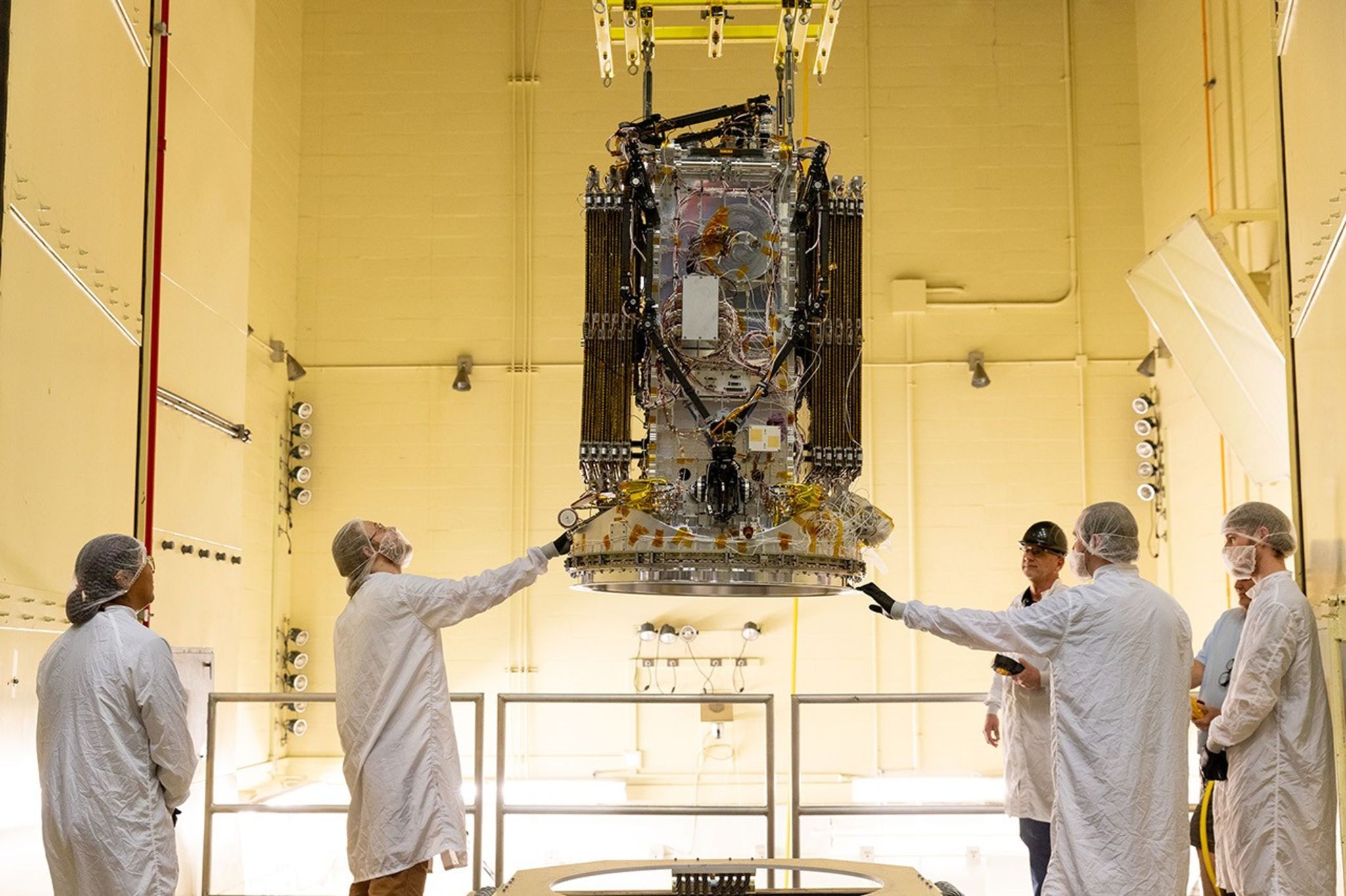
NASA is inviting members of the media to its Wallops Flight Facility in Virginia on Wednesday, June 17, for a closer look at an upcoming attempt to extend the working life of one of the agency’s key space telescopes. On display will be Northrop Grumman’s Pegasus XL rocket, which is slated to carry a Katalyst-built robotic spacecraft designed to raise the orbit of NASA’s Neil Gehrels Swift Observatory.
The mission centers on Katalyst’s robotic servicing vehicle known as LINK. Scheduled to fly aboard Pegasus in June, LINK is expected to rendezvous with Swift in orbit and increase the observatory’s altitude. By moving Swift to a higher orbit, the partners aim to keep the spacecraft operating longer and preserve its ability to continue collecting high-energy astrophysics data.
Wallops will provide credentialed journalists an opportunity to view not only the Pegasus XL rocket but also the L-1011 Stargazer aircraft, the carrier plane that releases Pegasus during the air-launch sequence. NASA noted that while interview opportunities will be available at the facility, the LINK spacecraft itself will already be enclosed inside the rocket for flight. To help fill that gap, the agency plans to distribute images and video of LINK to the press.
In addition to the on-site viewing, NASA and Katalyst will hold an audio-only media teleconference on June 17 to outline the goals and plans for the Swift orbit-boost effort. The teleconference audio will be livestreamed on NASA’s YouTube channel. NASA said details such as the start time and the list of speakers will be released closer to the event.
Reporters seeking to attend in person must request accreditation by email. U.S. citizens have until 4 p.m. EDT on Wednesday, June 10, to apply. International journalists who do not hold U.S. citizenship face an earlier deadline of 3 p.m. EDT on Wednesday, May 27. NASA’s media accreditation policy is available online.
Credential requests for both in-person attendance and participation in the media call should be sent to Amy Barra at amy.l.barra@nasa.gov.
Swift, launched in 2004, is a cornerstone of NASA’s space-based astrophysics fleet and focuses on transient, rapidly changing phenomena in the high-energy universe. The observatory is best known for its work tracking gamma-ray bursts—among the most energetic explosions known—but it also monitors a broad range of other extreme cosmic events and objects. When a sudden outburst occurs, Swift helps act as an early-warning hub, rapidly sharing essential information so other missions can quickly conduct follow-up observations and build a more complete picture of the underlying physics.
Additional information about the Swift orbit-boost mission is available at https://science.nasa.gov/mission/swift/swift-boost-mission.