NASA has named the Massachusetts Institute of Technology the top winner in its 2026 Revolutionary Aerospace Systems Concepts – Academic Linkage RASC-AL competition,…
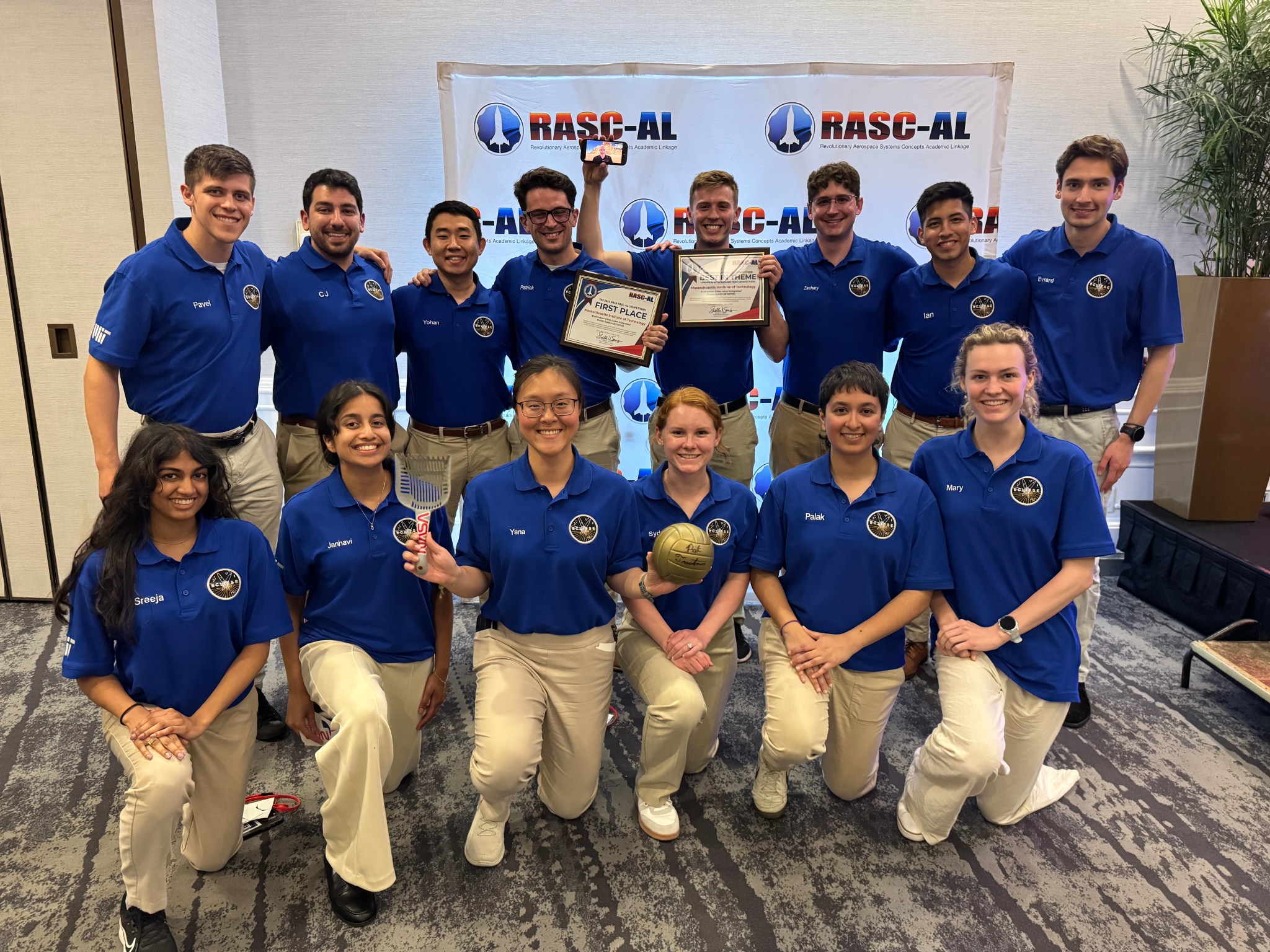
NASA has named the Massachusetts Institute of Technology the top winner in its 2026 Revolutionary Aerospace Systems Concepts – Academic Linkage (RASC-AL) competition, selecting the student team’s proposal, Exploration-Class Lunar Integrated Power SystEm, for first place overall. The annual challenge asks university teams to identify critical gaps in aerospace capabilities and respond with new system-level concepts and prototype-ready approaches that could strengthen future missions.
MIT claimed a second major distinction as well: another team from the institute took second place overall with Mars Exploration Layered Infrastructure for Operations, Research, and Advancement. Third place went to Virginia Polytechnic Institute and State University (Virginia Tech) for its Mars Pylon Network concept.
NASA leaders framed the results as a glimpse of how student-driven research can feed into agency priorities, including the Artemis program’s push to expand sustained operations at the Moon. Daniel Mazanek, RASC-AL program sponsor and senior space systems engineer at NASA’s Langley Research Center in Hampton, Virginia, said the winning work demonstrated the value of academic innovation in advancing Artemis-related goals. He added that the projects illustrate how careful, methodical analysis can help turn imaginative ideas into credible exploration architectures.
The top-ranked teams emerged from a competitive field of 14 finalists who gathered for the multi-day RASC-AL Forum in Cocoa Beach, Florida. There, student groups delivered formal briefings detailing their mission architectures, proposed technologies, and the analytical groundwork supporting their designs. NASA describes the forum as an opportunity for participants to experience the kind of direct critique and engineering scrutiny that accompanies human spaceflight concepts as they mature inside the agency. Judges recognized teams that combined strong technical rigor with originality and clear alignment to mission needs.
Beyond the three overall awards, NASA also highlighted additional honorees. Embry-Riddle Aeronautical University’s Worldwide Campus was recognized for Advanced Utilization of Resources for Energy & Viability Off-Earth, known as Project AUREVO. Another award went to a collaboration between the University of Illinois Urbana-Champaign and Leonardo de Vinci Engineering School for Mining and Advanced Transformation of Regolith for Infrastructure and eXpansion (MATRIX), a concept focused on using extraterrestrial soil and rock to support construction and growth beyond Earth.
Christopher Jones, another RASC-AL program sponsor and chief technologist for the Systems Analysis and Concepts Directorate at NASA Langley, emphasized that the program is designed to reward more than bold ideas. He said the competition pushes students to produce technically defensible studies and communicate them clearly—skills that reflect the systems-level thinking and professional standards expected in real aerospace engineering work.
RASC-AL is structured as a cross-agency effort within NASA and is administered by the National Institute of Aerospace. Day-to-day management is handled through the NASA Tournament Lab, part of the agency’s broader Prizes, Challenges, and Crowdsourcing Program—an initiative intended to draw new ideas and talent into NASA’s technology pipeline while giving students practical experience in mission design, systems engineering, and technical communication.