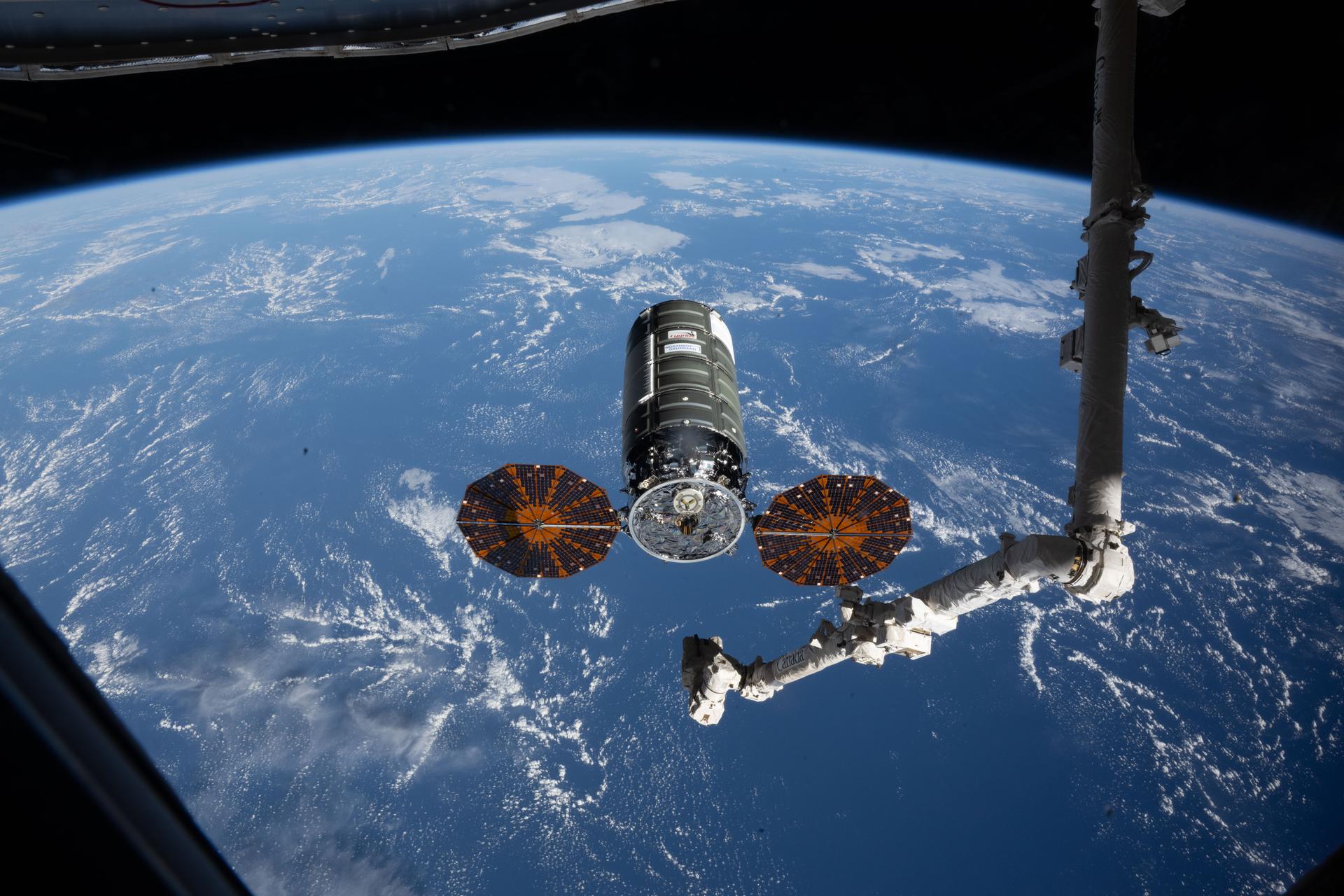
Northrop Grumman’s Cygnus XL cargo craft is set to undock from the International Space Station after delivering supplies, then deorbit for a destructive reentry.
After delivering more than 11,000 pounds of supplies, scientific investigations, and other cargo to the International Space Station, Northrop Grumman’s Cygnus XL resupply spacecraft is set to leave the orbiting laboratory on Friday, Oct. 9, marking the departure phase of the company’s Commercial Resupply Services-24 mission for NASA.
NASA plans to broadcast the undocking and departure live, with coverage beginning at 12:30 p.m. EDT on the agency’s streaming and digital platforms. The spacecraft is scheduled to be released from the station at 12:45 p.m. EDT.
The separation sequence will be carried out by flight controllers on the ground, who will remotely direct the station’s Canadarm2 robotic arm. The arm will first disengage Cygnus XL from the Earth-facing port on the Unity module, then carefully position the vehicle for release into free flight. NASA astronaut Luke Delaney will oversee the maneuver from inside the space station, monitoring the procedure as Cygnus transitions from being an attached visitor to an independent spacecraft.
Cygnus is not returning to Earth intact. As part of its standard mission profile, the vehicle will be packed with trash and other items no longer needed aboard the station before it departs. Northrop Grumman’s spacecraft is designed to serve as a disposal platform at the end of each cargo run, helping crews manage waste and clear space on the orbiting outpost.
NASA said Cygnus XL will remain in orbit briefly after leaving the station before being commanded to deorbit on Sunday, Oct. 11. The vehicle will then enter Earth’s atmosphere for a controlled, destructive reentry, where it will burn up safely. The agency does not plan to provide live coverage of the deorbit and reentry.
The CRS-24 Cygnus mission began months earlier, launching April 11 atop a SpaceX Falcon 9 rocket from Space Launch Complex 40 at Cape Canaveral Space Force Station in Florida. The flight is part of NASA’s ongoing use of commercial cargo providers to maintain a steady pipeline of food, equipment, and research materials to the station—along with a reliable way to remove waste when the spacecraft departs.
Additional details about NASA’s Northrop Grumman CRS-24 mission are available on the agency’s website at https://www.nasa.gov/mission/nasas-northrop-grumman-crs-24/.
Why it matters
Cargo missions like CRS-24 keep the space station supplied with essentials and enable microgravity research that can’t be done on Earth. Just as importantly, Cygnus provides a routine way to dispose of waste, preserving valuable room for crews and experiments. The next milestones to watch are the spacecraft’s clean release from Canadarm2 and its planned deorbit on Oct. 11.