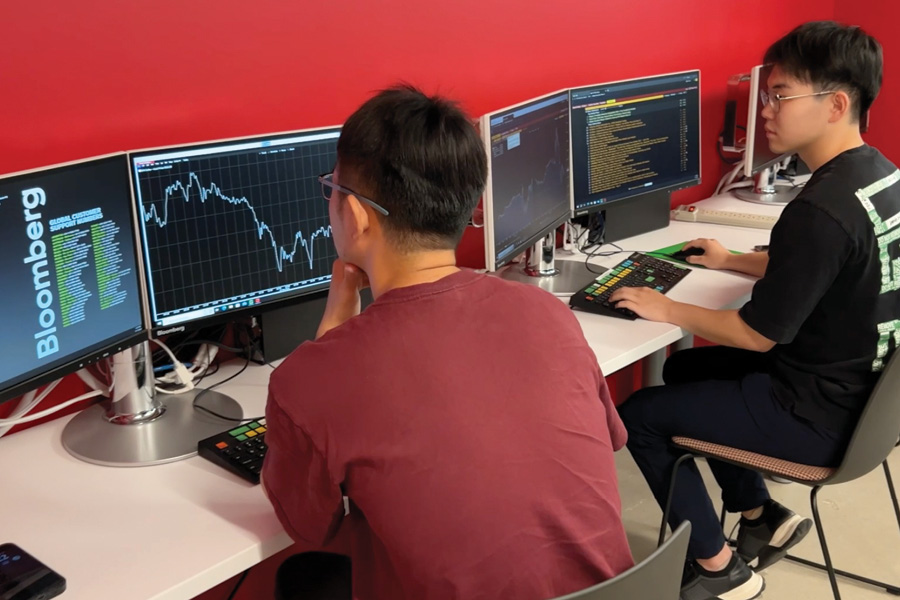
Finance is leaning harder on AI to spot patterns, curb fraud and execute trades, intensifying demand for computer scientists to build, run and govern complex systems.
In modern finance, the difference between a winning strategy and a losing one is often vanishingly small. Firms routinely compete on tiny spreads, minuscule changes in pricing, and even microseconds of execution speed. In markets where one participant’s gain can amount to another’s loss, that pressure fuels an intense hunt for any edge—making financial services a natural home for automation and sophisticated algorithms.
Machine learning is not new to the sector. Quantitative teams and asset managers began integrating machine-learning techniques decades ago, with tools in use since at least the 1980s. Today, the technology underpins a wide range of core activities. Credit and payments companies rely on predictive models to detect suspicious behavior early and reduce fraud before it spreads. On trading desks, algorithmic systems execute strategies at scale, including high-frequency trading—a common, and frequently debated, approach that aims to profit from extremely large volumes of low-margin transactions.
As artificial intelligence systems become more capable, many finance leaders see an opportunity to do more than simply automate. They expect AI to help shoulder the growing burden of data: processing enormous information streams, surfacing subtle patterns, and extracting signals that would be difficult to detect manually. That shift is also reshaping the labor market in finance, increasing demand for people who can build, operate, and govern complex computational systems.
Robert Simon, executive director of the Master of Science in Computational Finance program—a joint initiative spanning Carnegie Mellon University’s Tepper School of Business, Mellon College of Science, Dietrich College of Humanities and Social Sciences, and the School of Computer Science—argues that the industry’s need for professionals with strong computer science training still outstrips supply. He points to outcomes for graduates as evidence: for the past three years, the program’s placement rate three months after graduation has hovered around 99%. Simon says the appeal for technologists is not only compensation or prestige, but the speed of experimentation. In the startup world, he notes, it can take years to discover whether an idea works; in finance, strategies can be tested against markets and infrastructure in seconds, producing immediate feedback that some engineers find uniquely motivating.
That fast cycle is paired with substantial technical complexity. Melissa Goldman, a partner and global head of engineering for global banking and markets at Goldman Sachs, oversees the platforms, systems, and products supporting the firm’s markets and banking operations worldwide. From her vantage point, finance is among the most demanding settings for computer scientists, requiring highly reliable distributed systems, robust cybersecurity, and large-scale data engineering. She adds that teams increasingly contend with sophisticated cloud and platform engineering—all while meeting strict governance standards and regulatory requirements. The payoff, Goldman says, is that engineering changes can translate quickly into real-world impact, visible in production performance, client experience, and business results under live market conditions.
For computer science graduates who worry they lack domain expertise, Hilary Packer, executive vice president and chief technology officer at American Express, argues the bigger hurdle is already cleared. She recalls entering financial services early in her career with limited personal-finance confidence, yet finding that industry knowledge can be taught. In hiring, she says, it is often easier to train technologists in financial-services concepts than to bring in finance veterans who must then learn core technology skills on the job.
Why it matters
As finance leans harder on AI and automation, the sector’s competitive advantages increasingly depend on engineering talent and data infrastructure as much as on traditional financial expertise. That shift affects job pathways for computer scientists, as well as how consumers and investors experience fraud prevention, trading, and market services. The next key question is how firms balance speed and innovation with the governance, reliability, and regulatory scrutiny these technologies demand.