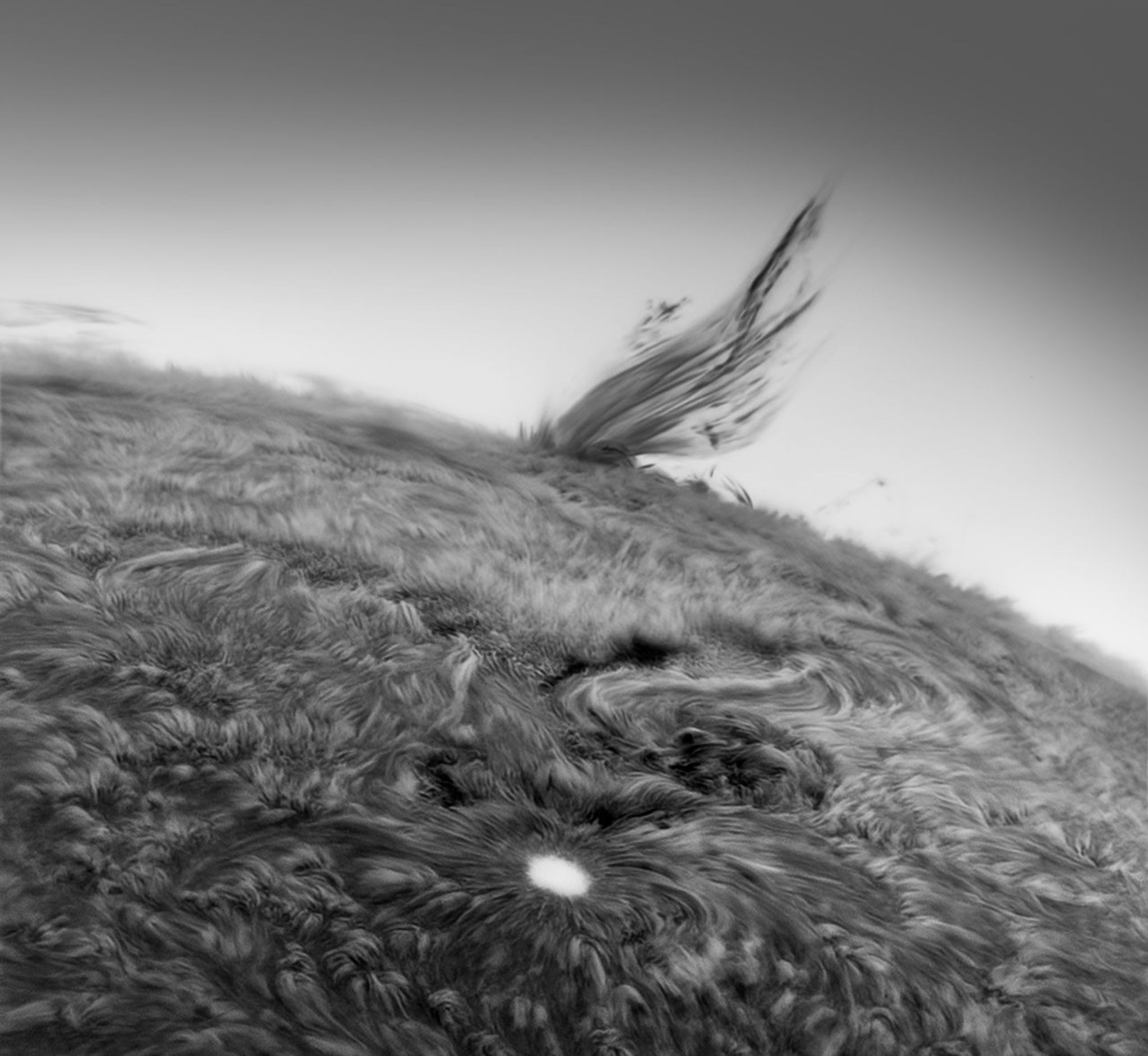
An H‑alpha image captures a moderate M‑class solar flare erupting from the Sun’s chromosphere, where stressed magnetic fields can suddenly release energy. Such events can disrupt radio communications and boost radiation levels in space.
A vivid solar outburst captured in today’s featured image spotlights a dynamic region of the Sun’s atmosphere: the chromosphere. Sitting above the visible surface (the photosphere), the chromosphere is a layer where temperatures climb rather than fall with increasing height—an apparent contradiction to everyday experience and a long-standing question in solar physics.
One leading explanation points to magnetism. The Sun’s turbulent interior drives churning motions that continually braid and stress magnetic field lines. Those fields extend upward through the solar atmosphere, carrying energy that can be deposited higher up, helping to heat layers like the chromosphere. But the same magnetic complexity that may warm the atmosphere can also set the stage for sudden, explosive releases of energy.
That release is what astronomers call a solar flare: a rapid brightening caused when magnetic fields become so twisted and strained that they abruptly reconfigure. When that happens, energy is converted into intense light across the spectrum and into showers of high-energy particles. In the featured observation, the flare is seen in a narrow slice of red light known as H‑alpha, produced by hydrogen atoms when they are energized. Using an H‑alpha filter allows observers to isolate this specific wavelength, revealing fine chromospheric detail and making the flare’s structure stand out as hot hydrogen moves above the Sun’s surface.
The event shown occurred on May 14, 2025. Space-based measurements from the GOES satellite system classified it as an M1 flare. In the standard GOES flare scale—based on peak X‑ray brightness—M-class flares are considered moderate, stronger than C-class events but below the most extreme X-class eruptions. Even at this “middle” tier, flares can have tangible effects near Earth.
M-class flares are capable of disrupting radio communications, particularly at high latitudes. They can also trigger minor radiation storms—bursts of energetic particles that raise exposure risks for astronauts in space. While such flares are not the most powerful the Sun can produce, they remain important targets for monitoring because their impacts can unfold quickly and depend on factors like flare location and the broader state of the solar magnetic environment.
To track these hazards, agencies including NASA and NOAA—along with other partners—continuously watch the Sun for signs of flare activity and related space weather. The goal is early warning: identifying eruptions and forecasting their possible consequences so that operators can protect satellites, adjust mission plans, and reduce risks to people working beyond Earth’s protective atmosphere.
Why it matters
Solar flares are not just spectacular; they can interfere with communications and increase radiation exposure for crews in space, especially on polar routes and in orbit. Continued monitoring by space-weather agencies helps translate rapid solar events into actionable alerts. As solar activity varies over time, what happens on the Sun can quickly become an operational concern on and around Earth.