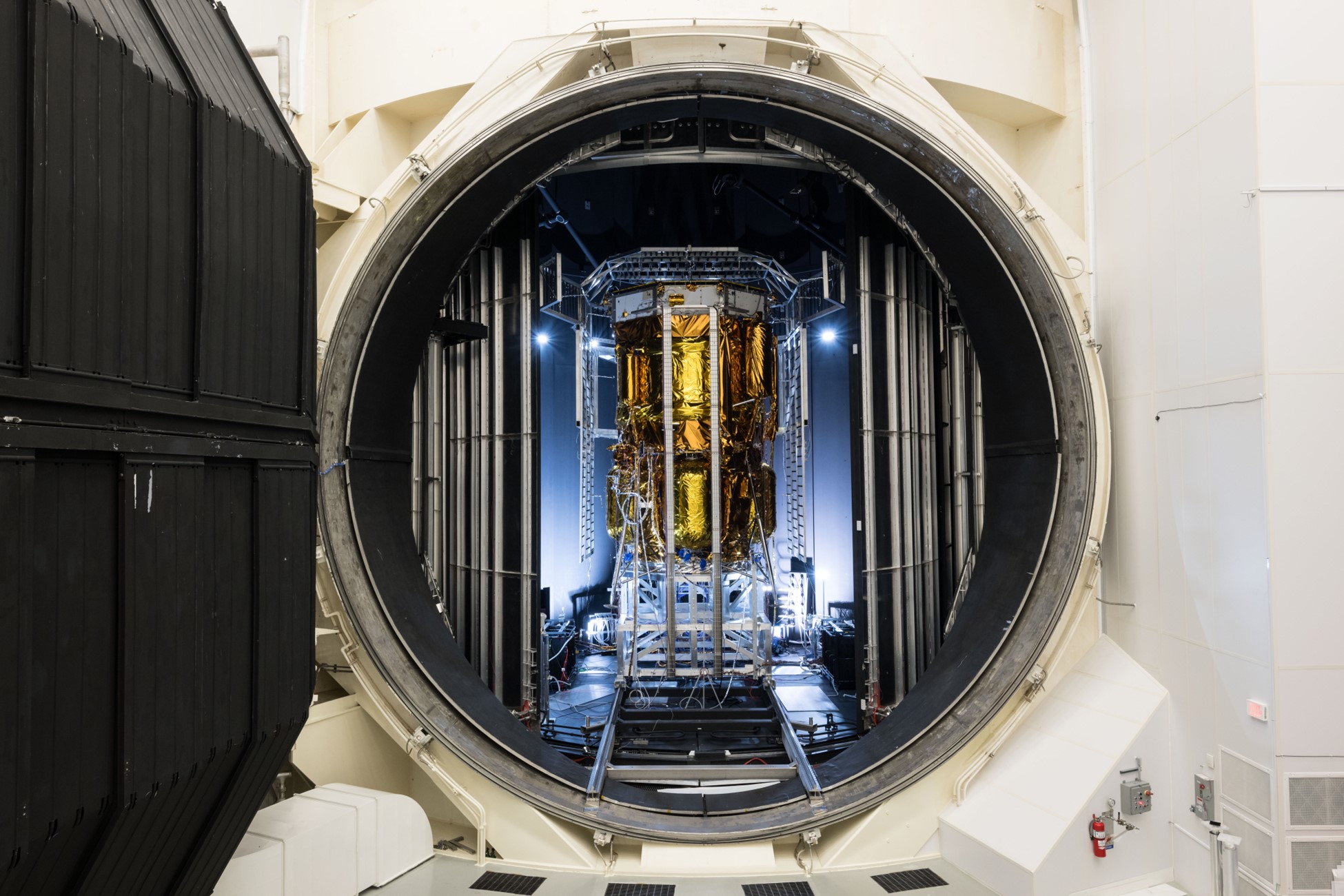
Blue Origin’s uncrewed lunar cargo lander, known as Endurance and designated Blue Moon Mark 1 MK1 , has completed a major round of environmental testing inside NASA’s…
Blue Origin’s uncrewed lunar cargo lander, known as Endurance and designated Blue Moon Mark 1 (MK1), has completed a major round of environmental testing inside NASA’s Thermal Vacuum Chamber A at Johnson Space Center in Houston. The campaign put the spacecraft through conditions meant to mimic space, allowing engineers to check how the vehicle performs when exposed to near-vacuum and severe temperature swings like those expected during a lunar mission.
MK1 is funded by Blue Origin as a commercial demonstration intended to strengthen capabilities tied to NASA’s Human Landing System efforts, which support the agency’s Artemis program to return astronauts to the Moon. The work in Chamber A also highlights a public-private model: Blue Origin conducted the testing under a reimbursable Space Act Agreement, paying NASA for access to the facility and related services.
Engineers used the chamber—one of the largest thermal vacuum test facilities in the world—to recreate the harsh environment of flight and evaluate whether the lander’s systems remain reliable under stress. By running the spacecraft through these ground-based simulations, the teams could assess system performance and confirm the vehicle’s structural and thermal integrity before it proceeds toward launch.
Endurance’s demonstration mission is designed to prove key technologies needed for future lunar surface operations. Among the headline objectives are precision landing, cryogenic propulsion, and autonomous guidance, navigation, and control—capabilities that will be essential as missions aim for more demanding sites and tighter landing constraints.
Beyond technology demonstrations, MK1 is also slated to deliver two NASA science and technology payloads to the Moon this year under the agency’s Commercial Lunar Payload Services (CLPS) initiative, targeting the lunar South Pole region. One payload, the Stereo Cameras for Lunar Plume-Surface Studies, is an array of high-resolution cameras intended to document how the lander’s engine plume interacts with the lunar surface during descent and touchdown. The imagery is expected to help scientists and engineers better understand plume-driven effects that could influence landing safety, surface hardware, and site selection.
The second payload, the Laser Retroreflective Array, is designed to support more accurate positioning by reflecting laser light back to orbiting spacecraft, enabling them to calculate a more precise location. Such capabilities can improve navigation and mapping for future lunar missions.
CLPS is NASA’s approach to partnering with U.S. companies to deliver science instruments and technology demonstrations to the Moon, broadening access to lunar surface opportunities while building knowledge of the environment. The data and experience gained are intended to support upcoming crewed missions within the Artemis campaign.
NASA and Blue Origin say lessons from MK1—spanning design, integration, and testing—will inform later Artemis missions and help mature technologies while reducing risk for human-rated systems. That includes Blue Moon Mark 2 (MK2), a larger crewed lander concept Blue Origin is developing to transport astronauts from lunar orbit to the surface and back, enabling sustained exploration in the South Pole area.
The testing effort was facilitated through NASA’s “front door” approach, a coordinated process that provides commercial partners access to agency facilities and technical expertise while maintaining safety, mission assurance, and alignment with NASA’s objectives.