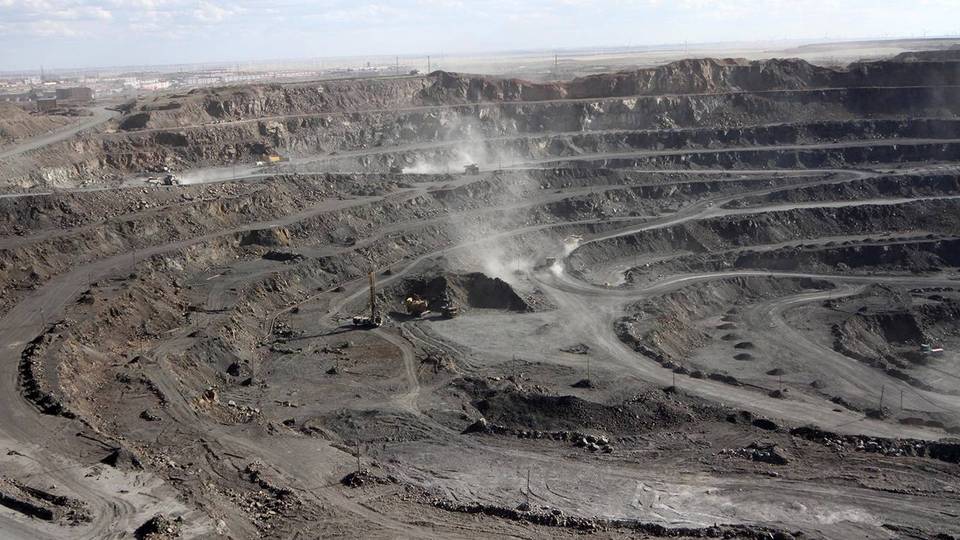
China is unlikely to impose a rare-earth embargo, but the threat is shaping policy and corporate choices abroad. The EU and US are building costly redundancy and stockpiles to cut exposure.
China is unlikely to pull the trigger on an outright embargo of rare-earth elements, but it has strong incentives to keep the possibility hovering in the background. The threat alone can shape corporate decisions and government policy abroad, reminding import-dependent economies how quickly supply chains for critical minerals can become a strategic pressure point.
Western governments, meanwhile, are not expected to reach full independence in rare-earth supply anytime soon. These materials are essential inputs for advanced manufacturing and defense-related technologies, yet building a self-contained supply chain—from mining and processing to downstream manufacturing—takes years, faces environmental and permitting hurdles, and is costly even when politically popular. Rather than true self-sufficiency, the more realistic trajectory is a steady attempt to reduce exposure to sudden disruptions.
That effort is already pushing the European Union and the United States toward expensive redundancy. New projects are being supported to replicate capacity that, from a narrow market perspective, might be more efficiently concentrated elsewhere. At the same time, governments and companies are likely to expand stockpiles to cushion potential shocks. Both strategies—duplicating capabilities and holding inventories—come with a price tag: higher near-term costs in exchange for greater resilience if a geopolitical crisis or trade conflict constricts supply.
This tug-of-war over rare earths reflects a broader shift in economic policy. In Berlin and other capitals, “economic security” has moved from a niche concept to a central organizing principle. The largest economies are turning that principle into concrete action, not only by reshoring or “friend-shoring” parts of critical supply chains, but also by using the size of their markets to influence how trading partners behave. Regulations, subsidies, and trade tools are increasingly designed with strategic dependencies in mind, not just efficiency.
Still, the politics of rare-earth resilience differ across countries. Large blocs such as the EU and the US can afford to experiment with industrial policy at scale, and they can try to force adjustments in global supply chains by setting standards or offering incentives that smaller economies cannot match. Their initiatives may gradually diversify supply sources, but they also risk raising costs for manufacturers and taxpayers, especially if multiple jurisdictions build parallel systems for the same inputs.
For smaller economies, the menu of options is narrower. They have less leverage to reshape partner behavior and less fiscal room to subsidize duplicate capacity. If they want to reduce vulnerability to coercion or bullying, diversification is often the only practical route—spreading import sources, building alternative supplier relationships, and avoiding overreliance on any single country or chokepoint.
In this sense, the rare-earth contest is not a single looming embargo so much as an ongoing game of influence, hedging, and risk management. China can benefit strategically from maintaining uncertainty, while Western governments respond by paying for resilience—without necessarily escaping dependence entirely.
Why it matters
Rare-earth supply is a bellwether for how geopolitics is reshaping global trade, with implications for manufacturers, defense planners, and consumers. The EU and US are likely to spend heavily on backup capacity and stockpiles, shifting costs up front to reduce the risk of a sudden cutoff later. Smaller economies, lacking similar leverage, will be pushed toward diversification as their main defense against supply-chain coercion.