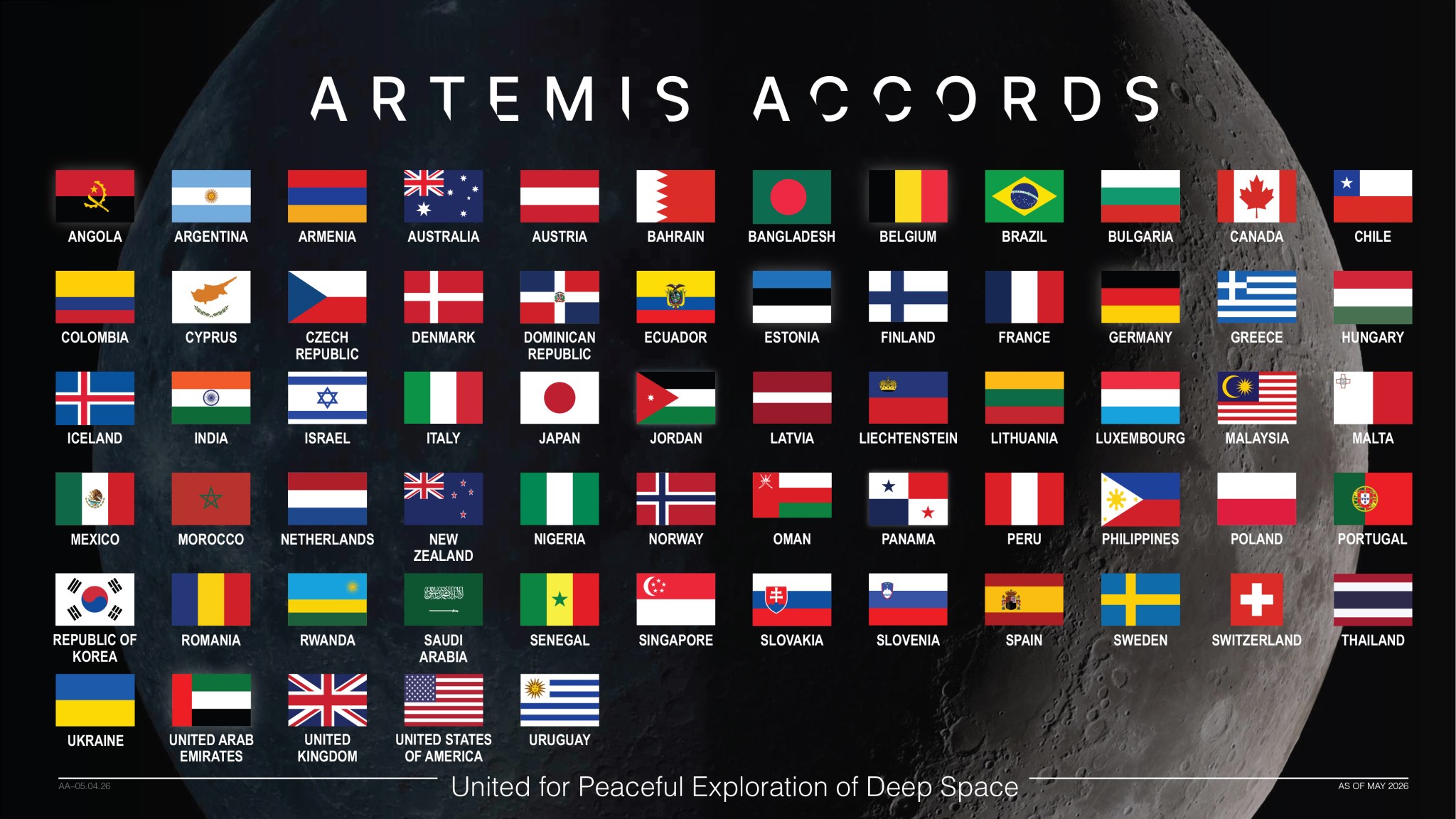
Malta has become the newest country to join the Artemis Accords, signing on to the U.S.-led framework that sets out shared principles for civil space exploration.
Malta has become the newest country to join the Artemis Accords, signing on to the U.S.-led framework that sets out shared principles for civil space exploration. The Republic of Malta is the 65th nation to endorse the accords, following a signing ceremony held Monday in the town of Kalkara with representatives from NASA and the U.S. Department of State in attendance.
In prerecorded remarks, NASA Administrator Jared Isaacman said Malta’s decision adds momentum to an expanding international partnership built around “peaceful, transparent, and responsible” activity beyond Earth. Those common standards, he argued, are intended to prevent confusion and disorder as more nations and private companies pursue ambitious missions, and to establish a clear roadmap for exploration that benefits all participants.
Malta’s Minister for Education, Youth, Sports, Research and Innovation, Clifton Grima, signed the agreement on the country’s behalf. Grima framed the move as a strategic investment in Malta’s economic and technological future, describing the space sector as a high-value arena driven by innovation. Joining the accords, he said, is expected to reinforce Malta’s governance approach, bolster the country’s standing internationally, and open avenues to attract investment, develop specialized capabilities, and create skilled jobs linked to the growing space economy.
The signing was witnessed by U.S. Ambassador to Malta Somers W. Farkas, NASA’s Europe Representative Gregory Mann, and Malta’s Deputy Prime Minister and Minister for Foreign Affairs and Tourism Ian Borg. U.S. officials also pointed to longstanding ties between the two countries, noting a relationship rooted in shared interests and values that stretches back to the era of the American Revolution.
NASA has encouraged signatory nations to take a deeper role in the Artemis program and recently highlighted new ways for members of the accords to expand their participation. The Artemis initiative, led by NASA, aims to return humans to the Moon and build the capabilities needed for future missions to Mars, while bringing together government and commercial partners.
The Artemis Accords were first introduced in 2020, during the first Trump administration, when the United States—through NASA and the State Department—joined with seven other founding nations to establish a set of practical guidelines amid rising global interest in lunar activity. That interest has been driven not only by national space agencies, but also by private-sector ambitions to operate on and around the Moon.
At their core, the accords outline expectations meant to improve safety, predictability, and coordination as countries explore the Moon, Mars, and deeper space. By signing, nations commit to conduct space exploration for peaceful purposes and with openness, to provide assistance to those in distress, to share scientific data so it can benefit humanity broadly, and to avoid harmful interference with other actors’ activities. The principles also call for protecting historically significant sites and artifacts and for developing best practices that support responsible exploration.
NASA expects additional countries to join in the coming months and years as it continues to press for an international approach to keeping space activities safe, cooperative, and sustainable.