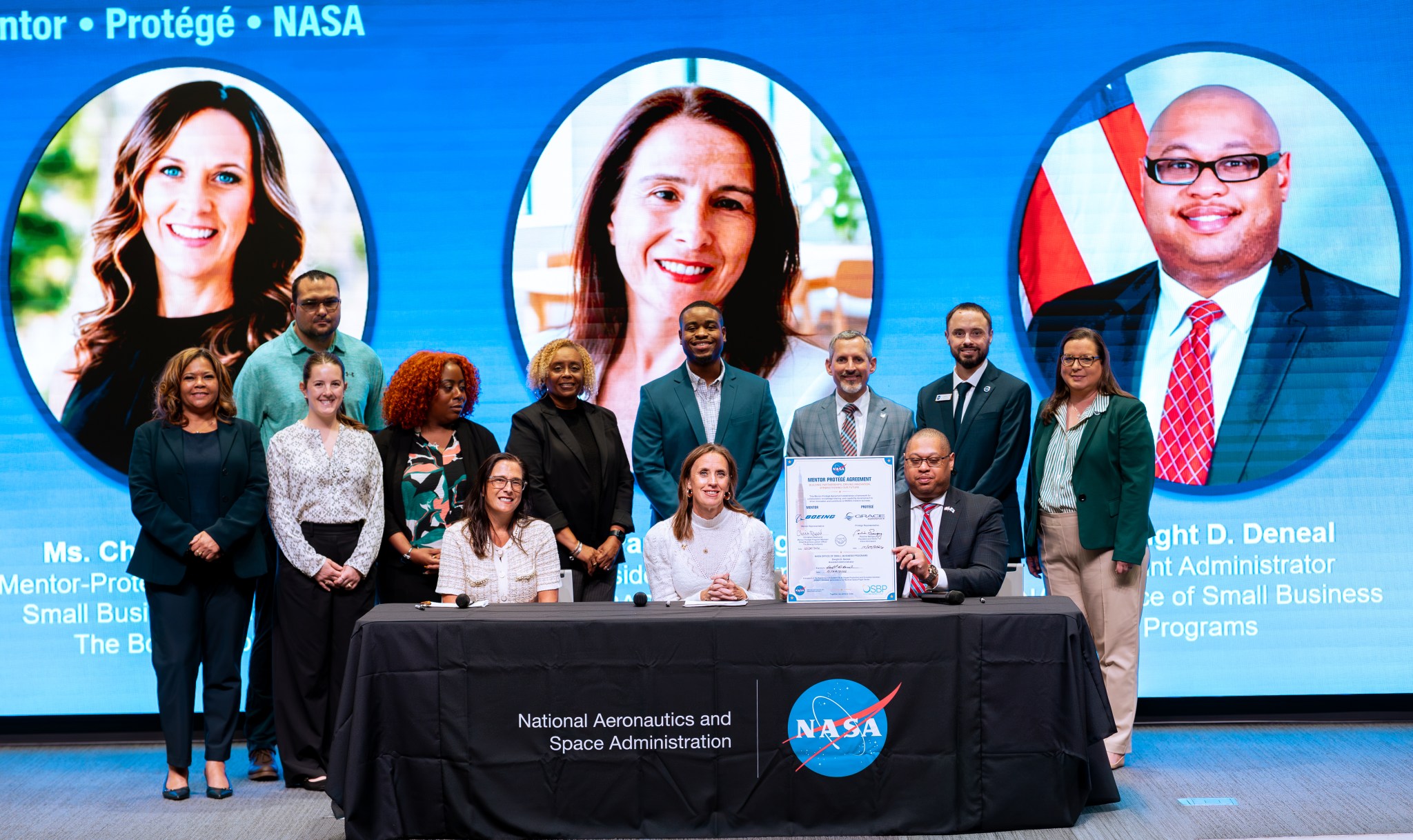
NASA has revamped its Small Business Supplier Development Program to cut barriers for emerging suppliers and strengthen the aerospace industrial base. Boeing will mentor GRACE Aerospace under a new agreement.
NASA is reshaping how it partners with small businesses, rolling out changes designed to make it easier for emerging suppliers to contribute to the agency’s next generation of exploration missions. The effort centers on a newly renamed initiative—the Small Business Supplier Development Program—which NASA says is intended to bolster the U.S. aerospace industrial base and ensure it is ready to deliver the components and expertise needed for high-priority missions.
Alongside the program’s overhaul, NASA announced a new Mentor-Protégé Agreement pairing The Boeing Company with GRACE Aerospace. The agreement is structured to provide hands-on development support aimed at helping the smaller firm grow into a stronger source of “mission-critical” aerospace hardware.
NASA’s updates focus on removing friction from participation. The agency says it is simplifying the program’s application steps, cutting down on administrative burdens, speeding up review and approval schedules, and improving incentives that encourage prime contractors to take part. The goal, NASA officials say, is to make supplier development more straightforward and better connected to the agency’s most immediate technical and mission demands.
Dwight Deneal, NASA’s assistant administrator for the Office of Small Business Programs at Headquarters in Washington, described the redesign as a deliberate shift toward mission outcomes. The agency, he said, is repositioning the program as a tool to improve industrial readiness and support mission success, while directing developmental support toward capabilities NASA most needs to strengthen.
Under the Boeing–GRACE partnership, Boeing will deliver “structured assistance” intended to expand GRACE Aerospace’s performance and capacity as a supplier in the aerospace sector. Boeing is also financing the agreement, which is valued at nearly $500,000.
Christian Diamond, Boeing’s Mentor-Protégé Program manager and small business liaison officer, said the company views the agreement as an extension of its long-running work with NASA. He emphasized that the partnership is expected to create opportunities for Boeing, GRACE, and the wider aerospace supply chain, while allowing Boeing to share expertise that supports the small business’s long-term growth and, in turn, reinforces Boeing’s own supplier network.
For GRACE Aerospace, the agreement is framed as a springboard to tackle more technically demanding programs. The company brings roughly 20 years of experience supporting defense and aerospace customers, and it plans to use the mentorship to prepare for increasingly complex aerospace and spaceflight work. Pauline Sevigny, GRACE’s president and owner, said the company is grateful for the opportunity and intends to learn from industry specialists while contributing to goals she characterized as resilience and “space superiority.”
NASA’s updated supplier development effort sits within the agency’s broader Office of Small Business Programs. Additional details about the initiative are available through NASA’s Office of Small Business Programs website: https://www.nasa.gov/osbp/supplier-development-program/
Why it matters
NASA’s missions depend on deep supply chains, and delays or gaps among smaller, specialized manufacturers can ripple into schedules and costs. By simplifying participation and motivating prime contractors to mentor smaller firms, NASA is trying to widen and harden the domestic supplier base needed for future exploration. The next test will be whether faster approvals and stronger incentives translate into more small businesses delivering flight-critical hardware at scale.