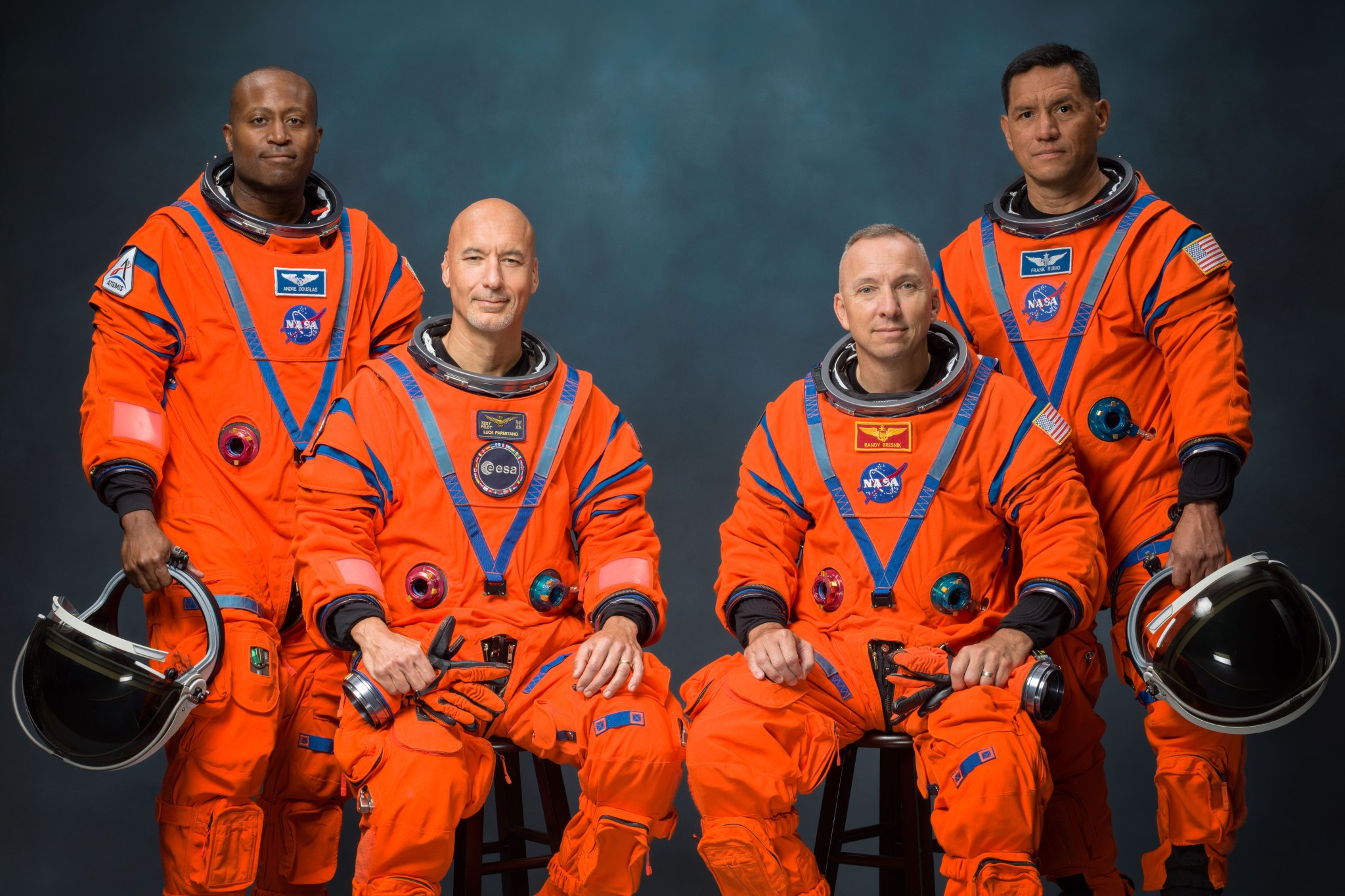
NASA has outlined fresh details for Artemis III, a mission the agency describes as a crucial proving ground for the technologies and procedures it will need before…
NASA has outlined fresh details for Artemis III, a mission the agency describes as a crucial proving ground for the technologies and procedures it will need before astronauts attempt the first crewed expedition to the lunar South Pole. In an update Tuesday, NASA said Artemis III is targeted for 2027 and will focus on demanding operations in Earth orbit that are intended to set the stage for Artemis IV, currently planned for 2028.
The agency also named the core flight team for Artemis III and identified NASA astronaut Bob Hines as the backup crew member. The prime crew consists of commander Randy Bresnik, pilot Luca Parmitano of the European Space Agency, and mission specialists Frank Rubio and Andre Douglas. The group will begin training immediately, with a dual emphasis: mastering Orion spacecraft systems and supporting the ongoing development and operational planning for test versions of the commercial lunar landing vehicles being built by Blue Origin and SpaceX.
Artemis III will launch aboard NASA’s Space Launch System (SLS) from Kennedy Space Center in Florida, sending the Orion spacecraft and its crew into low Earth orbit. After completing initial checkouts, Orion will conduct rendezvous and docking demonstrations—capabilities the spacecraft has not yet shown in flight. The docking will be performed with prototype configurations derived from one or both U.S. commercial human landing systems now under development.
Those maneuvers are expected to be among the mission’s most technically intricate elements. NASA’s plan calls for a tightly sequenced, multi-launch campaign involving heavy-lift rockets to place the required vehicles and hardware in orbit. The flight will also exercise the integrated interfaces between Orion and the landers, including software compatibility, communications links, propulsion coordination, and mechanical connections.
NASA Administrator Jared Isaacman said the mission represents the next major step toward returning humans to the Moon and highlighted both the scale of the technical challenge and the breadth of participation across government and industry. He framed Artemis III as an effort that builds on the momentum of Artemis II while testing the orbital operations and advanced systems needed for deeper exploration beyond Earth.
The assignment of Luca Parmitano marks a milestone for the Artemis program: it is the first time an ESA astronaut has been formally slotted onto an Artemis mission. ESA Director General Josef Aschbacher said Parmitano’s role as pilot reflects Europe’s operational experience in human spaceflight. He also pointed to ESA’s European Service Module—already central to Orion’s design—as a continuing European contribution that provides key functions that keep the spacecraft operating.
Hardware preparations are advancing on multiple fronts. NASA engineers plan to mate Orion’s crew module with its service module this summer, and the spacecraft’s docking system—set to fly for the first time—will be installed as part of that work. Testing of Orion’s heat shield is continuing, with individual blocks undergoing ultrasonic inspections before being attached to the shield’s underlying structure.
SLS assembly is also moving forward. Technicians are integrating the engine section with the core stage and are preparing to install the rocket’s four RS-25 engines later this summer. With all solid rocket booster segments now delivered to Kennedy Space Center and refurbishment of the mobile launcher proceeding as planned, NASA expects to begin stacking the launch vehicle this summer as well.