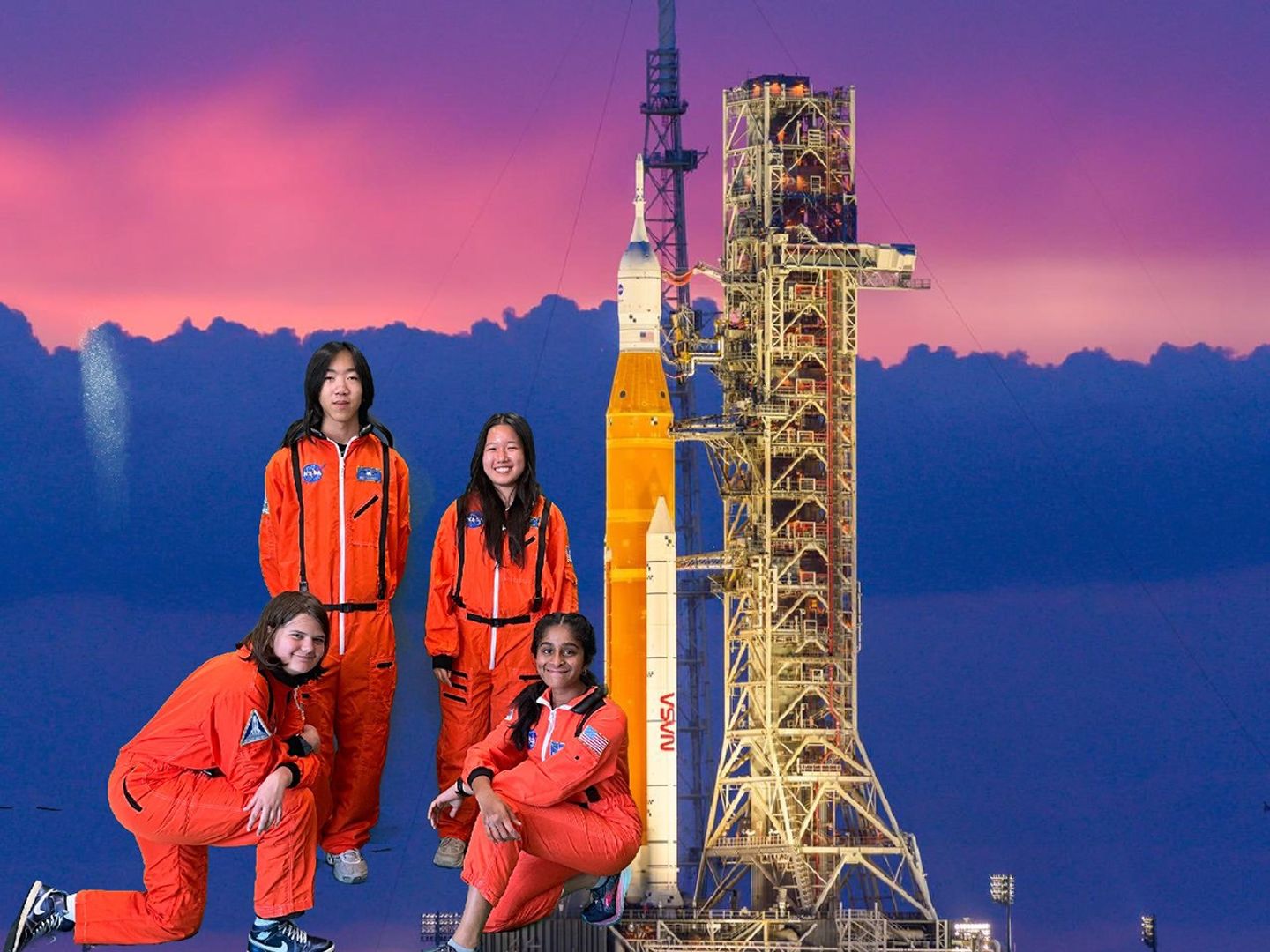
The Northwest Earth and Space Science Pathways NESSP project has wrapped up its 2025–2026 ROADS Rover Observation And Discoveries in Space from Earth to Venus National…
The Northwest Earth and Space Science Pathways (NESSP) project has wrapped up its 2025–2026 ROADS (Rover Observation And Discoveries in Space) from Earth to Venus National Challenge, a NASA Science Activation student program designed to immerse young learners in hands-on science and engineering modeled on real mission work. This year’s Venus-themed challenge drew participation from more than 500 students organized into 120 teams across eight states.
The program unfolded over the school year, beginning with educator professional development in August 2025. That training equipped teachers and mentors with the tools to guide students through the ROADS framework—an approach that asks upper elementary, middle, and high school participants to work collaboratively on mission-inspired tasks that reflect how NASA scientists and engineers study planetary environments and plan future exploration.
After registering, teams progressed through a series of checkpoints from January through May 2026, documenting and refining their work as they advanced. NESSP also hosted regional in-person “Hub” events in April and May 2026, giving students opportunities to present projects, meet peers, and take part in NASA-inspired STEM activities. Those gatherings were held at partner institutions including Central Washington University, Montana State University, and Northern Arizona University, connecting students to mentors and letting many experience a college campus as part of a broader STEM learning community.
NESSP, led by Central Washington University in Ellensburg, Washington, aims to link educators and students with NASA science through experiential learning. In the ROADS from Earth to Venus challenge, teams completed eight Mission Objectives spanning scientific investigation, engineering design, teamwork, and communication. Students captured their progress in Mission Development Logs and tackled a wide mix of activities tied to planetary science and exploration. Among the tasks were designing mission patches; modeling the movement of carbon on Earth and Venus; investigating the greenhouse effect; collecting remote sensing observations using cameras mounted on kites; and programming robotic rovers to traverse terrain inspired by Venus while gathering data. Teams also explored NASA-connected career pathways and assembled “mission stories” for final presentations shared virtually and at Hub events.
“The ROADS Challenge gives students the opportunity to do more than learn about NASA missions – they become part of the mission,” said Dr. Darci Snowden, director of NESSP. Snowden pointed to the unusually broad range of objectives teams tackled this year, from carbon-cycle modeling and experiment design to kite-based remote sensing and rover programming. She added that the process—working through authentic mission-style problems, collaborating with teammates, and communicating results—helps students build the skills and confidence to envision themselves as future scientists, engineers, educators, and explorers.
To mark the end of the challenge, NESSP recognized standout teams in elementary, middle, and high school divisions for strong participation and exemplary Mission Development Logs. In the Elementary School Division, honorees were The Evil Twins, The Acid Clouds, Flaming Asteroid Nebulas, and The NASA Intelligence, all from Silverdale, Washington. Middle School recognitions went to Venus Ascenders (Mukilteo, Washington), Project Fuego Venus (Safford, Arizona), Galaxy Dragons (Sequim, Washington), The Four Folds (Hardin, Montana), and Crater Lake Crusaders (Medford, Oregon). High School honorees included Laborantem (Columbus, Montana), Velocity to Venus (Sequim, Washington), Puget Sound Propulsion (Mukilteo, Washington), and Evergreen Explorers (Mukilteo, Washington).