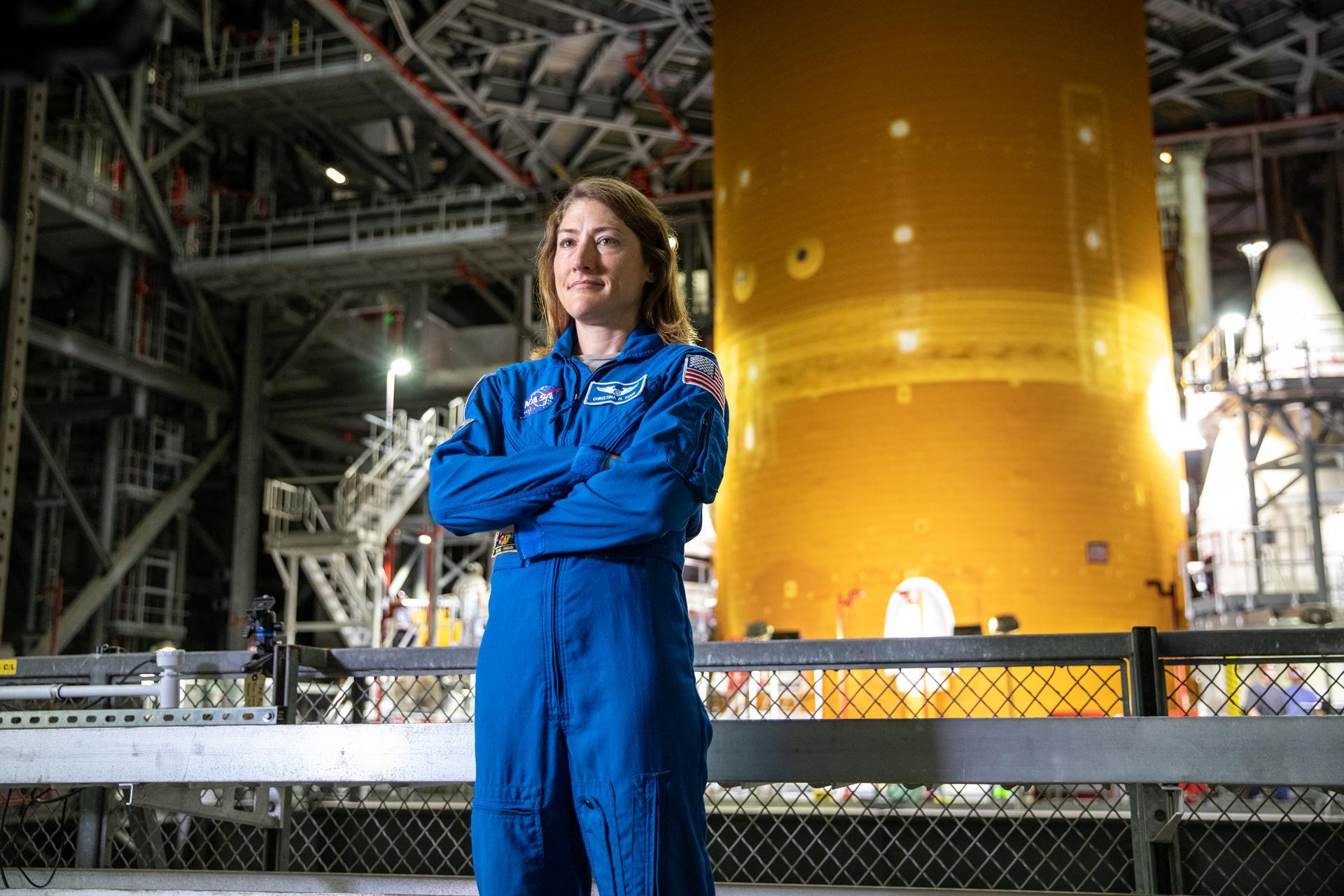
NASA astronaut and engineer Christina Koch will serve as acting deputy chief engineer, taking over after Katherine Van Hooser’s retirement and shifting to management status.
NASA astronaut and engineer Christina Koch is set to become NASA’s acting deputy chief engineer starting Sunday, Nov. 1, taking over after the retirement of Katherine Van Hooser. Van Hooser will завершить more than 35 years at the agency when she steps down on Wednesday, Oct. 21.
In the acting leadership post, Koch will help steer NASA’s engineering workforce and policies, with responsibilities that include agency-wide technical oversight, ensuring missions are prepared to fly, and reinforcing engineering standards across programs and projects. NASA noted that the move also changes Koch’s astronaut designation: she will shift to management astronaut status, which makes her ineligible for future spaceflight assignments.
NASA Administrator Jared Isaacman said Koch’s background gives her an uncommon perspective on the agency’s work—having contributed to the design and development of space systems on Earth and then relied on that hardware while living and working in orbit. Isaacman pointed to her long-duration stay aboard the International Space Station and her participation as a mission specialist on Artemis II earlier this year, the first crewed flight around the Moon in more than five decades. He said her technical skill and operational experience will be valuable as NASA pursues major objectives, including returning astronauts to the lunar surface, building a Moon Base, advancing nuclear power capabilities for space applications, and developing technologies aimed at eventual Mars missions.
NASA Associate Administrator and Chief Engineer Amit Kshatriya also praised Van Hooser’s tenure, describing her as a leader who combined deep technical competence with steady judgment on some of the agency’s most demanding engineering problems. He credited her leadership with strengthening NASA’s engineering culture and guiding teams through key transitions and milestones. Kshatriya said Koch brings a blend of engineering expertise and flight-tested insight, along with leadership experience both at NASA centers and within the Astronaut Office.
Koch is widely known for her 328-day continuous mission aboard the International Space Station, a mark that set a record for the longest single spaceflight by a woman. During that expedition, she also took part in the first all-female spacewalks. Before joining NASA’s astronaut corps in 2013, she built her career as an electrical engineer at NASA’s Goddard Space Flight Center in Greenbelt, Maryland, where she helped develop scientific instruments for space missions. Her earlier work also included scientific field engineering assignments in Antarctica and the Arctic. Over time, she has held leadership roles at Johnson Space Center in Houston and within the Astronaut Office—experience NASA says will inform her approach to human spaceflight readiness and broader technical decision-making.
Van Hooser, meanwhile, joined NASA in 1991 at the Marshall Space Flight Center in Huntsville, Alabama. Her early focus was propulsion engineering, particularly liquid rocket engine turbomachinery, before she rose to become chief engineer for the space shuttle main engine. In that position she oversaw engineering efforts through the shuttle program’s final 21 flights. She later became the first chief engineer for the Space Launch System’s Liquid Engines Element, contributing to the propulsion foundation of NASA’s Artemis campaign. As Marshall’s chief engineer and, beginning in 2023, NASA’s deputy chief engineer, she provided technical leadership and oversight across the agency, helping maintain continuity and mission readiness through complex challenges and organizational change.
Why it matters
NASA’s deputy chief engineer helps shape the technical rigor behind every major mission, influencing safety, reliability, and schedule risk across the agency. Koch’s appointment brings recent, firsthand human-spaceflight experience into a top engineering oversight role—while also ending her eligibility to fly again. As Artemis and other ambitious projects accelerate, NASA’s engineering leadership will be central to how quickly—and how safely—the agency can meet its lunar and Mars goals.