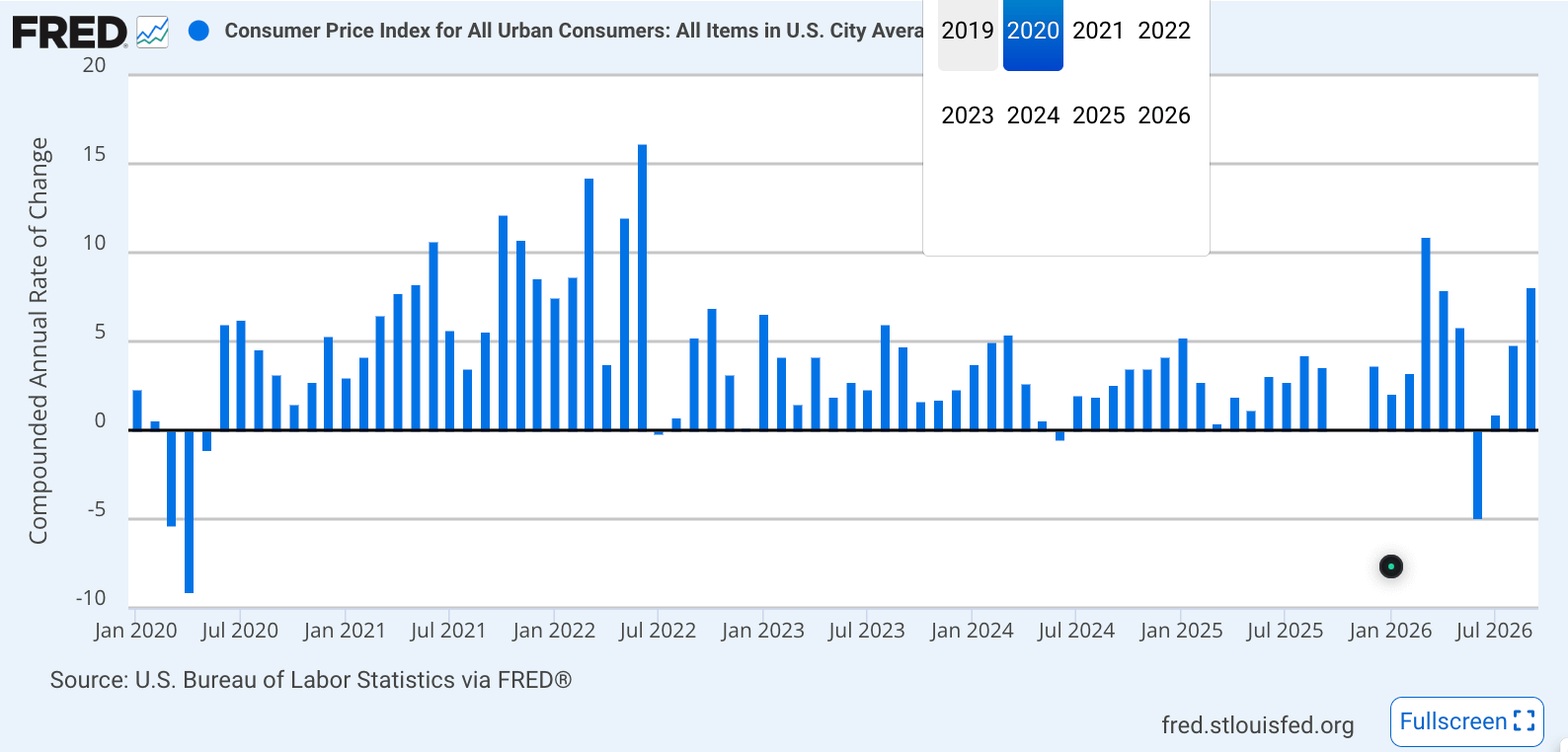
Hotter-than-expected inflation, led by a sharp rise in gasoline, is shifting market bets toward more Fed rate hikes. Stocks and risk assets slid as credibility concerns grew.
September’s inflation report landed with a thud on Wall Street and in Washington, complicating the Federal Reserve’s plans for the remainder of 2026 and raising the political stakes around its next meeting later this month.
The Consumer Price Index showed prices rising faster than investors anticipated. Over the past 12 months, consumer prices climbed 3.7%—well above the Fed’s roughly 2% inflation goal. Month to month, prices increased 0.6% in September, following a 0.4% rise in August. A major driver was energy: gasoline prices surged 9.1% from August to September, according to the CPI release cited in Bloomberg’s coverage.
That combination—high year-over-year inflation, a sharp monthly acceleration, and a visible energy shock—is reshaping expectations for where interest rates go next. Before the data, some market participants were looking for only modest additional tightening across the rest of 2026. After the report, the center of gravity shifted upward. What previously looked like 0.25 percentage points of rate increases now looks more like 0.50 points, implying two quarter-point moves—one potentially at the Federal Open Market Committee meeting in October and another in December. And what some had viewed as 0.50 points of tightening now starts to resemble 0.75 points.
The Fed, however, had telegraphed the possibility of skipping an October hike. That signal is now under pressure. In his SGH Macro Advisors newsletter, economist Tim Duy argued that inflation expectations already appear to be near 3% and that markets do not fully believe the Fed will stand pat in October given the latest “hot” inflation print. Duy also pointed to a credibility challenge: Fed Governor Chris Waller had previously suggested that a 0.3% monthly increase in core CPI could serve as a trigger for action, and former Fed official Kevin Warsh reinforced that threshold with September’s rate hike. With Warsh publicly associated with a more hawkish posture, Duy asked how policymakers could justify not moving again after an upside inflation surprise.
Economist Justin Wolfers, writing in his Platypus Economics newsletter, put the message more bluntly: inflation is running higher than it should, and the news is worse than forecasters expected. Wolfers emphasized three takeaways from the report: inflation remains too high in absolute terms; headline inflation is not falling, in part because of energy; and the key surprise is that the number came in above what markets had priced in.
Markets responded accordingly. Bloomberg’s David Rovella reported that the unexpectedly strong CPI reading reinforced expectations of Fed action, sapping appetite for riskier assets. CoreWeave bonds fell to levels typically associated with distress, even as the company’s chief executive described market behavior as “irrational.” Semiconductor-linked bellwethers, including Nvidia and Broadcom, extended a six-session slide to roughly 12%, reflecting renewed anxiety about higher interest rates, elevated valuations, and the enormous capital costs tied to building out artificial-intelligence infrastructure.
With midterm elections approaching, the inflation data also intensifies the affordability debate. Against that backdrop, any decision by the Fed to pause in October will be interpreted not just through the lens of inflation and employment, but also through the political context—including efforts to avoid provoking President Donald Trump.
Why it matters
Sticky inflation at 3.7% keeps pressure on household budgets and forces investors and businesses to plan for higher borrowing costs. The Fed’s credibility is now on the line: after signaling a possible October pause, officials must decide whether to prioritize clear inflation-fighting signals or avoid abrupt moves that could jolt markets and politics. The next FOMC meetings in October and December will be key markers for whether the central bank leans into additional tightening or risks being seen as tolerating inflation above target.