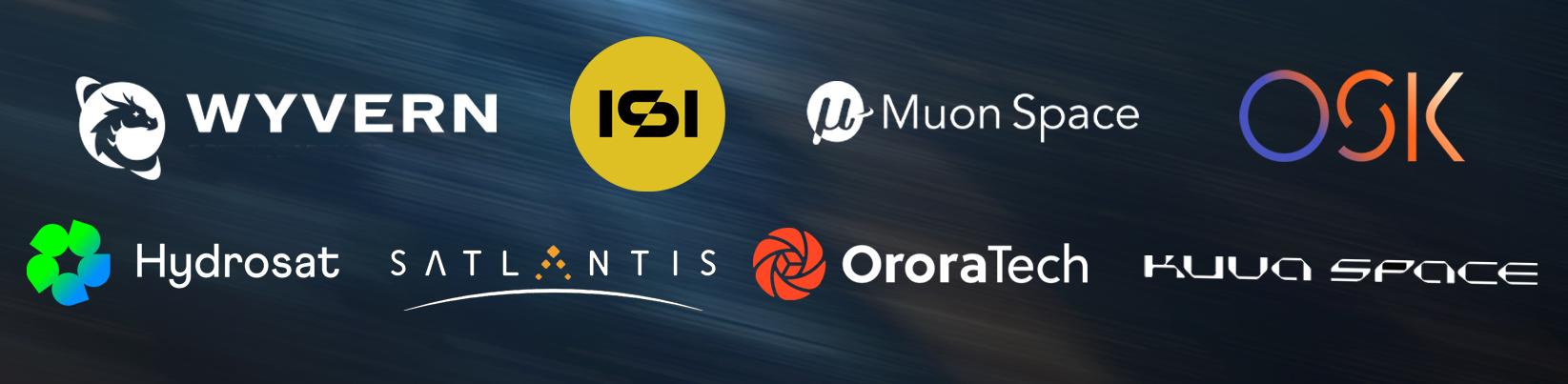
NASA has chosen eight commercial satellite data providers for new contract awards under its Commercial Satellite Data Acquisition CSDA program, expanding the pool of…
NASA has chosen eight commercial satellite data providers for new contract awards under its Commercial Satellite Data Acquisition (CSDA) program, expanding the pool of privately sourced Earth-observation information available for agency research and applications.
The selections were made through CSDA’s “On-Ramp 2” Multiple Award contract vehicle, structured as a firm-fixed-price, indefinite-delivery/indefinite-quantity (IDIQ) arrangement. Across all awards, the contracts carry a combined ceiling value of up to $476 million, with performance running through November 2028.
A defining feature of the CSDA IDIQ is its on-ramp provision, which allows NASA to reopen the solicitation at intervals. That approach enables additional companies to join later and also gives current CSDA vendors a pathway to offer new or upgraded data products—such as datasets derived from newly deployed instruments—that were not part of earlier proposal windows.
Dana Ostrenga, CSDA project manager, said the agency’s Earth science work depends on a broad range of observations gathered from satellites, aircraft, and ground-based measurements. She emphasized that the newly added commercial providers are intended to complement NASA’s existing Earth-observing assets and its current set of commercial partners. By widening the range of data available for evaluation and use, the program aims to provide researchers with a fuller picture of Earth’s atmosphere, land surfaces, oceans, cryosphere, and solid Earth—supporting both scientific advances and practical applications.
Following the contract awards, the selected companies’ datasets are slated to become accessible to approved CSDA users through the Satellite Data Explorer (SDX), the program’s online discovery and access platform. SDX is designed to let authorized users search for and obtain CSDA-acquired commercial data, including capabilities to discover, access, task, and download eligible products.
NASA outlined a standardized process for bringing commercial providers into the program. CSDA begins by issuing a request for proposals on SAM.gov, the federal government’s primary portal for managing contract solicitations. Interested firms submit proposals seeking entry into the IDIQ contract structure. A Solicitation Evaluation Board then reviews submissions to determine competitiveness and whether they satisfy CSDA technical requirements, including expectations related to sustained observations, orbital platforms, and data types aligned with the NASA Earth Science Division’s goals. Proposals that meet those requirements proceed to NASA leadership for approval, after which the agency awards contracts and initiates data evaluations through CSDA. Once evaluations are completed, providers may compete for task orders competed within the CSDA framework.
The CSDA program, established by NASA’s Earth Science Division, serves as the agency’s central mechanism for identifying, acquiring, and assessing commercial Earth observation data. NASA says these purchases can augment government and partner capabilities by bringing in data that may offer finer spatial detail, more frequent repeat coverage, measurement types that complement existing missions, and taskable observations.
Commercial datasets made available through SDX are limited to authorized CSDA users. Prospective users can apply by completing the CSDA Program Data Authorization Form, and access to SDX also requires an Earthdata Login.