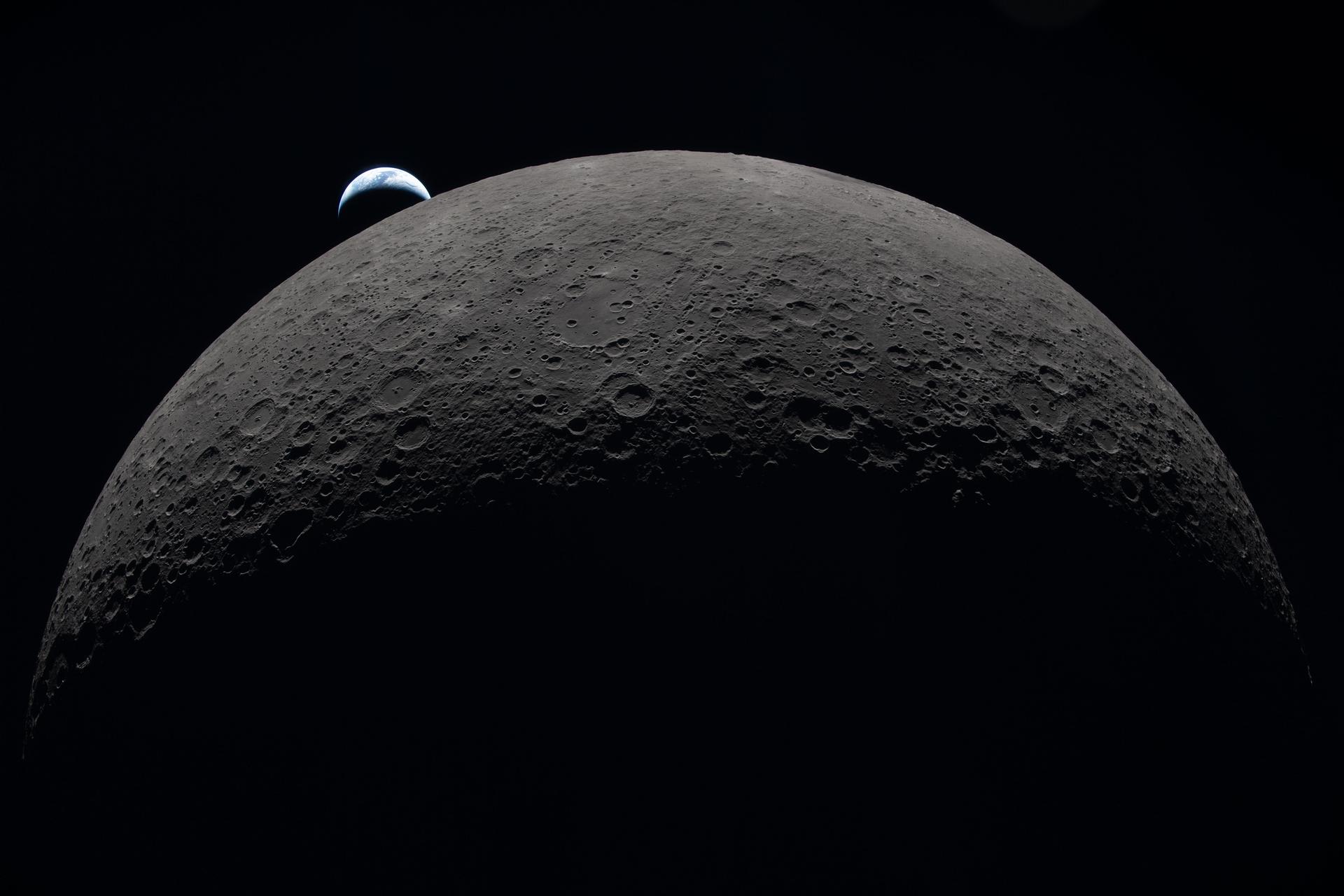
NASA is pushing to make future Moon and Mars expeditions less dependent on Earth-bound supply chains by accelerating technologies that can harvest useful materials directly from other worlds.
NASA is pushing to make future Moon and Mars expeditions less dependent on Earth-bound supply chains by accelerating technologies that can harvest useful materials directly from other worlds. The approach, known as in-situ resource utilization (ISRU), targets substances ranging from water ice and minerals to gases implanted in the Moon’s surface by the solar wind—resources that could one day feed propulsion systems, generate energy, and sustain life-support equipment for astronauts operating far from home.
As part of that effort, NASA has awarded Seattle-based Interlune a $6.9 million, firm-fixed-price contract running about 18 months. The award comes through Phase III of NASA’s Small Business Innovation Research (SBIR) program, a contracting pathway intended to move promising technologies out of the lab and toward operational use in NASA missions or the broader private sector. Interlune, which focuses on developing space-based natural resources, will use the funding to validate key tools for scouting and assessing lunar materials—capabilities aimed at improving the self-sufficiency of future missions and reducing the mass and cost of supplies launched from Earth.
The new work builds on Interlune’s earlier collaboration with NASA’s Flight Opportunities program. In that campaign, the company developed and tested payload prototypes during parabolic aircraft flights that briefly recreate the reduced-gravity environment expected on the Moon. Under the Phase III contract, Interlune is expected to progress from prototypes to engineering development units and flight-ready hardware, with testing designed to demonstrate that the instruments can perform reliably in relevant conditions.
Interlune’s payload concept is designed to do several jobs in sequence: gather samples of lunar regolith, sort the material by particle size, release volatile gases embedded in the grains, and quantify those gases. Such measurements are central to determining whether the Moon’s surface holds accessible reserves of strategically valuable species, including hydrogen and helium-3, that might be extracted and used in future space operations.
A centerpiece of the payload is a mass spectrometer influenced by NASA’s Mass Spectrometer Observing Lunar Operations (MSOLO) technology. Developed at NASA’s Kennedy Space Center in Florida, MSOLO is a compact, rugged instrument intended to analyze gases and characterize the chemical environment of lunar landing sites. The device originated within NASA’s Game Changing Development program, which seeks to mature high-impact technologies to the point they can be adopted for real missions.
MSOLO hardware was demonstrated under lunar-like conditions during Intuitive Machines’ second lunar mission, which targeted the Moon’s south pole region in 2025. Michael Johansen, deputy program manager for NASA’s Game Changing Development Program, said the agency aims to advance transformative technologies until industry can confidently incorporate them, pointing to MSOLO’s progression into a flight-capable instrument as an example. He added that seeing the technology used in commercial resource-prospecting efforts represents meaningful progress for the emerging lunar economy.
NASA has made MSOLO available for commercial applications and notes that it can be configured for ground testing and different flight architectures. Its internal design includes onboard processing through a hybrid computer and a calibration gas system, allowing the instrument to verify and adjust its measurements directly on the lunar surface. The software has already been modified to interface with four different Commercial Lunar Payload Services (CLPS) lander designs, underscoring its adaptability for a variety of commercial missions while also producing data relevant to NASA’s Artemis program.
NASA officials view investments in commercial lunar surface technologies as a key step toward a sustained presence on the Moon. By maturing instruments that can prospect and ultimately enable the use of local materials, the agency expects to lower the cost and complexity of deep-space exploration. SBIR and its companion Small Business Technology Transfer (STTR) program—managed by NASA’s Space Technology Mission Directorate—provide funding and other support to startups and small firms with fewer than 500 employees to develop and commercialize technologies that advance NASA’s goals and address broader challenges.