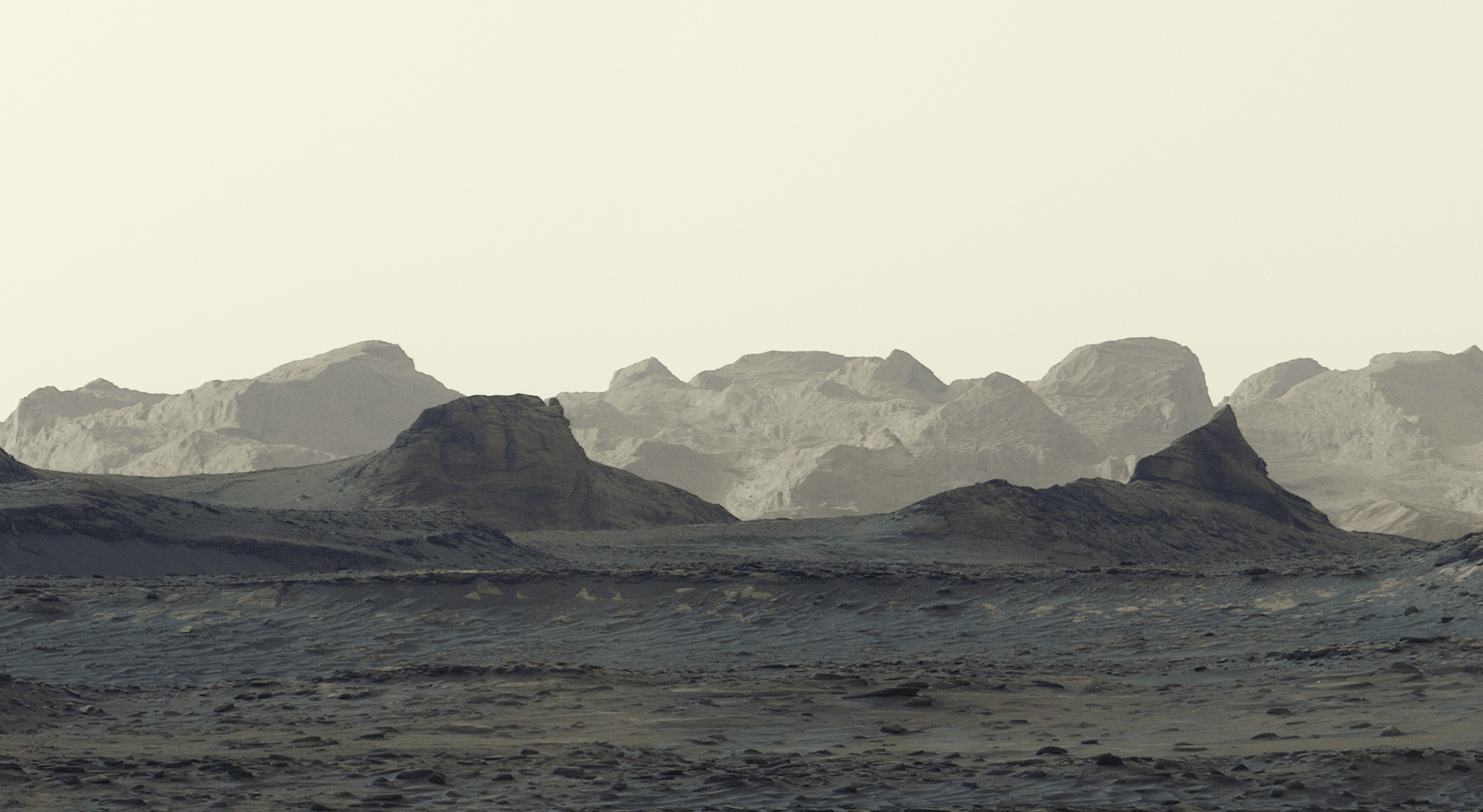
NASA’s Curiosity rover has captured its sharpest view yet of wind-carved Martian yardangs at dawn, revealing fine textures in distant cliffs that could help decode the planet’s erosional history.
NASA’s Curiosity rover has delivered a striking new look at daybreak on Mars, pairing the soft light of dawn with a close-up view of wind-sculpted terrain known as yardangs. The image, released by the agency on Oct. 6, 2026, comes from a larger panorama and offers what NASA describes as the most detailed look so far at distant Martian cliffs carved by persistent winds.
In the scene, long, narrow ridges stretch across the landscape—classic yardang formations produced when wind-driven particles gradually erode softer rock, leaving behind elongated spines aligned with prevailing airflow. While yardangs have been identified in orbital imagery for years, the new view brings out fine-scale textures and edges that are difficult to resolve from farther away. Mission researchers say these are the kinds of details they have been hoping to examine more closely, because small differences in shape and layering can preserve clues about how the rocks formed and how Mars’ environment has changed over time.
Curiosity recorded the panorama using its Mastcam imaging system on Aug. 11, during the rover mission’s 4,982nd Martian day, or sol. Rather than a single exposure, the panorama consists of six separate Mastcam frames. After the data were transmitted back to Earth, engineers and imaging specialists combined the individual shots into one seamless scene.
The dawn lighting is more than an aesthetic backdrop. Low-angle sunlight can accentuate shadows and relief, making ridges, grooves, and subtle contours stand out. That effect can help scientists distinguish between different erosional patterns and better interpret how wind has shaped the cliffs over long periods.
Curiosity has been exploring the Martian surface for more than a decade, using cameras and other instruments to reconstruct the planet’s geological history. This latest close-up adds a high-resolution look at features that, until now, have largely been appreciated from a distance—wind-carved cliffs and ridges that record the work of Mars’ atmosphere, even in its thin modern form.
Why it matters
Yardangs are natural records of erosion, and seeing them in unprecedented detail can sharpen scientists’ understanding of how Martian landscapes evolve under wind and dust. The new panorama also demonstrates how routine imaging—stitched from multiple Mastcam frames—can deliver fresh scientific value when lighting conditions reveal subtle terrain features. Researchers will be watching for what these fine textures and ridge shapes imply about rock strength, layering, and the environmental forces that shaped the region.