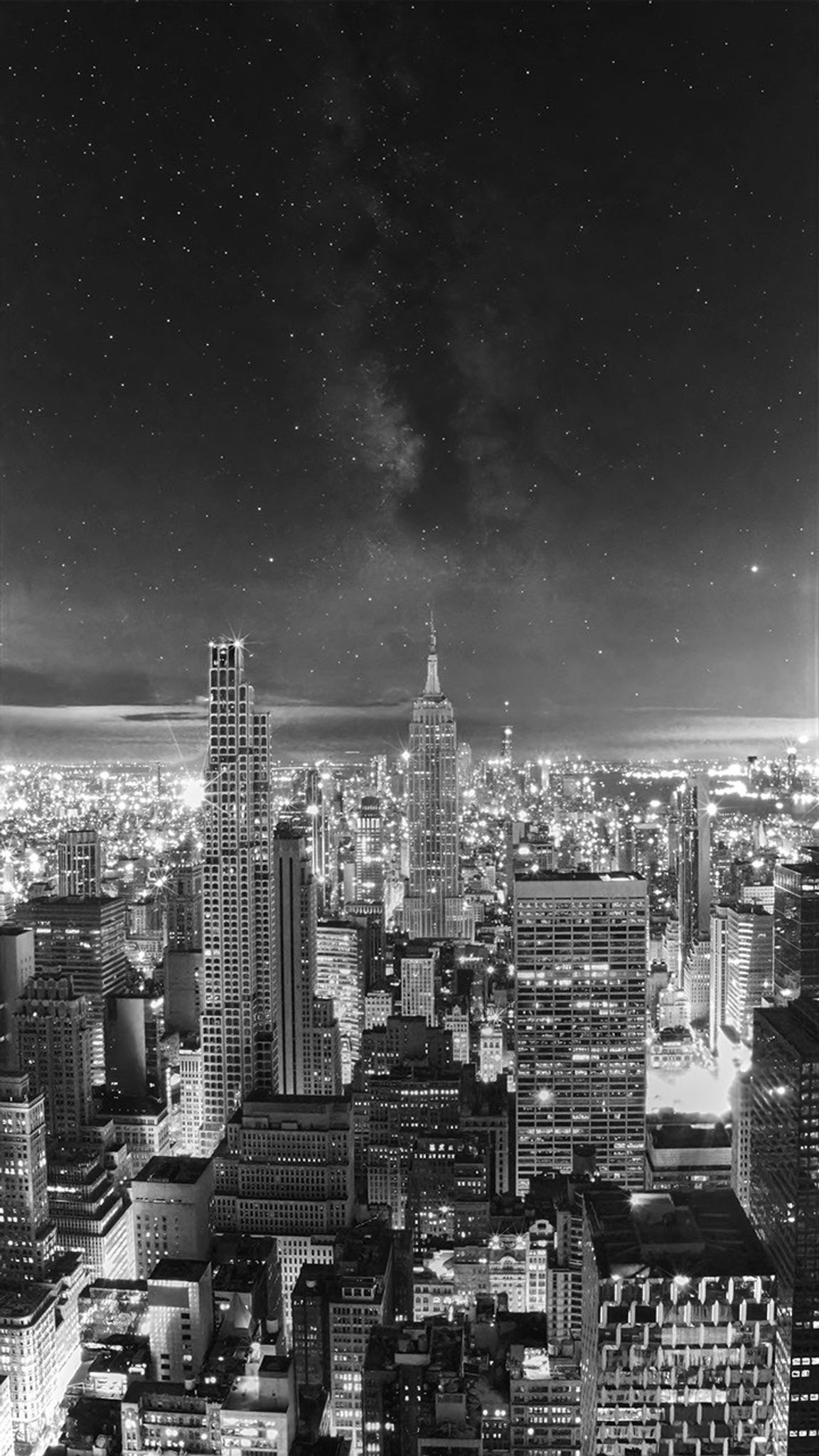
A NASA-featured image shows the Milky Way arching over Manhattan by using a near-infrared filter that suppresses much of the city’s visible light pollution.
New York City’s reputation as the “City That Never Sleeps” is earned in light: streetlamps, billboards, illuminated windows, and traffic combine to wash the night sky in a glow that usually overwhelms all but the brightest celestial objects. Under typical conditions, the Milky Way is effectively erased above Manhattan.
Yet in a striking image shared as part of NASA’s Astronomy Picture of the Day series, the Milky Way appears arcing over the city skyline—an effect made possible not by an unusually dark night, but by a smart change in how the scene was recorded. The photograph was made using a filter designed to reject most visible light and instead transmit near-infrared wavelengths, a band of the electromagnetic spectrum that lies just beyond red light and carries less energy than the visible range.
That choice matters because different kinds of artificial lighting behave very differently outside the visible spectrum. In the near-infrared, older incandescent bulbs and some types of neon lighting remain strong emitters. However, many modern light sources common in cities—especially fluorescent lamps and LEDs—produce comparatively little near-infrared light. By emphasizing near-infrared and suppressing visible wavelengths, the photographer’s setup reduces much of the city’s most pervasive light pollution in the final image.
The stars, meanwhile, do not disappear when the camera shifts its attention beyond visible light. Stellar emission remains strong in the near-infrared, allowing the dense starfields of the Milky Way to stand out even when the foreground is one of the brightest urban environments on Earth. The result is an unusual juxtaposition: a galaxy-scale structure revealed above a metropolis famous for drowning out the night.
Beyond its technical ingenuity, the image carries a broader message. It underscores that the night sky is not solely the domain of remote observatories and dark-sky parks; with the right tools and techniques, astronomy can still reach into heavily populated places. And it offers a reminder that, despite the divisions on the ground, everyone lives beneath the same cosmic canopy—an idea at the heart of why astronomical imaging continues to resonate with the public.
Tomorrow’s featured APOD image is slated to focus on “Chasing the ISS.”
Why it matters
Light pollution shapes what billions of people can see of the universe, especially in major cities. This image shows that near-infrared photography can reveal celestial features that visible-light observations miss amid urban glare. As outdoor lighting continues shifting toward LEDs, it will be worth watching how evolving lighting technologies change both the problem of light pollution and the strategies used to work around it.