NASA is accelerating work to shape the Artemis III mission, a crewed flight planned for next year that will stay in low Earth orbit but is intended to prove technologies…
NASA is accelerating work to shape the Artemis III mission, a crewed flight planned for next year that will stay in low Earth orbit but is intended to prove technologies and procedures needed before astronauts attempt a lunar landing later in the program.
The agency announced in February that it would insert an additional Artemis mission ahead of the crewed South Pole landing effort. Since then, teams have been weighing different mission designs and operational approaches to ensure Artemis III serves as a risk-reduction test ahead of Artemis IV, which is slated to return Americans to the Moon’s surface.
Jeremy Parsons, acting assistant deputy administrator for Moon to Mars within NASA’s Exploration Systems Development Mission Directorate, described the upcoming flight as a crucial rehearsal. Although it will not travel to the Moon, he emphasized that Artemis III is designed to integrate multiple spacecraft and new capabilities in a coordinated campaign—an operational complexity NASA has rarely attempted. The goal, he said, is to understand how Orion, its crew, and ground teams work in concert with hardware and personnel from commercial landing providers before surface expeditions and longer-term lunar infrastructure, including a Moon Base, are pursued.
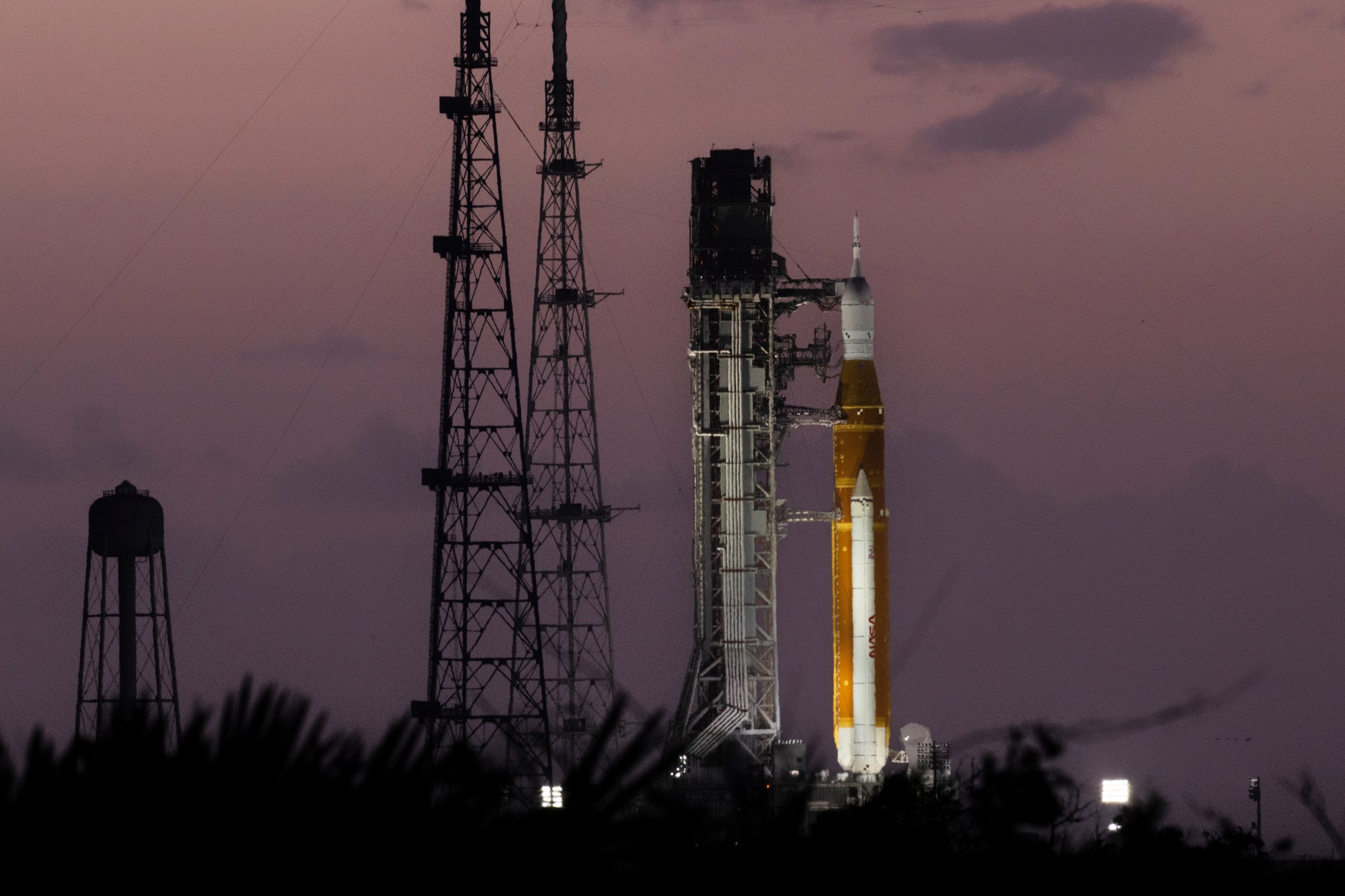
Under current planning, Artemis III would launch four astronauts aboard the Orion spacecraft atop NASA’s Space Launch System (SLS) rocket from Kennedy Space Center in Florida. A notable change from earlier SLS configurations is that NASA does not intend to fly the interim cryogenic propulsion stage as the rocket’s upper stage for this mission. Instead, engineers will use a “spacer” that matches the mass and external dimensions of an upper stage and preserves the same interfaces between the Orion stage adapter and the launch vehicle stage adapter—but without any propulsion capability.
Development of this spacer is moving quickly at NASA’s Marshall Space Flight Center in Huntsville, Alabama. According to NASA, machining is underway on the spacer’s barrel section along with the upper and lower rings, ahead of planned welding work.
Once Orion is delivered to orbit, its European-built service module will perform the burns needed to circularize the spacecraft’s trajectory in low Earth orbit. Operating in Earth orbit, NASA says, increases the number of viable launch windows compared with a lunar mission, making it easier to coordinate multiple elements: SLS and Orion with the crew, along with pathfinder versions of SpaceX’s Starship human landing system and Blue Origin’s Blue Moon Mark 2 human landing system.
NASA is also drafting the mission’s concept of operations based on the capabilities of both companies’ vehicles. While the agency has not finalized every detail, planners are considering scenarios in which astronauts could enter at least one of the lander test articles. The crew is expected to remain aboard Orion longer than during Artemis II, enabling additional evaluation of life-support performance. Artemis III would also mark the first in-space demonstration of Orion’s docking system, a key step toward future rendezvous, habitation, and mission-operations concepts needed for lunar surface expeditions.
On the return to Earth, NASA intends to test an upgraded Orion heat shield, aiming to expand reentry options and improve robustness for later missions.
In the weeks ahead, NASA plans to refine the flight plan further, including when astronauts will be assigned and begin training, potential evaluations of Axiom’s AxEMU spacesuit interfaces with landers ahead of surface missions, the final mission duration, and possible science activities. The agency has also solicited industry input on ways to strengthen communications links between the spacecraft and ground teams during the mission.