A newly released image from the NASA/ESA Hubble Space Telescope, published May 29, 2026, spotlights a spiral galaxy caught in a long, slow passage through space—an…
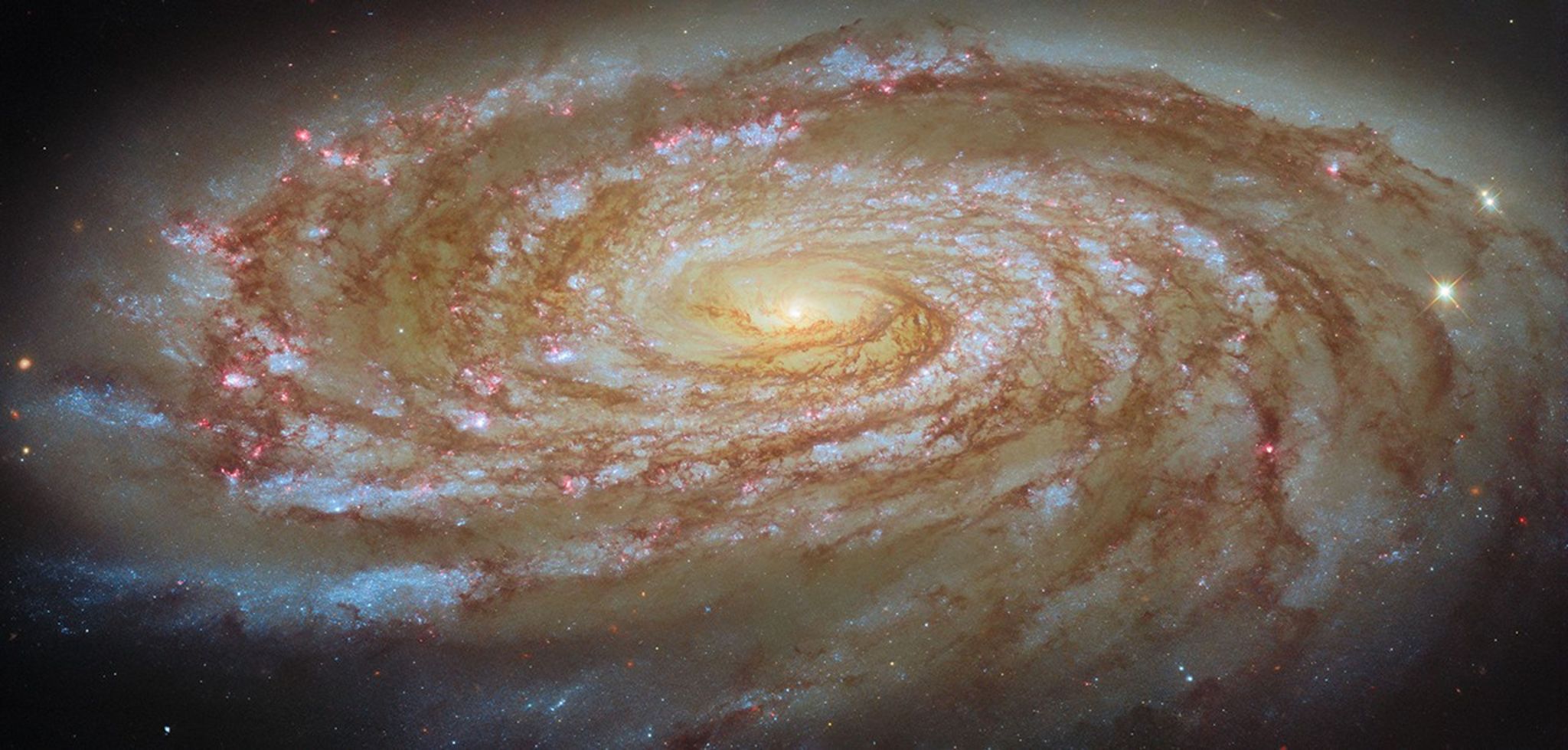
A newly released image from the NASA/ESA Hubble Space Telescope, published May 29, 2026, spotlights a spiral galaxy caught in a long, slow passage through space—an odyssey measured not in years, but in hundreds of millions of them.
The target is Messier 88, better known to many astronomers as NGC 4501. Seen in the direction of the constellation Coma Berenices, or Berenice’s Hair, M88 lies roughly 63 million light-years from Earth. From that distance, Hubble’s view presents the galaxy as a striking spiral system, but the real intrigue lies in its core.
M88 is classified as an active galaxy, meaning its central region is far from quiet. At its heart sits a supermassive black hole that is actively drawing in surrounding material—gas and dust that drift too close and become part of a swirling, heated flow as they fall inward. That feeding process is what gives an active galaxy its name: as matter accelerates and compresses near the black hole, it can release enormous amounts of energy, making the nucleus unusually energetic compared with more dormant galactic centers.
In M88, astronomers estimate the central black hole has a mass of about 100 million Suns. Observations indicate that this black hole is not only consuming material but also driving it back out: the energetic activity in the nucleus appears to be launching streams of gas outward from the galaxy’s center. Such outflows are a hallmark of active galactic nuclei, revealing how a black hole’s growth can influence its host galaxy by pushing on, heating, or redistributing the very gas that might otherwise form new stars.
The Hubble image captures M88 during a time in its cosmic travels when this internal activity is on display, offering a vivid look at the interplay between a spiral galaxy’s structure and the powerful engine embedded in its core. While the galaxy’s journey unfolds over immense spans of time, the snapshot serves as a reminder that even at 63 million light-years away, the effects of a feeding supermassive black hole can be inferred through the motions of gas it helps set in motion.