NASA will host a live International Space Station call with Florida students, with astronauts answering STEM questions to inspire interest in space and NASA careers.
Florida students will get a chance to connect with astronauts currently living and working hundreds of miles above Earth, as NASA hosts an education event from the International Space Station.
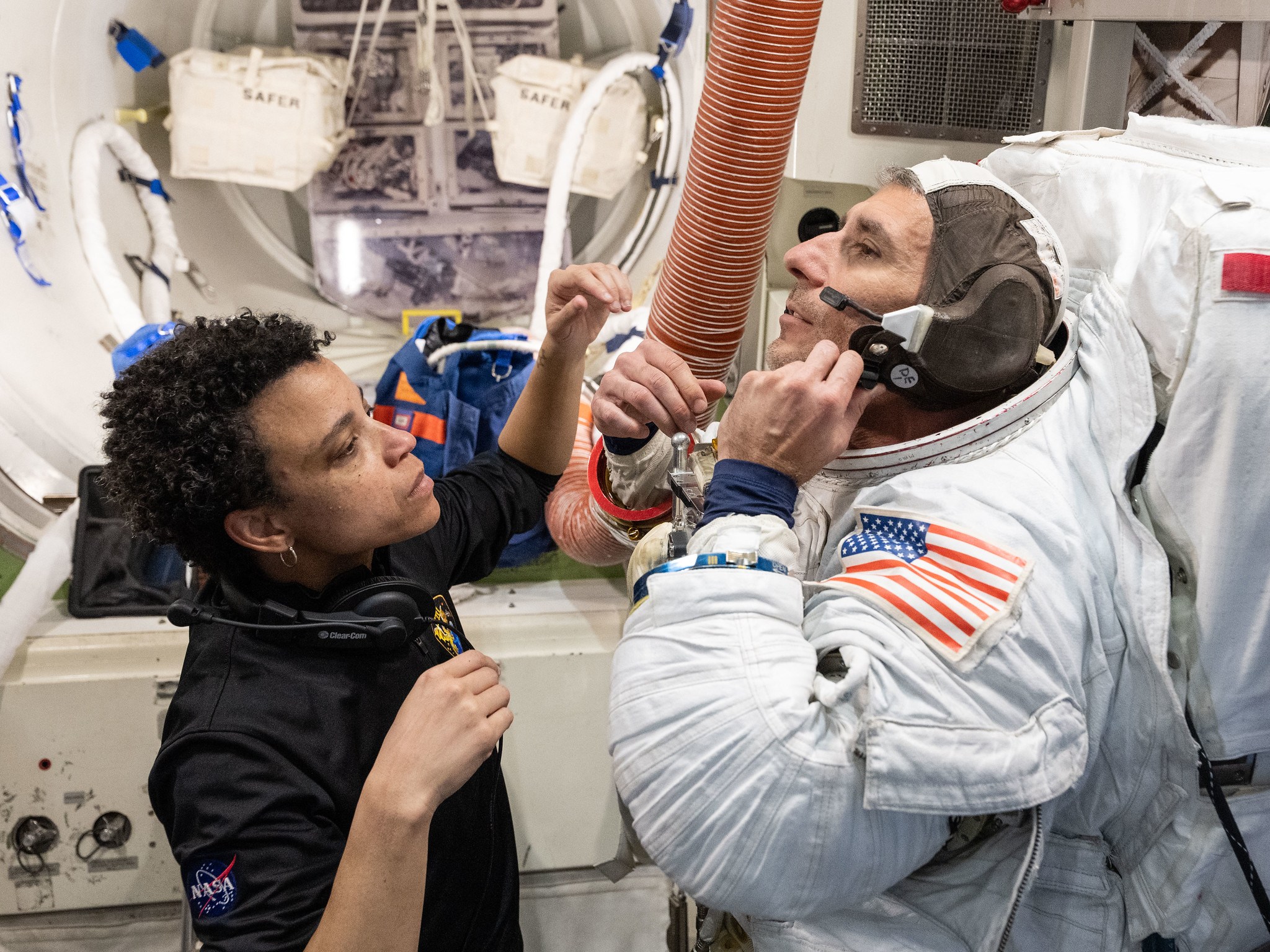
During the scheduled Earth-to-space call, NASA astronauts Jessica Watkins and Luke Delaney will respond to prerecorded questions focused on science, technology, engineering, and math. The conversation is set to begin at 12 p.m. EDT on Friday, Oct. 16, and will be broadcast live on NASA’s Learn With NASA YouTube channel.
The event is being organized by Sally Ride Elementary School in Orlando, Florida, and is designed for a broad audience: students from kindergarten through 12th grade, as well as members of the surrounding community. Organizers say the goal is to strengthen students’ understanding of space exploration while also highlighting the range of STEM-related careers connected to NASA’s work.
Media outlets interested in covering the downlink must confirm attendance in advance. RSVPs are due by 5 p.m. EDT on Thursday, Oct. 15. Requests can be directed to Jenny Morgan at (407) 858-3100 or by email at jenny.morgan@ocps.net.
The call also draws attention to the larger role of the International Space Station, which has hosted continuous human presence for more than 25 years. Over that period, astronauts and their partners have used the orbiting laboratory to conduct experiments and develop technologies that cannot be pursued in the same way on Earth, contributing to advances across multiple scientific disciplines.
NASA views the space station as a key platform for preparing for deeper-space exploration. Research conducted in low Earth orbit helps the agency better understand and address the demands of human spaceflight, from health and performance considerations to operational challenges of living in space for extended periods.
At the same time, the ISS serves as a testbed for expanding commercial activity in low Earth orbit, supporting a growing ecosystem of private-sector participation alongside government-led research. The experience gained through station operations and experiments also feeds directly into NASA’s longer-term exploration roadmap.
That roadmap includes the Artemis program, which aims to support long-duration missions to the Moon and develop capabilities needed for future journeys to Mars. Lessons learned aboard the ISS—where astronauts must manage limited supplies, maintain complex systems, and conduct high-stakes science in an extreme environment—inform strategies for sustaining crews on missions that are longer, farther from Earth, and more difficult to resupply.
More information about NASA’s in-flight education calls is available through the agency’s resources online.
Why it matters
Events like this give students direct exposure to working astronauts and make space science feel immediate and achievable, potentially influencing career interests in STEM fields. For NASA, public engagement helps build understanding of why the ISS remains central to research, commercial development in low Earth orbit, and preparations for Artemis-era exploration. What to watch next is how these educational links continue as NASA balances ISS operations with a transition toward more commercial stations and missions beyond Earth orbit.