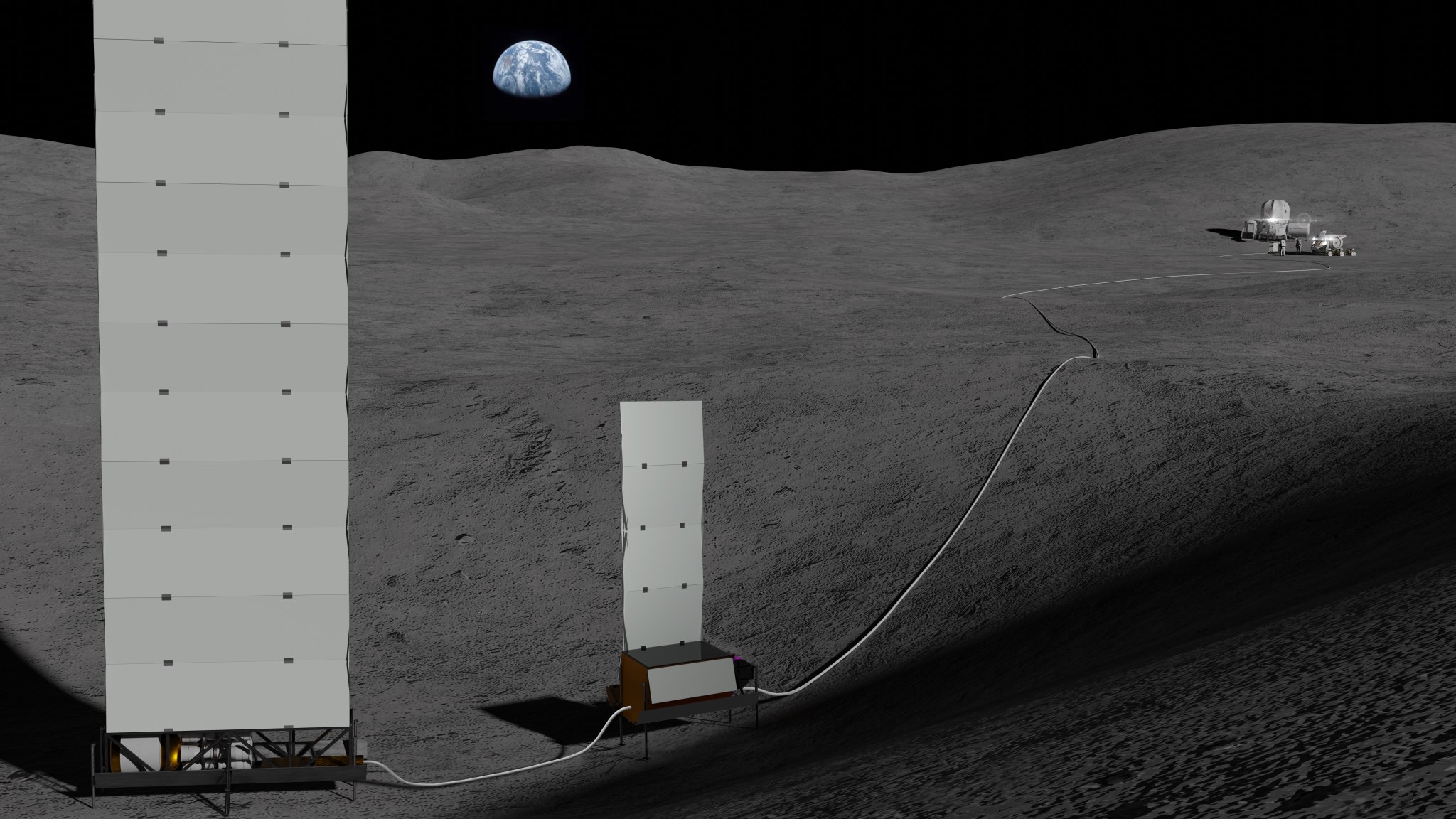
NASA is seeking private-sector proposals for Lunar Reactor-1, a compact nuclear fission power system designed to generate continuous electricity for long-term Moon operations.
NASA is inviting private-sector teams to help design and demonstrate what would become the first nuclear fission reactor built specifically to generate electricity on the Moon—an effort the agency sees as foundational for long-term human activity on the lunar surface.
The project, called Lunar Reactor-1 (LR-1), is envisioned as a compact fission power system capable of producing 20 kilowatts of electrical power. NASA notes that this output is roughly comparable to the annual electricity use of about 16 average U.S. households on Earth. On the Moon, however, that steady supply could be directed to the basics of living and working: future crew habitats, communications links, mobile rovers, scientific payloads, and other infrastructure needed to keep a lunar outpost operating.
NASA’s schedule is ambitious. The agency wants an LR-1 system that is ready for launch by 2030, and it expects the reactor to operate on the Moon for at least five years after it is deployed. A chief motivation is reliability. Solar arrays can provide strong power in sunlight, but they are constrained by geography and time. The Moon experiences nights that last about two Earth weeks, and certain regions can have limited illumination. A nuclear reactor, by contrast, can supply electricity continuously regardless of the lighting environment.
“This request for proposals represents an important step forward as NASA partners with industry to establish an enduring human presence on the lunar surface,” said Brian Giblin, the LR-1 program manager. He added that dependable, safe power will be central not only to lunar missions but also to exploration on Mars, emphasizing that space nuclear systems can provide uninterrupted energy without relying on sunlight.
The new solicitation—issued under NASA’s Space Power and Reactor Capabilities Request for Proposals—reflects feedback the agency gathered after releasing a draft version in August and holding an industry day in September at the Ohio Aerospace Institute in Cleveland. Among the requirements: any proposed reactor approach must comply with Department of Energy safety standards governing nuclear operations.
While the immediate goal is to mature the technology, testing regime, and flight design for LR-1, NASA also signaled that the contract framework could later be used to commission additional work on other nuclear power systems intended for space. Proposals for the LR-1 effort are due Dec. 21.
The push comes as NASA lays groundwork for missions where solar energy is less dependable. Lunar darkness can last 14 days at a stretch, and on Mars, global and regional dust storms can reduce sunlight for months. The farther spacecraft travel from the Sun, the less useful solar generation becomes. In those conditions, nuclear systems offer a stable alternative for both surface operations and spacecraft needs.
LR-1 is managed by NASA’s Space Reactors Division working in partnership with the Department of Energy. That same division is also overseeing development of Space Reactor‑1 (SR-1) Freedom, a separate nuclear initiative slated for launch in 2028. NASA says SR-1 Freedom is intended to deliver three SkyFall helicopters to Mars and to showcase nuclear electric propulsion—using reactor-generated electricity to power propulsion systems—which could expand the reach and capabilities of future deep-space missions.
Why it matters
A practical lunar reactor would remove one of the biggest constraints on sustained off-Earth living: reliable power through long nights and harsh conditions. The program also signals growing reliance on fission energy for missions to Mars and beyond, where solar power can be intermittent or insufficient. The next key milestones will be who wins the LR-1 contracts and whether NASA can meet its 2030 launch-ready target while satisfying strict safety requirements.