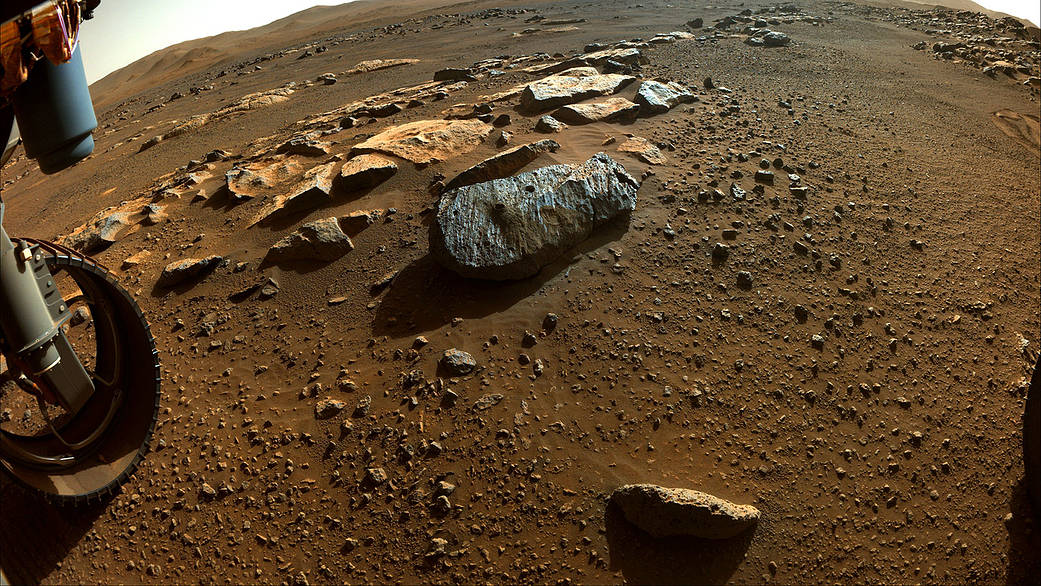
Plans to send humans to Mars come with an unavoidable environmental hazard: crews will live and work amid a pervasive haze of extremely fine dust.
Plans to send humans to Mars come with an unavoidable environmental hazard: crews will live and work amid a pervasive haze of extremely fine dust. Yet the health risks of breathing Martian airborne particles are still not fully characterized, in part because no mission has returned true samples of Martian atmospheric dust to Earth for laboratory testing. In the absence of those samples, NASA is building an initial exposure standard using the best available analogs—decades of lunar dust toxicology work, studies using Martian regolith simulants, and a large body of chemical and mineralogical measurements collected by Mars landers and rovers.
That evidence has been folded into a draft Permissible Exposure Limit (PEL) intended for inclusion in NASA-STD-3001, the agency’s core human-systems standard for spaceflight. The draft was developed through a collaboration between the Johnson Space Center (JSC) Lunar and Martian Dust Risk Custodian, the JSC Toxicology group, and the Office of the Chief Health and Medical Officer (OCHMO) Standards team. To scrutinize both the proposed limit and the supporting data, NASA convened a Martian Dust Limit Working Group that met in two sessions in February 2026.
During those meetings, participants examined how mission architecture choices—such as how often astronauts conduct extravehicular activities (EVAs), how dust is tracked into a habitat on suits and equipment, and how well life-support and filtration systems remove particulates—could determine real-world exposures. The group emphasized that any near-term standard must be conservative, measurable in practice, and flexible enough to evolve as Mars mission designs mature.
The working group included David Damby, Claire Horwell, Brian Hynek, Shaunna Morrison, and Joyce Tsuji; NASA presenters were Katie Borremans, Elizabeth Rampe, and Torin McCoy; and OCHMO organizers and moderators were Douglas Ebert, David Francisco, and Kim Lowe. Additional attendees came from NASA’s Space Medicine and Operations group and JSC Toxicology.
The panel ultimately agreed that NASA’s proposed 30-day continuous PEL of 0.1 milligrams per cubic meter (mg/m³) is a reasonable and suitably cautious starting point for early, short-duration surface missions. The value is derived from the existing 30-day lunar dust PEL of 0.4 mg/m³, then reduced by a factor of three to reflect uncertainties specific to Mars. Those uncertainties include gaps in knowledge about Martian dust toxicity, the planet’s higher iron content, the presence of amorphous components, and the imperfect match between laboratory simulants and the real particles astronauts would encounter.
Members also supported applying the limit as a measured time-weighted average rather than linking it to assumed dust-clearance rates, which could vary widely across habitat and spacecraft designs. At the same time, they cautioned that crew exposures on Mars are likely to be dominated by short, high-concentration events—such as dust bursts following EVA suit entry—and recommended that the standard explicitly address management of these brief spikes.
While total dust mass was reaffirmed as the main near-term engineering and health driver, the group reviewed whether specific chemicals in the dust require separate controls. Chromium in the hexavalent state (Cr 6+), manganese, and perchlorate were judged to present low inhalation risk so long as the overall dust PEL is enforced. Perchlorate, however, was flagged for agency-wide attention because it could affect crews through multiple pathways beyond inhalation, including ingestion scenarios associated with in situ food production. Iron received sustained discussion: it is abundant in Martian regolith and can contribute to reactive oxygen species formation, but available toxicology does not yet show a clear pathway from iron-driven oxidation to lung injury. Because of remaining unknowns, the panel recommended prioritizing iron for further research and possible development of a dedicated Spacecraft Maximum Allowable Concentration (SMAC). Arsenic, by contrast, was considered unlikely to be a significant concern under current expectations.