As a college student walking past a job fair display, Anton Kiriwas paused at a booth crowned by images of the Moon and Mars.
As a college student walking past a job fair display, Anton Kiriwas paused at a booth crowned by images of the Moon and Mars. The scene stuck with him—equal parts inspiration and impossibility. At the time, returning astronauts to the Moon sounded like something reserved for future generations, not a career path he could realistically chart.
Years later, that distant vision has become his day job.
Kiriwas is now a senior technical integration manager with NASA’s Exploration Ground Systems Program, a position that places him at the nerve center of the Artemis campaign—NASA’s effort to send humans back to the Moon for the first time in more than 50 years. His route to NASA began during the Space Shuttle era, when he worked for United Launch Alliance, the same organization behind the booth that once caught his eye. Not long after, he joined NASA as a civil servant, building expertise by designing electrical systems before moving into roles that demanded broader, cross-cutting technical leadership.
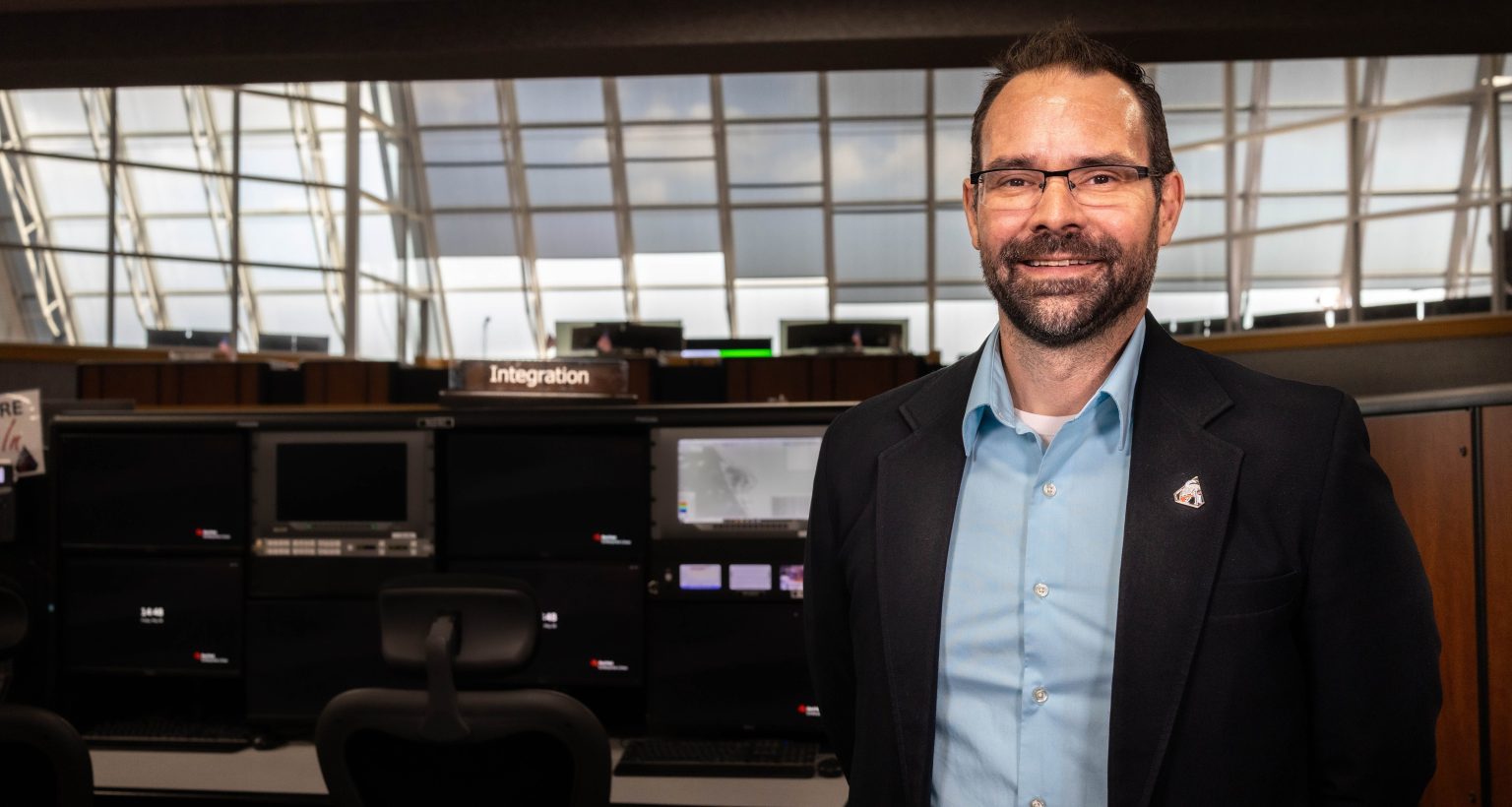
In his current post, Kiriwas is best described as the person who helps turn a vast, multi-disciplinary enterprise into a single coordinated launch team. A central responsibility is serving as a launch project engineer, stationed at the integration console in Firing Room 1 inside the Launch Control Center at NASA’s Kennedy Space Center in Florida. From that console—positioned to connect the many specialists responsible for a modern rocket’s readiness—he functions as a key link between test management and engineering organizations.
The launch project engineers, including Kiriwas, report directly to the launch director. During the countdown, they are tasked with making the final technical recommendation when problems emerge, advising whether the team should proceed or hold. It is a role that demands comfort with complexity: decisions often require input across multiple engineering disciplines, all guided by a shared priority—getting the spacecraft and its crew off the ground safely.
Although launch day carries enormous stakes, Kiriwas says the countdown itself can feel more straightforward than the exhaustive preparation that precedes it. The team conducts extensive rehearsals and simulations designed to stress the system and the people operating it, training for contingencies that range from minor technical discrepancies to serious anomalies. The best outcome, he notes, is a launch day without surprises. But the point of the training is to ensure that if the day isn’t quiet, the response is disciplined and decisive.
When an issue does arise, Kiriwas and his team start with fundamentals: clarifying requirements, identifying which systems could be impacted, and determining who needs to be at the table. He then draws together the relevant technical experts to troubleshoot, evaluate options, and arrive at a recommendation—either a “go” to continue toward liftoff or a “no-go” to stop and resolve the concern.
That process, he emphasizes, depends on keeping emotion in check. “There is adrenaline to get to launch, but you want to be careful to never let that turn into ‘launch fever,’” Kiriwas said. “We need to launch exactly when we’re ready and not a moment before.”
With Artemis II complete, his work continues in the less visible—but essential—phase that follows a mission: studying what worked, capturing lessons learned, and turning them into requirements for what comes next. At Kennedy Space Center, Artemis III hardware is now being processed as teams prepare the next steps toward returning astronauts to the lunar surface. For Kiriwas, it’s the culmination of an improbable trajectory that began with a chance glance at a booth display—and now unfolds through what he calls the countless components required to make exploration possible. “There’s a million little pieces that go into this, and I get to be a part of it,” he said.