A bumpy ride may be more than a minor annoyance for the fledgling air-taxi business.
A bumpy ride may be more than a minor annoyance for the fledgling air-taxi business. New NASA research suggests that how these small, vertical-takeoff-and-landing aircraft move in the air could strongly shape whether passengers feel comfortable—and whether they would choose to fly again.
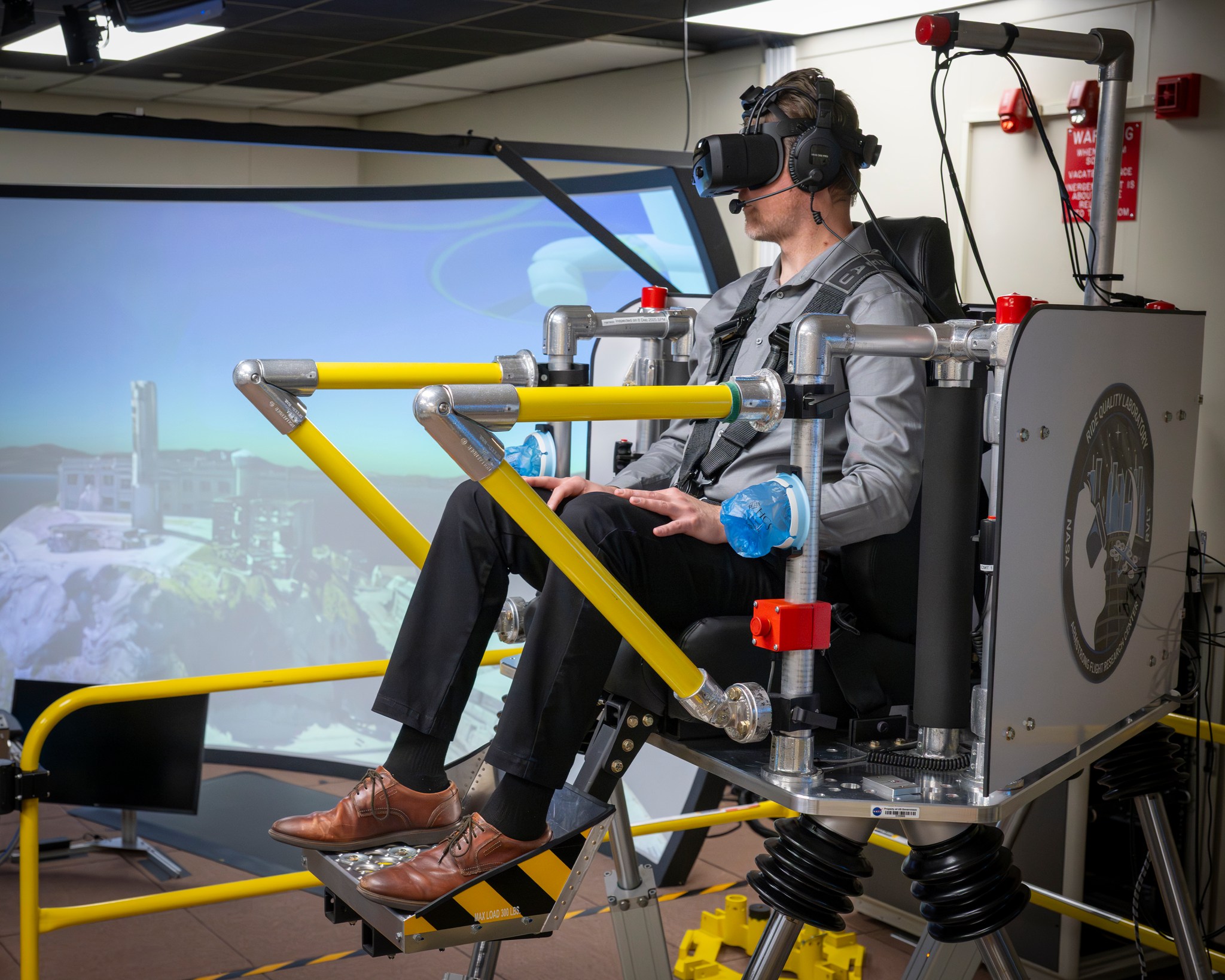
To help the advanced air mobility industry anticipate those reactions, NASA has been collecting data that connects specific flight motions with passenger comfort and confidence. Rather than waiting for large numbers of commercial flights, researchers turned to a controlled stand-in: a virtual reality motion simulator at NASA’s Armstrong Flight Research Center in Edwards, California. There, agency volunteers strap in for simulated air-taxi trips designed to reproduce the kinds of sudden tilts and shifts riders might experience in real operations.
By watching how participants respond to these jolts, NASA is building a clearer picture of the motions that people find most troubling. The results indicate that abrupt, large changes in movement can be particularly uncomfortable—an important finding because such motions can arise not only from pilot maneuvers, but also from environmental factors such as gusty winds and the dynamics of landing.
Using the simulator feedback, the NASA team developed models that relate these sudden motions to a person’s willingness to fly. The goal is practical: provide aircraft designers and future operators with tools to predict when a planned maneuver or an expected condition is likely to push passengers past a comfort threshold. With that information, manufacturers can refine vehicle designs and flight-control strategies, while operators can adjust procedures to reduce the likelihood of ride qualities that feel too harsh.
“Through this study and others, we are starting to identify passenger comfort thresholds for aggressive flight motion,” said Curtis Hanson, the NASA Armstrong lead researcher on the work. As those thresholds become better defined, Hanson said, researchers can begin forecasting how air taxis should be flown so most riders find the trip pleasant—supporting both public acceptance and industry growth.
In the study, each participant took part in virtual flights that followed a route from downtown San Francisco to Alcatraz Island. During those trips, the simulator exposed riders to four increasing intensity levels of common aircraft motions: pitching up and down, rolling side to side, rotating, and rapid accelerations into climbs or dives. After each flight, participants rated their experience on a five-point scale and identified which movements caused discomfort.
Even midrange motion levels were enough to reduce comfort for some people, while others tolerated higher intensities with fewer complaints—highlighting variability in how passengers experience the same ride. Participants were also asked whether they would take a real air-taxi trip if it included motions they personally found uncomfortable. Their responses pointed to a notable trend: compared with earlier NASA ride-quality studies, today’s travelers may be less willing to accept rough motion than airline passengers were roughly half a century ago.
The new findings add to a multiyear NASA effort aimed at understanding air-taxi ride quality, including consistent links between particular movement patterns and reported comfort. The work is being carried out under the Subsonic Vehicle Technologies and Tools project within NASA’s Research and Technology Mission Directorate and supports the agency’s broader advanced air mobility research.