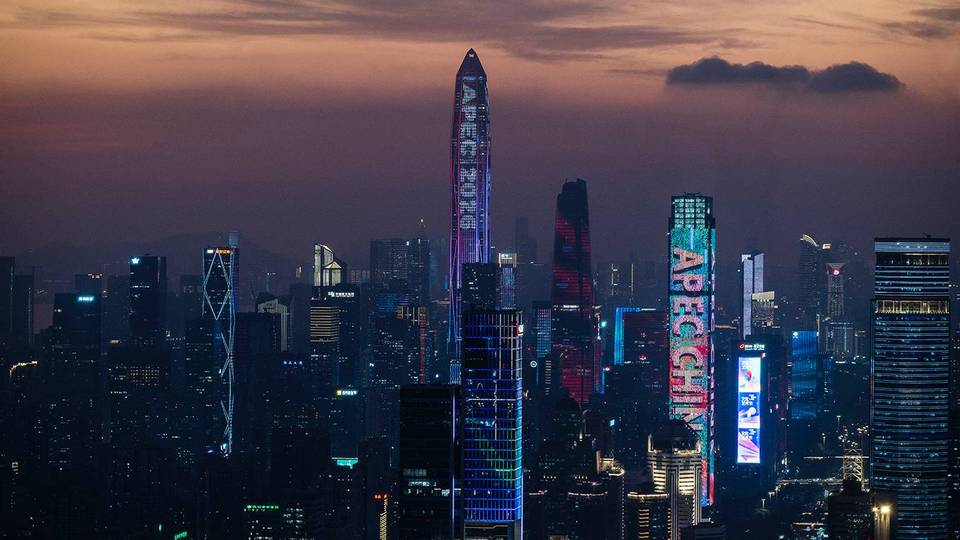
A proposed Trump–Putin–Xi trilateral meeting at the APEC gathering in Shenzhen is eclipsing the forum’s trade agenda, raising stakes for nuclear, AI and security talks.
A proposed summit bringing together the presidents of the United States, Russia, and China is drawing intense global scrutiny as leaders converge in Shenzhen, China’s flagship technology center, for the annual meeting of the 21-member Asia-Pacific Economic Cooperation (APEC) forum. While APEC’s agenda typically revolves around trade, investment, and regional economic coordination, the prospect of a high-stakes, three-way conversation among Donald Trump, Vladimir Putin, and Xi Jinping is overshadowing the wider gathering.
In an ideal world, a trilateral meeting of the heads of the three most powerful nuclear-armed states could be used to confront some of the most urgent security challenges facing the international system. Chief among them is the spread of nuclear weapons: preventing additional countries from acquiring nuclear capabilities, strengthening arms-control arrangements, and reducing the incentives for an accelerating global arms race. With Washington, Moscow, and Beijing all central to the strategic balance, any meaningful effort to curb nuclear proliferation would benefit from direct engagement at the highest level.
The summit, at least in principle, could also provide an opening to address the rapid rise of artificial intelligence and the risks that accompany it. As AI technologies become more capable and more widely deployed, governments are increasingly confronted with questions about military use, cyber operations, misinformation, and the potential for accidents or unintended escalation. Coordinated discussion among the world’s leading powers could, in theory, establish baseline expectations—aimed at steering AI development toward broadly beneficial outcomes rather than destabilizing competition.
Beyond weapons and emerging technology, the gathering could be a forum for confronting the reality of ongoing wars and the danger of new ones. The presence of the leaders of the United States, Russia, and China—countries that exert outsized influence through military power, economic leverage, and diplomatic weight—could allow for direct bargaining, crisis management, and potentially the creation of pathways to de-escalation. If used effectively, such a meeting might help reduce the risk that current conflicts widen or that additional flashpoints tip into open confrontation.
But the gap between what such a summit could accomplish in theory and what it is likely to deliver in practice may be large. Even as the setting in Shenzhen highlights China’s status as a major engine of technological and economic change, the political realities surrounding a Trump–Putin–Xi meeting point toward outcomes that may look less like coordinated problem-solving and more like an exercise in power politics. The spectacle of three leaders meeting on the sidelines of a major economic forum could be interpreted as a bid to reshape global alignments—whether through ad hoc deals, symbolic gestures, or the signaling of spheres of influence—rather than through transparent, rules-based cooperation.
For now, Shenzhen’s APEC gathering remains the formal venue. Yet it is the planned trilateral conversation—its agenda, tone, and any hints of agreement—that is poised to define the headlines and influence how governments, markets, and allies interpret the direction of the world’s most consequential relationships.
Why it matters
A meeting among the US, Russian, and Chinese presidents can quickly shift geopolitical expectations, affecting everything from security calculations to economic confidence. If the talks tilt toward transactional bargaining rather than concrete commitments on nuclear risk, AI safeguards, or conflict prevention, smaller states and allies may face greater uncertainty. The key question to watch is whether the leaders produce any verifiable steps—or merely signals about how they intend to divide influence in the years ahead.